49 works in this view — arrow keys or swipe to move between them.
Dance in Art
Plaque
Unknown
- Collection:
- Plaque
- Source:
- Victoria and Albert Museum
- Rights:
- Rights vary by item — check the source record before reusing this image. Source record ↗
- Recorded as:
- V&A — check rights per item
This object records the visual context of aristocratic dance in the 18th century—not the dance itself, but the formal garden, the silk dress, the social hierarchy, and the leisured interactions that surrounded and framed actual dance performance. For a historian of rococo culture and courtship rituals, it shows how dance was woven into aristocratic life and display.
What you are looking at
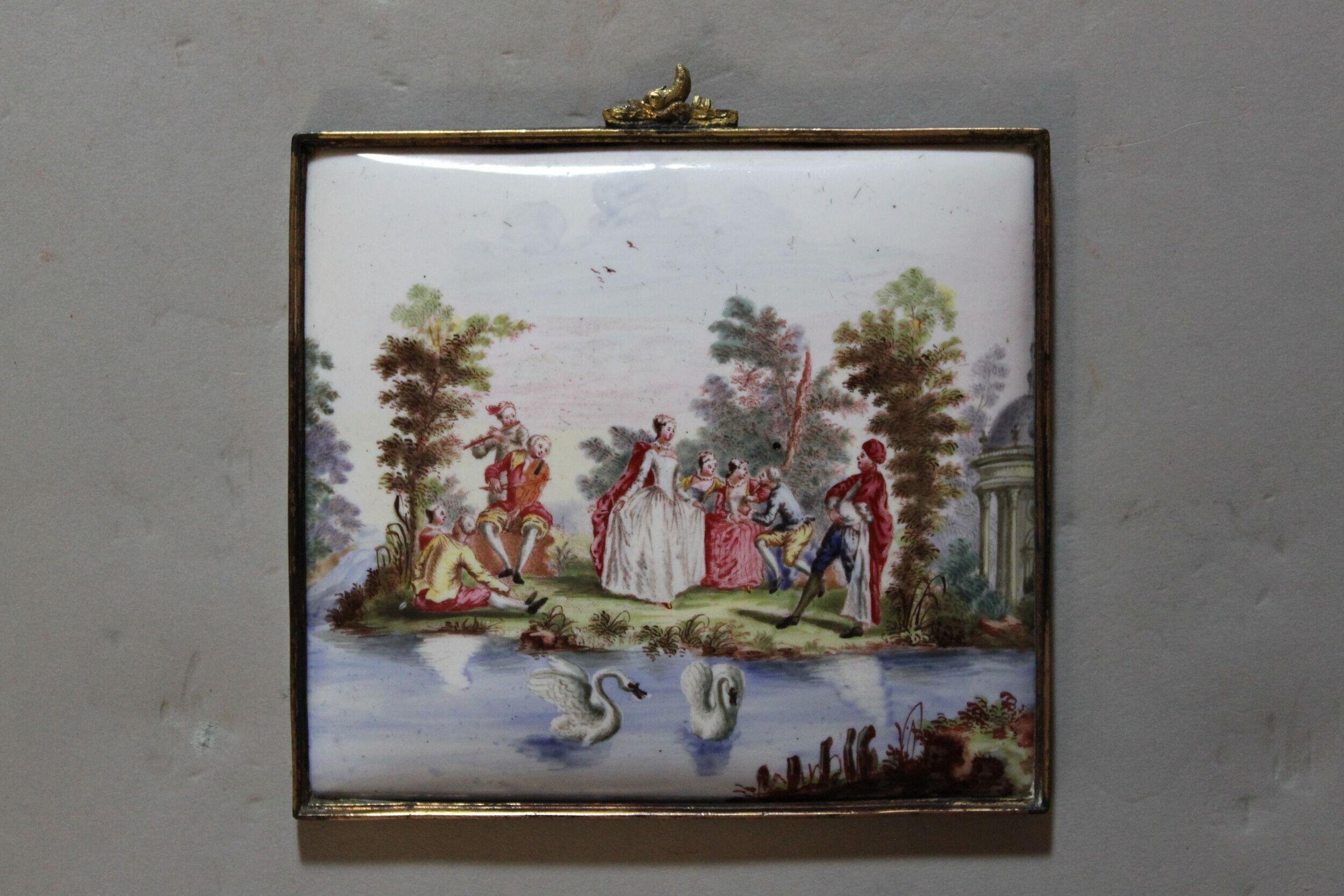
This hand-painted porcelain plaque depicts an aristocratic outdoor garden scene, likely from the 18th century. In the foreground, elegantly dressed figures in silk gowns and formal attire occupy a manicured parkland beside a still body of water. Two white swans float on the water, suggesting a formal estate garden. In the middle distance, a group of at least eight figures are arranged on a lawn: a woman in a white gown stands centrally, surrounded by attendants and courtiers in red and gold silks. Tall trees frame both sides of the composition. On the right, a classical stone structure—possibly a pavilion or temple—hints at formal garden architecture. The palette is soft and refined: pale sky, naturalistic greens and browns in the foliage, rich reds and golds in the clothing, and the luminous white of the porcelain ground showing through. The scene captures a moment of courtly leisure and social interaction rather than active dance, though the postures suggest conversation and light movement among the assembled guests.
The dancing
The central woman in white stands upright in a relaxed, graceful posture, her body open to the figures around her. The other figures—both men and women—are positioned at various angles around her, some gesturing with arms extended, others standing in conversation. The poses are genteel and controlled: no high extensions or athletic movement, but rather the elegant bearing of aristocratic dress and social deportment. Several figures appear to be in mid-gesture or light social interaction rather than in the sustained frame of a formal dance. The grouping is loose and informal, suggesting a promenade or garden party rather than a choreographed ensemble.
The dance depicted
This image most likely depicts a garden entertainment or promenade of the rococo period rather than a formal dance performance. The grouping, postures, and setting are consistent with 18th-century aristocratic leisure activities—the kind of outdoor 'galanterie' and social display that often preceded or accompanied minuets and country dances. The central woman and her attendants suggest a scene of courtship or social hierarchy rather than active dancing. No specific dance style can be confidently identified from the postures alone, though the formal dress and garden setting are typical of the era in which historic-baroque dances like the minuet were performed.
How it was made
This is a hand-painted porcelain plaque mounted in a brass or gilt-metal frame with an ornamental finial. The painting technique employs delicate enamel glazes fired onto the porcelain surface, allowing for fine detail and luminous color while preserving the white ground. The small scale and precious material suggest this was a luxury object for a wealthy collector—likely produced in a European porcelain manufactory in the 18th century. The brass mount and hanging loop indicate it was intended for display in a cabinet or on a wall, making it a decorative rather than functional object, and evidence of the owner's taste and status.
About this work
This is an 18th-century hand-painted porcelain plaque depicting an aristocratic garden scene with elegantly dressed figures. The work captures a moment of courtly leisure and social interaction—a promenade or garden entertainment rather than formal choreographed dance. The composition, dress, and setting are consistent with rococo-era court life, when such outdoor diversions often accompanied or preceded the formal dances (minuets, galliards) that structured aristocratic social events.
The plaque belongs to a category of decorative luxury objects made for wealthy European collectors, and it records not active dance but the social and courtship rituals that framed dance in aristocratic culture. For historians of 18th-century dance, it documents the setting, dress, and social dynamics within which formal dances were embedded.
How to look at it
Look first at the posture of the central woman and the arrangement of the figures around her. Note how none of them are in the sustained, turned-out frame of a formal dance like a minuet; instead, they are in the relaxed, gestural poses of social conversation. The setting—the garden, the water, the architectural folly—is as important as the figures; this is a scene of aristocratic display and leisure, not a ballroom or stage. The soft palette and luminous porcelain ground give the scene an almost dreamlike quality, distancing it from daily life and marking it as a representation of refined, idealized aristocratic pleasure.
The period
This plaque was made during the height of the rococo period (roughly 1730–1780), when hand-painted porcelain emerged as a status symbol among European aristocracy. Meissen, Sèvres, and other great manufactories produced thousands of such decorative plaques and tableware depicting scenes of courtly leisure, pastoral entertainment, and aristocratic life. These images reinforced and circulated idealized visions of aristocratic behavior and courtship. Concurrently, the minuet and other formal dances were central to aristocratic social life; these paintings often depict the leisure and social settings in which dances were performed, rather than the dances themselves.
Where it lives
The plaque is held in a collection catalogued only as 'va' (likely a regional or institutional archive). It is a decorative object produced for private collecting and display, typical of 18th-century luxury porcelain wares.
Questions about this work
Is this depicting an actual dance?
Not a formal, choreographed dance. The postures and setting suggest a garden promenade or social entertainment—the kind of aristocratic leisure activity that often preceded or accompanied formal dances like minuets. The figures are in conversation and light interaction rather than in the sustained frame of a dance ensemble.
What does the porcelain technique tell us about this object?
Hand-painted porcelain was an expensive, luxurious material in the 18th century, produced only by elite manufactories. The small scale, precious material, and decorative mount indicate this was a collector's object for a wealthy household, intended for display in a cabinet or on a wall. It would have been seen by a limited, educated audience rather than circulated widely.
What era does the dress and setting suggest?
The silk gowns, formal attire, and rococo aesthetic point to the mid-to-late 18th century (roughly 1730–1780). The garden architecture, swans, and pastoral setting are typical of rococo taste. This was the era of the minuet, galliard, and other formal dances that structured aristocratic social life.
More dance artwork





