49 works in this view — arrow keys or swipe to move between them.
Dance in Art
Theatre costume
Wilhelm
- Collection:
- Theatre costume
- Source:
- Victoria and Albert Museum
- Rights:
- Rights vary by item — check the source record before reusing this image. Source record ↗
- Recorded as:
- V&A — check rights per item
The photograph documents costume design as a distinct theatrical craft during a period when the designer's role was becoming professionalized. The simplicity and restraint of the design—the use of costly silk only as accent, the reliance on drape and weight rather than ornament—tells us about both the aesthetics and the economics of early 20th-century European theatre.
What you are looking at
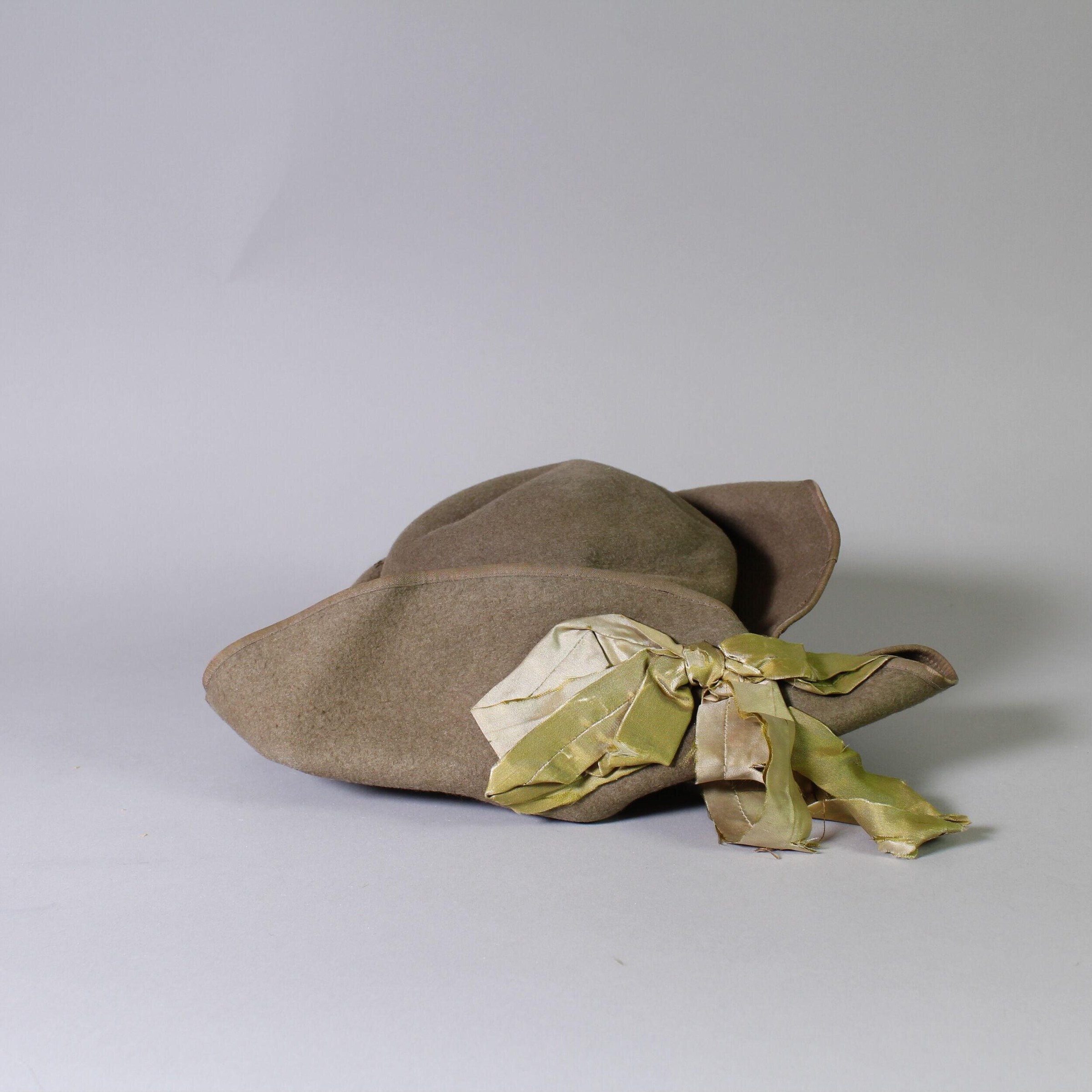
A soft, draped tan or khaki wool fabric lies pooled on a pale gray surface, gathered and folded to suggest the weight and volume of stage costume. From one gathered section emerges a ribbon or sash of chartreuse-green silk, crumpled and twisted as if hastily removed or arranged for display. The green fabric has a lustrous quality distinct from the matte wool, and its pale cream underside is visible where it folds. The lighting casts a soft shadow beneath the costume, emphasizing its three-dimensional form and textile qualities. There is no figure within the garment; instead, the fabric itself becomes the subject, presenting the costume as an object of study—how it drapes, how it reflects light, how its materials speak to stage use.
The dancing
No dancer is present. The costume is arranged to show its construction and volume, with the wool bunched to suggest where it would gather at a waist or be compressed in movement. The addition of the silk ribbon or trim suggests the costume's decorative element, the accent that would distinguish it on stage. The arrangement implies a garment made for a body—we can infer its scale and the weight a performer would have worn—but presents it as an object in its own right.
The dance depicted
The costume is consistent with early 20th-century theatre dress, particularly European theatrical practice of 1912. The simplicity of the palette—muted earth tones with a single accent of jewel-green—and the generous draping suggest a classical or allegorical theatre role rather than naturalistic contemporary dress. Without seeing the costume on a body, we cannot determine the specific dance form. The wool weight and voluminous gathering would suit a role requiring significant movement and visual presence, whether in ballet, pantomime, or dramatic theatre.
How it was made
This is a photograph of a three-dimensional textile object—a stage costume. The camera angle is close and direct, presenting the garment as museum documentation or costume study. The lighting is even and diffused, typical of studio or archive photography, designed to reveal the fabric's texture and drape without creating distracting shadows. This approach to photographing costume—isolating it from the performer and stage—was common in 20th-century theatre archives and museum practice, shifting the audience from performance to material culture.
About this work
This is a theatre costume from 1912 by an artist known as Wilhelm, documented in photograph form. It is a wool garment in warm muted tones with a green silk accent, presented as a study of theatrical dress from the early 20th century. The costume belongs to a moment when theatre design was becoming a recognized artistic practice, when the maker and material of stage dress were subjects of serious attention. The photograph itself is an artifact of how theatre institutions came to preserve and value costume: not as memory of a performance, but as object of study.
How to look at it
Attend to the weight of the fabric—the way the wool holds its folds and how gravity shapes the costume's form. Notice how the green silk accent draws the eye and would frame or focus attention on a performer's body in space. Consider what the costume would show in motion: the generous folds would create visual interest with each gesture, and the contrast between the matte wool and lustrous silk would catch stage light in different ways. The photograph's stillness invites you to imagine the costume in action.
The artist
Wilhelm is recorded as the artist, but no further biographical information is available in the collection record. The name could refer to a costume designer, a photographer, or both; the attribution system of the archive does not clarify the distinction. Early 20th-century theatre in German-speaking Europe saw the emergence of named costume designers as distinct creative figures, and the record's credit to Wilhelm suggests he held that status.
The period
In 1912, theatre design was undergoing rapid change, influenced by the reform movements in staging, lighting, and notation that had developed from Appia, Craig, and others in the 1890s. The emphasis shifted from quantity of ornament to quality of silhouette and the effect of light on fabric. This costume's simplicity and its presentation as a study object reflect that new aesthetic. Simultaneously, dance and theatre were becoming subjects of serious photographic documentation and archival preservation, particularly in Europe, where the influence of theatrical photography and dance photography was growing.
Where it lives
The costume is held in the Theatre collection, and this is a photograph made for archive or documentation purposes. The source is recorded as 'va', likely indicating the Victoria and Albert Museum, which maintains extensive theatre collections. The photograph represents the costume as a preserved cultural object, removed from performance context and stored as historical record.
Questions about this work
Is there a dancer in this image?
No. This is a photograph of the costume itself, arranged and photographed in a studio or archive setting without a performer. This method of documenting theatre costume—isolating the garment from the body—became standard practice in museum and institutional archives during the 20th century.
What kind of theatre was this costume worn in?
The simplicity and classical proportions suggest a role in formal theatre or ballet rather than contemporary or comic theatre. The generous wool and jewel-tone accent indicate a character of status or significance, but the specific role cannot be determined from the costume alone.
Why photograph the costume without a body?
Photographing the costume as an object allows archivists and curators to study its construction, materials, and drape as evidence of historical making and aesthetics. It also preserves the object itself, independent of any single performer or performance, making it available to future researchers and makers.
More dance artwork





