49 works in this view — arrow keys or swipe to move between them.
Dance in Art
Theatre costume
Wilhelm
- Collection:
- Theatre costume
- Source:
- Victoria and Albert Museum
- Rights:
- Rights vary by item — check the source record before reusing this image. Source record ↗
- Recorded as:
- V&A — check rights per item
For historians of dance and theatre, these shoes are a rare surviving example of actual performer footwear from the early 20th century, showing how constrained and fashion-led stage costume was even for roles requiring significant movement. The bright, almost artificial color—now faded—speaks to the visual spectacle of early 20th-century theatre under electric light, where vibrant dyes and lustrous fabrics created effects impossible under gaslight.
What you are looking at
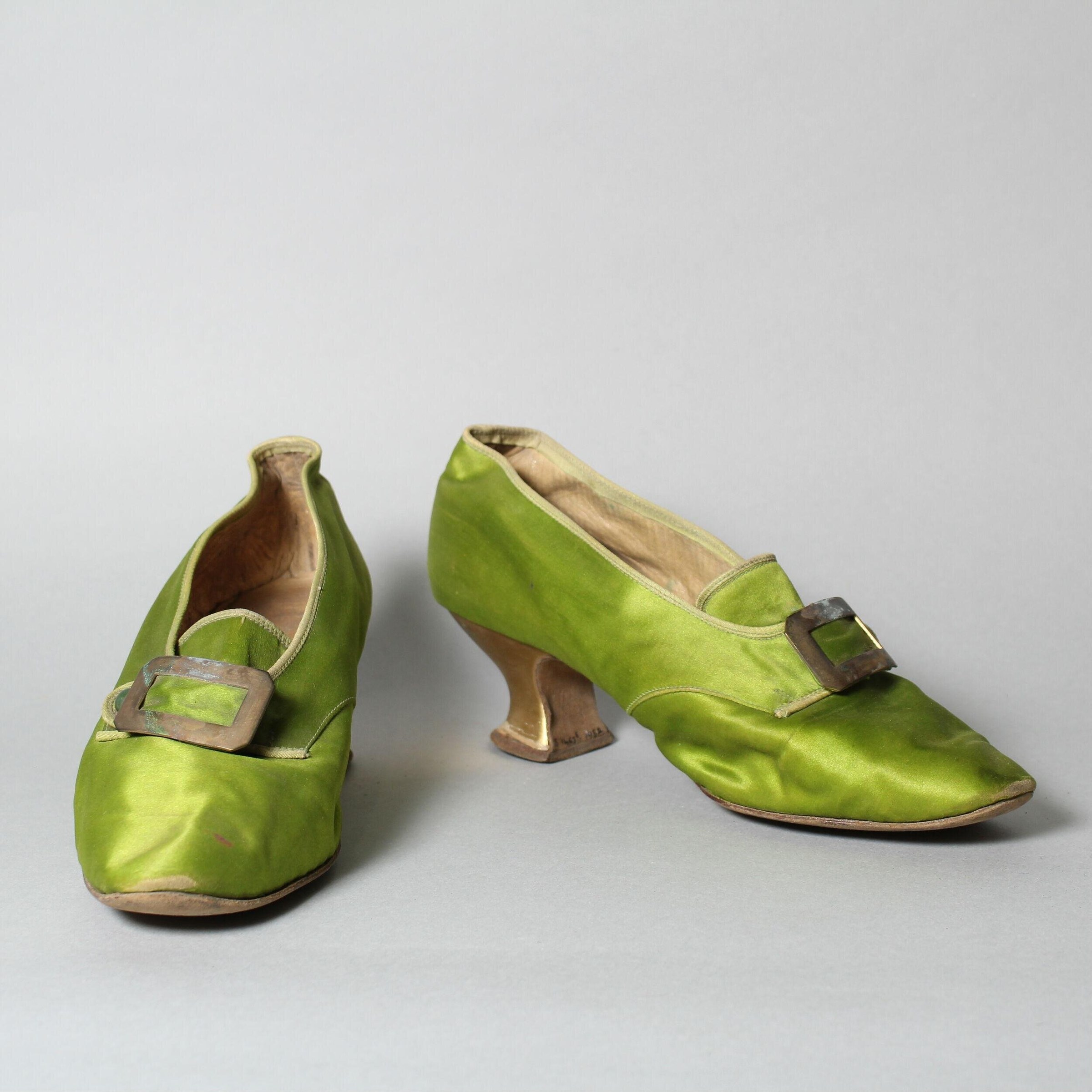
Two silk slippers in a brilliant lime-green color sit against a neutral background, angled to show profile and three-quarter views. The shoes are constructed with elegant, elongated pointed toes and modest heeled feet—characteristic of early 20th-century women's formal wear. The uppers are made of what appears to be lustrous silk fabric in a vivid chartreuse shade, while the undersoles and inner linings are rendered in a warm cream or beige. A small rectangular buckle or ornament in dark bronze or pewter-toned metal adorns the front of each shoe. The heels are modest and slightly splayed, typical of the period. The shoes show subtle wear—a softness to the fabric at the toe and creasing at the vamp—suggesting they were worn rather than merely decorative.
The dancing
These are not shoes for dancing in the conventional sense. The pointed toe, the heel height, the tight fit across the instep, and the decorative buckle all mark these as fashionable women's court or drawing-room shoes of the 1900s–1910s era. The silhouette is refined but constrained—the geometry of the foot is deliberately elongated rather than accommodating the natural arch or flexible sole required for ballroom or theatrical dance movement.
The dance depicted
The catalogue identifies these as theatre costume, and the elegant restraint and fashionable design suggest they were worn by a performer in a comedic, dramatic, or operatic role rather than as dance shoes for a ballet or concert work. The construction and ornamentation point toward Edwardian-era theatrical dress—the kind of footwear a woman character might wear in a play set among the wealthy or at court. Without further provenance it is impossible to name the specific production or performer, but the care taken in the design and the survival of the pair suggest these belonged to a known actress or were part of a professional theatrical company's wardrobe.
How it was made
These are actual three-dimensional objects—constructed footwear—not an image or artwork about shoes. The museum has preserved them as a pair, indicating their value as historical costume. The silk fabric has aged and faded slightly from its original intensity; the buckles show patina. As historical costume artifacts rather than fine art, they document the material standards and aesthetic choices of early 20th-century theatrical dress.
About this work
This is a pair of women's formal evening shoes from circa 1912, catalogued as theatre costume and attributed to a maker or designer named Wilhelm. The vivid silk and deliberate elegance of the design mark them as high-quality theatrical footwear rather than everyday dress. They sit at the intersection of fashion history, theatrical practice, and material culture—objects that tell us what performers wore and how fashion and stage design aligned in the Edwardian era. The shoes document a moment when theatre costuming drew directly from contemporary high fashion, and when even the feet of performers were considered sites of visual expression.
How to look at it
Notice the artificial intensity of the color—even faded as these shoes now are, the lime-green is striking and must have read vividly from the stage under electric light. Observe the buckle: it is small and precisely positioned, a detail meant to catch light and draw the eye to the foot. Look at the wear pattern on the toes and the slight warping of the heel—these shoes were worn, not merely displayed, suggesting they were part of an active performer's wardrobe rather than a costume kept pristine for a single season.
The artist
Wilhelm is identified as the maker in the catalogue record, but without further annotation it is unclear whether this is a shoemaker, a costumer, or a theatrical supplier. The name and the quality of construction suggest a professional workshop producing for the theatre rather than a one-off creation. The archive has not yet disambiguated this maker's identity or practice.
The period
In the 1910s, theatrical costume was undergoing rapid change. Electric lighting allowed for brighter, more saturated colors; the growing professionalization of theatre companies meant investment in high-quality costume; and designers were beginning to see costume as an integral part of dramatic expression rather than simply an extension of current fashion. At the same time, women's shoes were at an extreme of the silhouette—the toe was lengthened, the heel was still modest, and ornamentation was considered essential to elegance. Theatre shoes of this era had to balance fashion, durability under performance, and visibility to an audience seated at distance.
Where it lives
Catalogued as theatre costume, source VA (likely the Victoria and Albert Museum). The pair survives together, indicating they were preserved as a unit by the holding institution, suggesting recognized historical value at the time of acquisition.
Questions about this work
Were these shoes actually danced in?
Probably not—at least not in a modern sense of dance. The heel height, toe point, and rigid construction would make sustained balletic or rhythmic movement difficult. These are formal evening or drawing-room shoes. If the wearer danced, it would have been in slow, supported movements like a waltz or a processional scene, where the shoe's role was decorative and postural rather than kinetic.
Why is the color so bright?
The lime-green is likely original or close to original—early 20th-century silk dyes were vivid, and stage lighting (electric, by 1912) was designed to showcase bright, saturated fabrics. Bright shoes would have been unusual in everyday dress but strategically chosen for theatrical visibility.
What does 'Wilhelm' mean?
The record does not clarify whether Wilhelm is a maker's name, a brand, or a costumier's workshop. It may have been a prominent London or European theatrical supplier, but without further research the identity remains open. Archival work or additional documentation from the holding institution could resolve this.
What play or production were these from?
That information is not recorded in the current catalogue entry. The shoes' formal elegance and the date suggest they were worn by a female character in a contemporary (Edwardian) or historical comedy or drama, possibly set among the wealthy or at court, but specific attribution would require further provenance research.
More dance artwork





