49 works in this view — arrow keys or swipe to move between them.
Dance in Art
Fancy dress costume design
Jules Helleu
- Collection:
- Fancy dress costume design
- Source:
- Victoria and Albert Museum
- Rights:
- Rights vary by item — check the source record before reusing this image. Source record ↗
- Recorded as:
- V&A — check rights per item
Costume design drawings like this are primary evidence for how people actually moved in the clothes they wore to dance. The construction and volume of the skirt, the positioning of ornaments and fastenings, and the weight distribution implied by the stance all determined what steps were possible and how the body appeared. As a design from 1860, it captures a moment when the crinoline had reached its fullest extent and Romantic ballet costume was evolving, making it valuable documentation of the material constraints and theatrical ideals of mid-Victorian dance culture.
What you are looking at
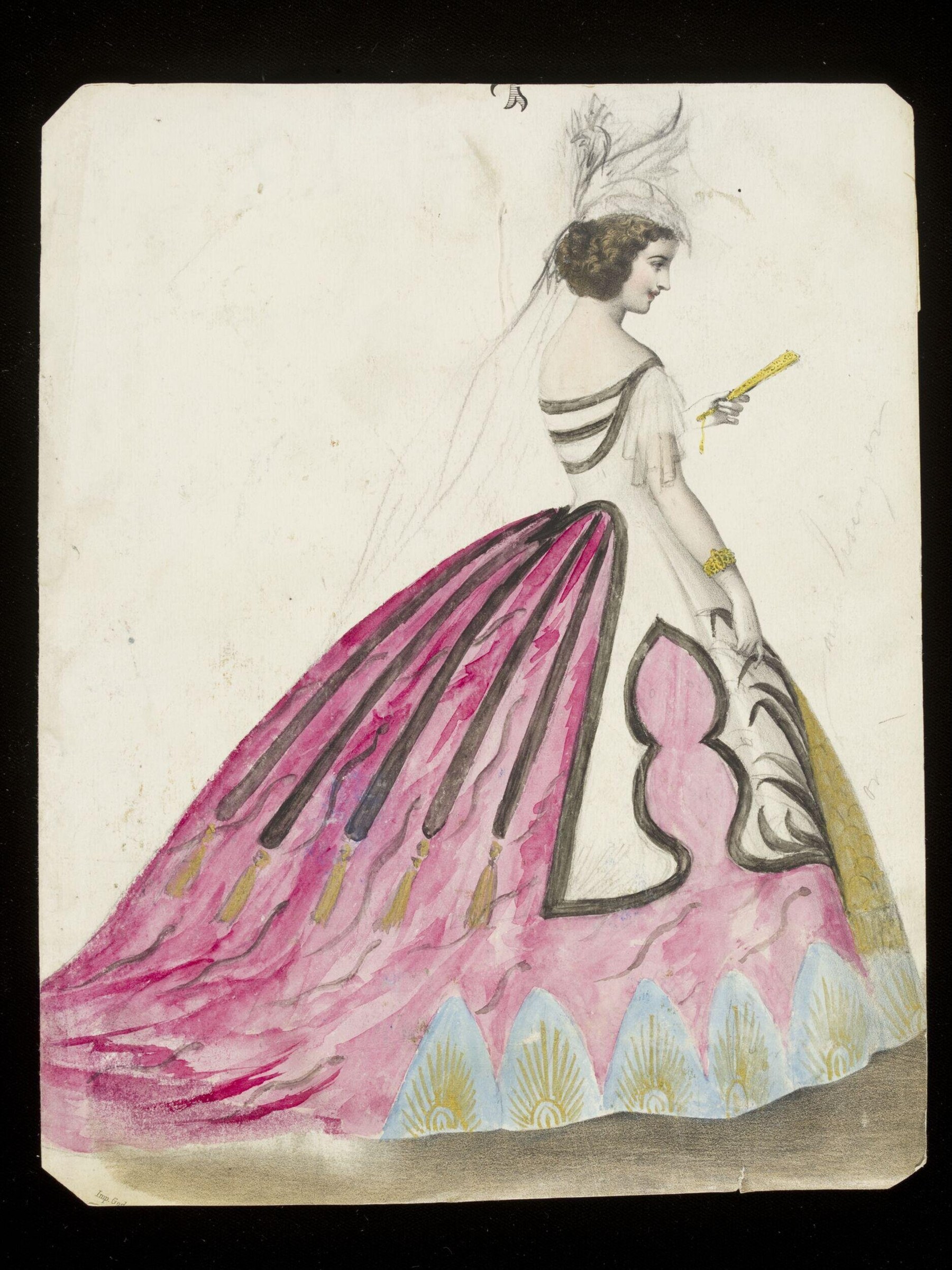
A single figure in profile, shown from approximately the waist up, wears an elaborate costume design for fancy dress or theatrical wear. The upper body is dressed in a white draped garment with black horizontal stripes across the shoulders and chest, fastened with gold ornaments at the wrists. The figure holds a gold scepter or baton in the right hand. The lower half displays an enormous skirt of vivid magenta and deep purple, rendered with bold radiating pleats and stripes that create dramatic volume and movement. The skirt hem is decorated with ornamental blue and gold shell or fan-like motifs. A translucent veil or cape trails from the figure's hair, which is dark and styled close to the head with an ornamental feathered or foliate headdress rising above. The entire figure is set against a plain cream background, with only a thin brown line at the base suggesting ground. The illustration is rendered in watercolor and ink, with careful attention to the interplay of the luxurious fabrics and the theatrical silhouette.
The dancing
A single standing figure shown in strict profile facing right. The posture is upright and frontal despite the profile view, with weight evenly distributed. The right arm is extended downward, holding the scepter with a relaxed grip. The left arm hangs naturally at the side. The body is encased in the costume rather than animated by it; there is no suggestion of active movement, weight shift, or dance steps. The figure's silhouette is architectural—designed to be seen and admired as an ensemble rather than interpreted through the body's gesture.
The dance depicted
This is a costume design rather than a depiction of dance in motion. The theatrical dress—particularly the dramatic skirt volume, ornamental accessories, and pageantry—suggests fancy dress for social dancing, opera, or theatrical spectacle in the nineteenth century. The scepter and formal bearing suggest costume for a character role or allegorical figure rather than a ballroom dancer. The scale and construction of the skirt would accommodate movement, but the static profile view prevents us from seeing how the wearer would actually dance in it. The work documents fashionable dress conventions rather than dancing itself.
How it was made
A hand-tinted watercolor and ink drawing on paper, likely a fashion or costume plate intended for circulation among dressmakers, performers, or patrons of the theater. The artist has used delicate pencil outlines for the figure's profile, precise ink work for the costume details and feathered headdress, and bold watercolor washes for the skirt in magentas and purples, with touches of gold for ornaments. The technique of watercolor over ink allowed for both fine detail and broad areas of saturated color, typical of nineteenth-century costume and theatrical design prints made for professional or commercial use.
About this work
This is a costume design for fancy dress, dated 1860 and attributed to Jules Helleu, showing a single theatrical figure in profile. The work captures the silhouette and ornamental excess of mid-nineteenth-century ball gowns and theatrical costume. While it documents dress rather than depicting dance itself, it belongs in a dance gallery because costume is a primary medium through which dance history is preserved and understood. The theatrical vocabulary—the scepter, the allegorical bearing, the architectural construction—situates this within the world of staged and formal social dance where such elaborate dress was central to the event and the performer's identity.
How to look at it
Observe the construction of the skirt: the bold radiating pleats and stripes create the illusion of enormous volume and would have required a full crinoline cage to achieve. Notice how the costume is designed to be viewed from the front and side simultaneously—the profile pose is a convention of costume design that shows the silhouette without showing the figure moving. The gold scepter and feathered headdress are allegorical attributes, suggesting this is a character or historical role rather than a social dancer. The static profile pose is not a moment frozen in time but a technical presentation, like a museum display, showing the full effect of the garment.
The artist
Jules Helleu (1821–1884) was a French designer and illustrator known for costume and fashion designs, particularly for theatrical productions. He worked during the height of the Second Empire, when Paris was the center of European theater, opera, and fashionable spectacle. His detailed costume drawings circulated among performers and dressmakers, establishing conventions of theatrical dress across Europe.
The period
In 1860, European ballroom dance and theatrical dance were visually defined by elaborate costume and architectural silhouette. The crinoline skirt had reached its maximum fullness around 1860 before beginning to recede toward the bustle. Simultaneously, Romantic ballet, pioneered decades earlier, was codifying a new aesthetic of ethereal, costumed figures. Fancy dress balls were major social events in aristocratic and upper-middle-class circles, where costumed dancing re-enacted theatrical characters and historical roles. Costume design was a specialized profession, and printed designs circulated to performers, dressmakers, and patrons as both practical instruction and fashion propaganda.
Where it lives
The work is held in the Victoria and Albert Museum (indicated by 'va' in the source field). It is part of the museum's extensive collection of costume and theatrical design drawings, which document the professional practices of costume makers and theater designers from the eighteenth century onward.
Dance in this work
Questions about this work
Is this a person dancing or a costume design?
This is a costume design—a visual specification for how a theatrical garment should be made. The figure is posed statically to show the full effect of the costume from multiple viewpoints, not captured mid-dance. The drawing was likely made for practical use by a dressmaker or performer, and for circulation as a fashionable design.
What would someone actually wear under this skirt?
A full crinoline cage—a framework of hoops made of steel or whale bone. In 1860, a full ball gown crinoline could be 4–5 feet in diameter. The wearer would wear multiple petticoats as well. The scepter suggests this is formal or theatrical dress, not everyday wear.
Who was Jules Helleu?
A nineteenth-century French costume and fashion designer who created designs for theater, opera, and high society. His work was circulated widely and influenced how performers and fashionable people dressed. His designs preserve practical and aesthetic conventions of mid-Victorian theater and ball culture.
Could someone actually dance in this dress?
Yes, though with significant constraints. The skirt's volume would swing and create visual effects, but the weight and bulk would prevent rapid movement or intricate footwork. A waltz or slow promenade would be possible; anything more vigorous would be uncomfortable. The dress was designed to look impressive while standing or moving slowly—the visual effect mattered more than freedom of movement.
More dance artwork





