49 works in this view — arrow keys or swipe to move between them.
Dance in Art
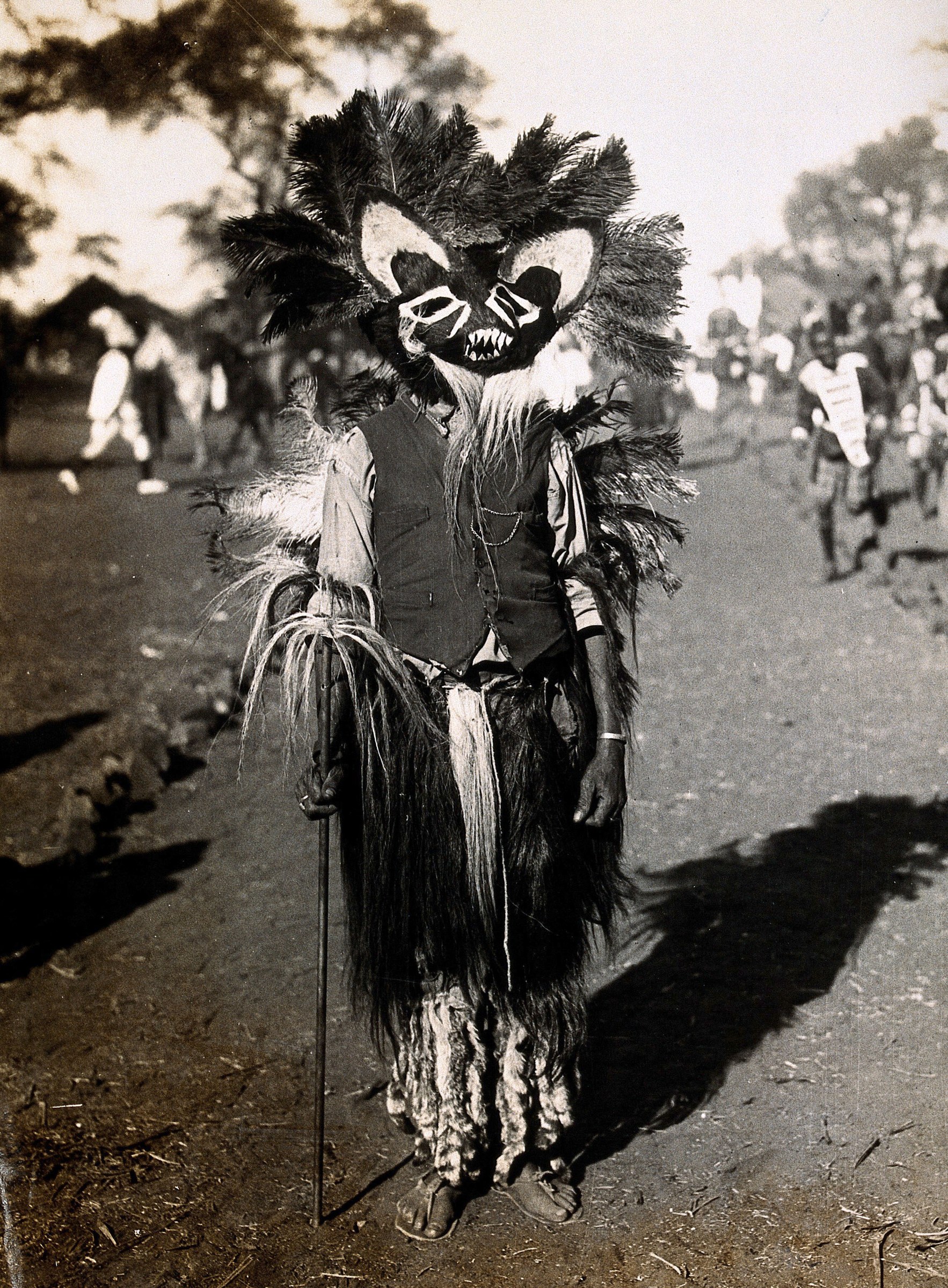
Serowe, Botswana: an African devil dancer wearing a headdress. Albumen print.
Unknown artist
- Source:
- Wellcome Collection
- Rights:
- Public domain — free to use, share and adapt.
- Recorded as:
- Public Domain Mark
For dance historians, this image documents the aesthetic and material sophistication of masked performance traditions that received little serious attention in colonial-era scholarship. The photograph preserves evidence of how costume, mask, and ceremonial presence functioned together in African performance practice—a corrective to the dismissive language ('devil dancer') in which colonial sources recorded indigenous traditions. The albumen medium itself dates the image and situates it within early photography's role in ethnographic collection and circulation.
What you are looking at
A solitary figure stands centered on a dirt road, facing the camera with an arresting presence. The figure wears a striking mask with large round white eyes outlined in black, a grinning skeletal mouth, and elaborate black fur or feathered headdress rising in tufts from the crown—features suggesting both animalistic and supernatural character. The costume comprises layered black and white striped or patterned cloth wrapping the torso, and what appears to be substantial fiber or fur bunching at the hips and legs, creating volume and movement even in stillness. The figure holds a long stick or staff, angled downward in the left hand. Behind, trees and foliage blur into soft focus while spectators in light-colored clothing are visible in the mid-distance, watching. The photograph is printed on albumen stock in sepia tones, and the pose—frontal, commanding, motionless—suggests a moment of display or ceremonial presentation rather than active movement.
The dancing
A single performer dominates the frame, standing upright with weight evenly distributed. The posture is formal and presentational, neither in active movement nor in a recognizable dance hold. The figure is isolated by framing from the watching crowd, emphasizing individual presence rather than interaction. The staff or stick held at an angle suggests potential for percussion, striking, or ritual gesture, though no active motion is captured. The costume's bulk and the rigid frontal pose create a monumental rather than dynamic effect.
The dance depicted
The costume, mask, and setting strongly indicate this is an African masquerade performer, likely from Botswana as the caption states. The term 'devil dancer' in the colonial-era label reflects European terminology for masked spirit figures rather than an indigenous category. Without indigenous documentation, the specific dance style and ritual function cannot be determined from the photograph alone. The performer may be part of a masquerade tradition involving spirit manifestation, fertility, protection, or initiation, common across Southern African cultures. The stillness of the pose and the presence of onlookers suggest this may be a moment of ritual display or greeting rather than the kinetic phase of the performance.
How it was made
An albumen print, identified by its characteristic warm sepia tone and the slight gloss of the surface. Albumen printing (albumen-coated paper) was the dominant photographic printing process from the 1850s through the early 1900s, suggesting this photograph dates from that era or shortly after. The medium implies this was made by a professional or trained photographer—likely a colonial-era missionary, trader, or official documentarian—and was circulated in print form for ethnographic or commercial purposes. The sharpness of detail and the formal composition suggest deliberate studio-like attention to the subject despite the outdoor setting.
About this work
This is a documentary photograph of a masked performer in Serowe, Botswana, captured on albumen-print stock during the colonial era. The figure's elaborate costume—a skeletal mask with white eyes and grinning mouth, combined with a voluminous layered garment of black and white fibers—represents a masquerade tradition tied to spiritual and ceremonial practice. The photograph is valuable not for showing dance in motion but for preserving the visual material culture and ritual aesthetics of a performance tradition that colonial documentation often misnamed and misunderstood. The image sits between ethnographic document, costume record, and performance art, offering evidence of how masked figure traditions functioned in Southern African communities.
How to look at it
Look first at the mask and headdress: the proportions of the eyes, the treatment of the mouth, and the scale and direction of the feathered crown all communicate symbolic meaning to the community for which this figure performed. Notice the costume's construction—the careful wrapping and layering of cloth and fiber creates both visual impact and, likely, controlled sound or rustling movement when the figure dances. The stick or staff in the hand is a material prop to examine: is it a musical instrument, a ritual object, or a tool for managing the figure's own movement or that of onlookers? The photograph's formal frontality and the presence of the watching crowd suggests the photographer caught a moment of ritual greeting or revelation rather than kinetic dance.
The period
This photograph was made during the colonial period in Southern Africa, when Botswana (then the Bechuanaland Protectorate) was under British administration. Early photography in the region was dominated by missionaries, traders, and colonial officials who documented indigenous peoples and practices largely for audiences in Europe or settler colonies. The terminology in the caption—'devil dancer'—reflects colonial-era frameworks that pathologized or exoticized African religious and performance traditions. By the early 20th century, when albumen printing was still in use but declining, masked performance traditions in Southern African communities were already under pressure from colonial prohibition and Christian missionary opposition to 'pagan' rituals.
Where it lives
The image is held in the Wellcome Collection, a London-based repository founded to collect materials on the history of medicine and human experience. This photograph likely entered the collection as part of early 20th-century ethnographic or colonial documentation. The Wellcome's acquisition suggests the image was valued for its documentary or anthropological interest rather than as a record of dance specifically.
Dance in this work
Questions about this work
What does 'devil dancer' mean in the title?
The term reflects colonial-era European vocabulary for African masked figures. 'Devil' was often applied to spirit masks and ritual performers because European observers interpreted the masks through Christian frameworks and did not have access to the indigenous names and meanings of these figures. Modern scholarship avoids this terminology in favor of respectful documentation and translation of local performance categories.
Is this a photograph of dance happening, or of a costume display?
The photograph appears to capture a moment of ritual display or greeting rather than active dance. The figure stands frontal and still, with onlookers gathered. This does not mean the figure was static in performance—masked figures typically move, gesture, and interact during their ritual function—but this particular frame freezes a moment of presentation or pause.
Why is the costume so elaborate?
The mask and layered garment are designed to transform the wearer into a non-human or spirit being, creating both visual impact and psychological distance between the performer and onlookers. The bulk and texture of the costume support the idea that the figure represents something other than ordinary human presence. In many African masquerade traditions, the costume's visual power is inseparable from its spiritual or ceremonial function.
Can we tell what specific tradition this is from?
Not from the photograph alone. While the style and costume suggest Tswana or nearby Southern African masquerade practices, without indigenous documentation or oral history from Serowe, we cannot identify the figure's specific name, ritual role, or the occasions on which it performed. The colonial-era caption provides location but little interpretive context.
More dance artwork





