49 works in this view — arrow keys or swipe to move between them.
Dance in Art
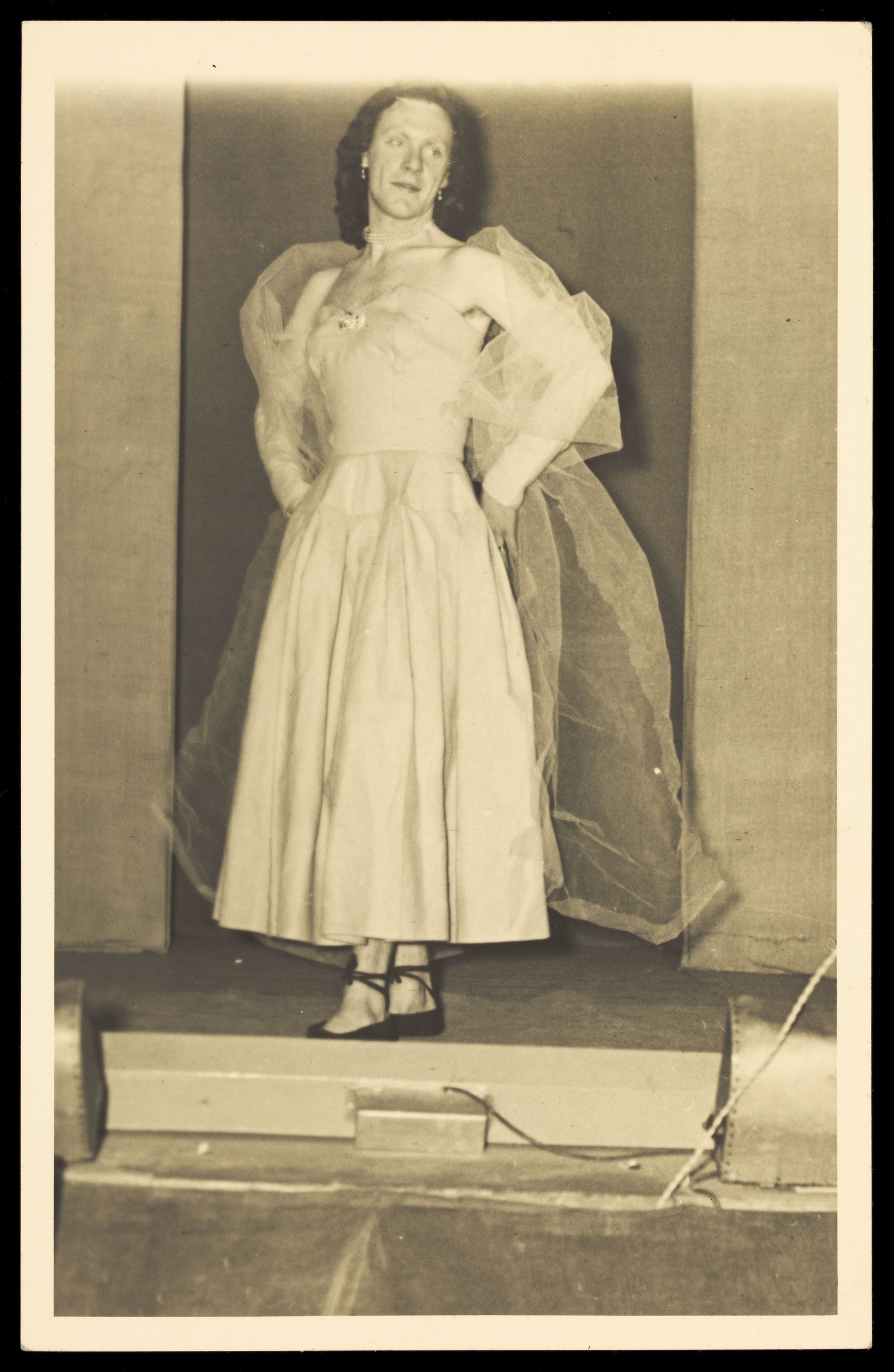
A man in drag standing on a stage. Photographic postcard, 195-.
Unknown artist
- Source:
- Wellcome Collection
- Rights:
- Rights reserved by the holding institution — do not reuse without permission. Source record ↗
- Recorded as:
- In copyright
This postcard is evidence of drag performance as a documented theatrical practice in the early-to-mid twentieth century, and of how performers used printed materials to circulate their image. For historians of performance and queer theatre, it is a concrete example of self-presentation and fan engagement. The image raises questions about the relationship between still photography and performance—how a single pose can stand in for a live act.
What you are looking at
A single figure stands on a low wooden stage against a plain backdrop, posed in a formal three-quarter stance. The person wears a pale cream or ivory floor-length dress with a fitted bodice and full skirt, paired with dark T-strap shoes. The dress sleeves are notably voluminous, gathered at the shoulders and upper arms in the exaggerated style of the 1890s–1940s. A gauzy or translucent wrap or shawl drapes across the shoulders and back, creating an impression of theatrical costume. The figure's posture is deliberate and composed—weight balanced, one hand placed on the hip, the other at the side—suggesting a performer awaiting entrance or holding a set position. The photograph is sepia-toned and slightly faded, characteristic of studio photography from the mid-twentieth century. The stage is minimal and the setting utterly plain, implying this is a documentation shot rather than a performance photograph.
The dancing
The single performer stands in a neutral, upright position with weight evenly distributed. The posture is neither dynamic nor relaxed—instead formal and restrained, as if the figure is being examined or presented. The arms hang naturally at the sides with one hand resting on the hip, a gesture of presentation rather than active dance movement. The skirt falls straight from the waist, showing no evidence of spin or movement. The expression is composed and directed forward. There is no partner, no interaction, no apparent narrative—just a figure in costume, stationary and still.
The dance depicted
This image most likely documents a performer in drag—a person presenting in women's dress on stage—but it does not depict active dance movement or a recognizable dance style. The costume and pose suggest theatrical performance, possibly cabaret, vaudeville, or experimental theatre from the early-to-mid twentieth century. The voluminous sleeves and sheer wrap are consistent with stage drag performance rather than a specific dance form. Without evidence of footwork, hold, frame, or movement, no particular dance style can be identified. The image may belong to a documentary or archival record of performance practice rather than to dance proper.
How it was made
This is a black-and-white photographic postcard, a common format for theatrical documentation and fan distribution from the 1930s–1950s. The sepia tone and soft focus are typical of studio photography from this period. Postcards served as affordable, portable records of performers and productions, circulating among audiences and within theatre archives. The plain backdrop and frontal pose suggest this was a standard studio portrait session, taken for publicity or documentation purposes. The format implies this performer had sufficient profile to merit a printed postcard—a form of celebrity circulation that was inexpensive to produce and distribute.
About this work
This is a studio photograph of a performer in drag, captured on a theatrical postcard from approximately the 1950s. The image documents costume, posture, and presentation rather than dance movement; it is a static portrait of a figure in stage dress. The work belongs in a gallery of dance in art because drag performance has a deep and complex history within dance, theatre, and queer cultural practice, and because the photograph itself is an artifact of how performance was documented, circulated, and consumed. It is a record of mid-century theatrical culture and performer presentation.
How to look at it
Attend to the costume details—the exaggerated sleeve volume, the sheer wrap, the precision of the pose—all of which signal a constructed, theatrical presentation. Note the neutrality of the backdrop and the frontality of the stance: this is documentation, not a moment of action. Look at the shoes and posture to understand how the performer inhabited the costume. The sepia tone and slight fading tell you this is a reproduction or original print that has aged, placing it firmly in the early-to-mid twentieth century.
The artist
The photographer is unknown. The postcard format and sepia printing indicate this was produced by a professional studio, likely one specializing in theatrical portraiture. Such studios were standard fixtures in theatre districts and served performers across music, dance, vaudeville, and drag performance.
The period
Drag performance flourished in twentieth-century theatre, cabarets, and vaudeville circuits, existing alongside—and sometimes within—dance performance. The 1930s–1950s saw a robust culture of theatrical postcards, which functioned as affordable publicity and memorabilia. The voluminous sleeves visible in this photograph are consistent with late 1930s–1940s fashion and stage costume design. The format and quality suggest this was a commercial product created for distribution and sale, reflecting the economic infrastructure of mid-century popular performance.
Where it lives
The photograph is held by the Wellcome Library and is catalogued as a photographic postcard from approximately 1950. It is part of a collection of theatrical and performance documentation.
Questions about this work
Is this a photograph of a dancer?
No active dance movement is visible in the image. The figure is posed statically on a stage, presented in costume for the camera. This is a portrait of a performer in drag, not a document of dance itself. However, drag has significant historical overlap with dance and theatrical performance, and this postcard is an artifact of early-to-mid twentieth-century performance culture.
What is the date of this photograph?
The catalogue record gives approximately 1950. The styling, costume details, and printing technique are consistent with late 1930s–1950s theatrical portraiture, though the exact date is not documented.
Why is this in a dance gallery?
Drag performance has deep historical and cultural connections to dance, theatre, and embodied artistic practice. This postcard documents performance presentation and self-representation, and belongs in a broader conversation about how the body is used, photographed, and circulated in theatrical contexts. It is also evidence of how performance was documented and consumed in the twentieth century.
More dance artwork





