49 works in this view — arrow keys or swipe to move between them.
Dance in Art
The Minuet
Unknown artist
- Collection:
- Prints & Photographs
- Source:
- Library of Congress
- Rights:
- Rights vary by item — check the source record before reusing this image. Source record ↗
- Recorded as:
- Library of Congress — no known restrictions (verify per item)
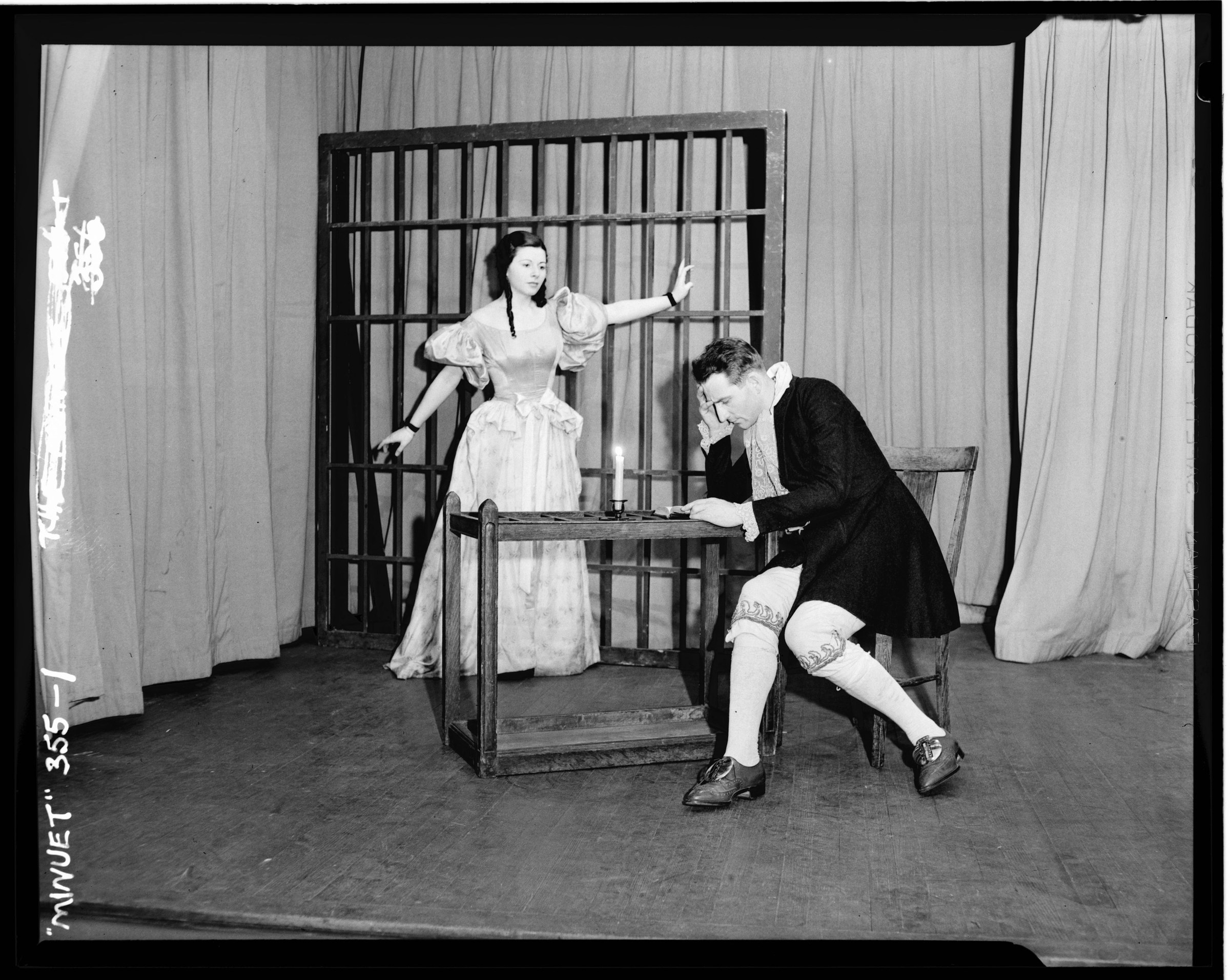
The photograph complicates the relationship between dance, theatre, and costume history: it is *about* the minuet culturally and aesthetically, yet it does not show minuet technique. For historians of dance in performance and theatrical representation, it documents how minuet imagery functioned as shorthand for formality, courtship, and dramatic tension in early twentieth-century theatre.
What you are looking at
A theatrical scene depicts two figures in a formal eighteenth-century setting. A woman in a white dress with full skirts and puffed sleeves stands in an animated pose within a large black barred enclosure—a prison or cage set piece that dominates the composition. She gestures expressively with her right arm extended, her body angled as if mid-speech or entreaty. A man in dark formal dress sits outside the cage on a simple wooden chair, leaning forward intently toward the woman, his posture one of attention and perhaps concern. The setting is sparse: draped curtains frame the scene on both sides, and the floor is bare. The lighting is bright and even, typical of stage lighting, which casts sharp shadows and emphasizes the theatrical framing. The props and poses suggest a narrative moment—possibly a scene of separation, confinement, or emotional confrontation.
The dancing
The woman's stance is upright and mobile, with her weight forward and her arms free to gesture. Her raised right arm and open posture convey urgency or appeal. The man sits with his legs extended, one foot forward, his upper body inclined toward her in a posture of listening or response. Both figures face each other across the barrier of the cage, their relative positions suggesting dialogue and emotional engagement rather than a formal dance hold. Neither figure displays the turned-out legs, lifted port de bras, or sustained line characteristic of ballet technique.
The dance depicted
While titled *The Minuet*, this image does not depict the minuet—a stately, formal couple dance of the baroque and classical periods. Instead, it shows a dramatic or comedic theatrical scene, likely from a play or opera, in which minuet *costume* and *setting* are used but the action is narrative rather than choreographic. The woman's expressive gesture and the cage suggest a scene of emotional drama or operatic theatricality. The work may document a theatrical production in which a minuet *scene* appears, or it may be a satirical or comedic reference to minuet culture; without additional context, the narrative content cannot be determined.
How it was made
This is a black and white photograph, judging from the grayscale tones, photographic detail, and even lighting typical of mid-twentieth-century stage photography. The medium suggests this is documentation of a live theatrical production or staged photograph made for publicity or archival purposes. The photograph captures a single moment under stage lights, freezing a gesture and pose that would unfold in real time in performance. The clarity and composition imply professional theatrical photography rather than a snapshot.
About this work
This 1934 photograph documents a theatrical scene titled *The Minuet*, though the action shown is not the dance itself but a dramatic moment within a theatrical production in period costume and setting. A woman and man in eighteenth-century dress are separated by a cage or prison set, their poses suggesting emotional engagement and dialogue. The work sits at the intersection of theatre history, dance-adjacent performance culture, and the documentary tradition of stage photography. It records both the material fact of a production—the costume, set, and acting—and the cultural association of minuet imagery with aristocratic courtship and confinement narratives.
How to look at it
Attend to the cage as the central visual and narrative element: it is not a ballroom or garden but a space of confinement, which reframes the minuet from social pleasure to dramatic tension. Notice the woman's gesture—raised, urgent, expressive—which signals acting and emotion rather than the controlled, symmetrical port de bras of formal dance. The man's seated position and forward lean suggest he is a witness or respondent rather than a dance partner. The photograph captures not a dance step but a theatrical moment that *uses* minuet costume and setting to create meaning.
The period
By 1934, the minuet had been out of active dance practice for over a century but remained a potent symbol of aristocratic manners and ancien régime courtship in theatre, literature, and visual culture. Early twentieth-century theatrical productions frequently incorporated historical costume and reference without historical fidelity, using period dress as a visual marker of formality, romantic drama, or satire. The 1930s saw widespread use of stage photography for publicity and archival documentation, creating a rich record of theatrical productions now inaccessible except through photographs.
Where it lives
The photograph is held by the Library of Congress Prints & Photographs division, catalogued from a source identified as LOC (Library of Congress). It is one of numerous theatrical photographs documenting stage productions and performance culture of the twentieth century.
Questions about this work
Is this a photograph of people actually dancing the minuet?
No. Although titled *The Minuet*, the image shows a theatrical scene—a dramatic moment between two figures in period costume separated by a cage set piece. The woman's expressive gesture and the man's attentive seated posture indicate acting and dialogue, not dance technique or partner work.
What production is this from?
The catalogue record does not identify the theatrical production, playwright, or company. The photograph is dated 1934 but provides no additional source information. Further research would be needed to identify the specific play or opera.
What does the cage represent?
The cage or barred enclosure is a set piece that suggests confinement, imprisonment, or separation. Its presence reframes minuet imagery—typically associated with courtship and social pleasure—within a narrative of restraint or drama.
More dance artwork





