49 works in this view — arrow keys or swipe to move between them.
Dance in Art
Decorating the Hall the Night Before the Dance
Unknown artist
- Collection:
- Prints & Photographs
- Source:
- Library of Congress
- Rights:
- Rights vary by item — check the source record before reusing this image. Source record ↗
- Recorded as:
- Library of Congress — no known restrictions (verify per item)
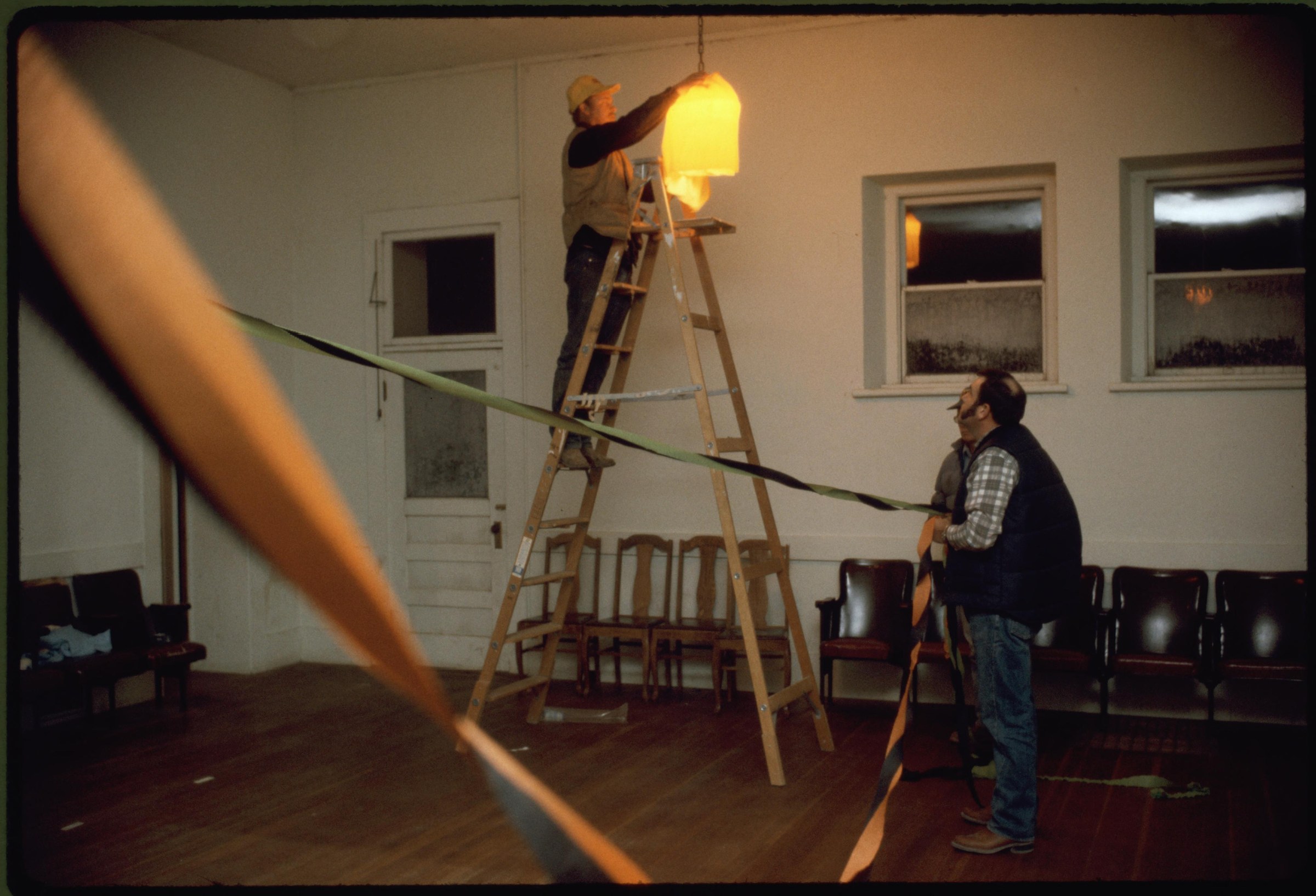
The image is a reminder that dance exists not only as movement or performance but as a social event that requires planning, preparation, and communal labor. For dance historians and cultural researchers, it documents the material conditions under which social dancing happened in American communities in the late 1970s—the types of spaces used, the care taken in preparation, and the collaborative effort involved.
What you are looking at
A man stands on a tall wooden ladder in an institutional interior, reaching upward to adjust or install a large yellow pendant lamp. Below him, a second man in a checkered shirt and vest stands on the wooden floor, watching and apparently assisting or supervising the work. The room has plain white walls, a dark wood floor, and several tall windows with light frames. Wooden chairs are stacked or arranged along the right side of the image. A rope or cable runs diagonally across the composition from the ladder toward the lower right, creating a strong compositional line. The photograph, shot in color, captures the scene with warm interior lighting that emphasizes the glow of the lamp and the amber tones of the wood.
The dancing
Two figures are present but neither is dancing. The man on the ladder reaches vertically upward with one arm extended, his body balanced on the ladder rungs, his posture functional and practical rather than graceful. The man below stands with relaxed attention, his weight evenly distributed, his arms at his sides or slightly bent. Both wear casual work clothing—the standing man in particular wears a checkered shirt and dark vest, suggesting manual labor or maintenance work rather than any dance costume.
The dance depicted
This image does not depict dance. It shows two men performing a practical maintenance task—installing or adjusting lighting in what appears to be a social or community hall. The title references preparation for a dance event, but the photograph itself captures only the preparatory labor, not any dancing or choreographed movement.
How it was made
This is a color photograph, most likely a slide or transparency given the color saturation and the visible color film aesthetic typical of 1979. The warm cast and slight color shift suggest Kodachrome or similar color reversal film. The composition is straightforward documentary photography, with natural interior light supplemented by the bright pendant lamp, creating strong visual interest without manipulation. The format and style suggest this was intended as a record or study image rather than fine art photography.
About this work
This is a documentary photograph of the practical work that precedes social dancing—the decoration and preparation of a hall before a dance event. While the title explicitly situates it in the context of dance culture, the image itself shows only the labor of setup: the installation of lighting, the arrangement of seating, the readying of the space. It is a record of the social infrastructure of dance rather than a representation of dance itself. The photograph belongs in a gallery of dance in art because it documents the often-invisible material and human labor that enables dance events to happen. It captures the night-before moment when a gathering space is transformed from its everyday utility into a venue for social pleasure.
How to look at it
Look at the diagonal line created by the rope or cable—it guides the eye through the composition and connects the two figures across the space, visually linking the worker above with the supervisor below. Notice the warm glow of the lamp, which will be the central visual focus of the decorated hall once the work is complete. Observe the ordinary wooden chairs stacked casually along the wall—these are the stage furniture for the social dance that will happen here tomorrow night. The photograph captures a moment of anticipation and transformation.
The period
Photographs of dance preparation and community social halls reflect the continued importance of public dance venues in American social life during the 1970s. This was an era before the widespread privatization of entertainment and before digital technology reshaped how people gathered for music and dancing. Community halls, church basements, and similar spaces remained central to local social culture. The straightforward documentary style of the photograph is consistent with 1970s American vernacular photography and institutional record-keeping.
Where it lives
This photograph is part of the Library of Congress Prints & Photographs collection, which preserves documentary and vernacular images alongside fine art photographs. The object is catalogued as a photograph from 1979 but carries no recorded artist attribution.
Questions about this work
Why is a photograph of people working in a photograph gallery about dance?
Because dance is not only movement—it is also a social practice that requires spaces, preparation, and community participation. This photograph documents the invisible labor that makes dance events possible. It shows us how a community transforms an ordinary hall into a venue for dancing.
Is this a staged photograph or a candid documentary?
The straightforward composition and functional framing suggest this is documentary photography—a record of actual preparation work rather than a composed artistic image. It has the quality of institutional photography, made to document the condition or activity of the space.
What kind of dance was happening the night after this photo?
The catalogue record does not specify. The wooden chairs and institutional interior suggest this was likely a community social dance—possibly a square dance, contra dance, or general social dancing typical of American community halls in the 1970s. The scale and style of the space indicate a public or semi-public venue rather than a formal theater.
More dance artwork





