49 works in this view — arrow keys or swipe to move between them.
Dance in Art
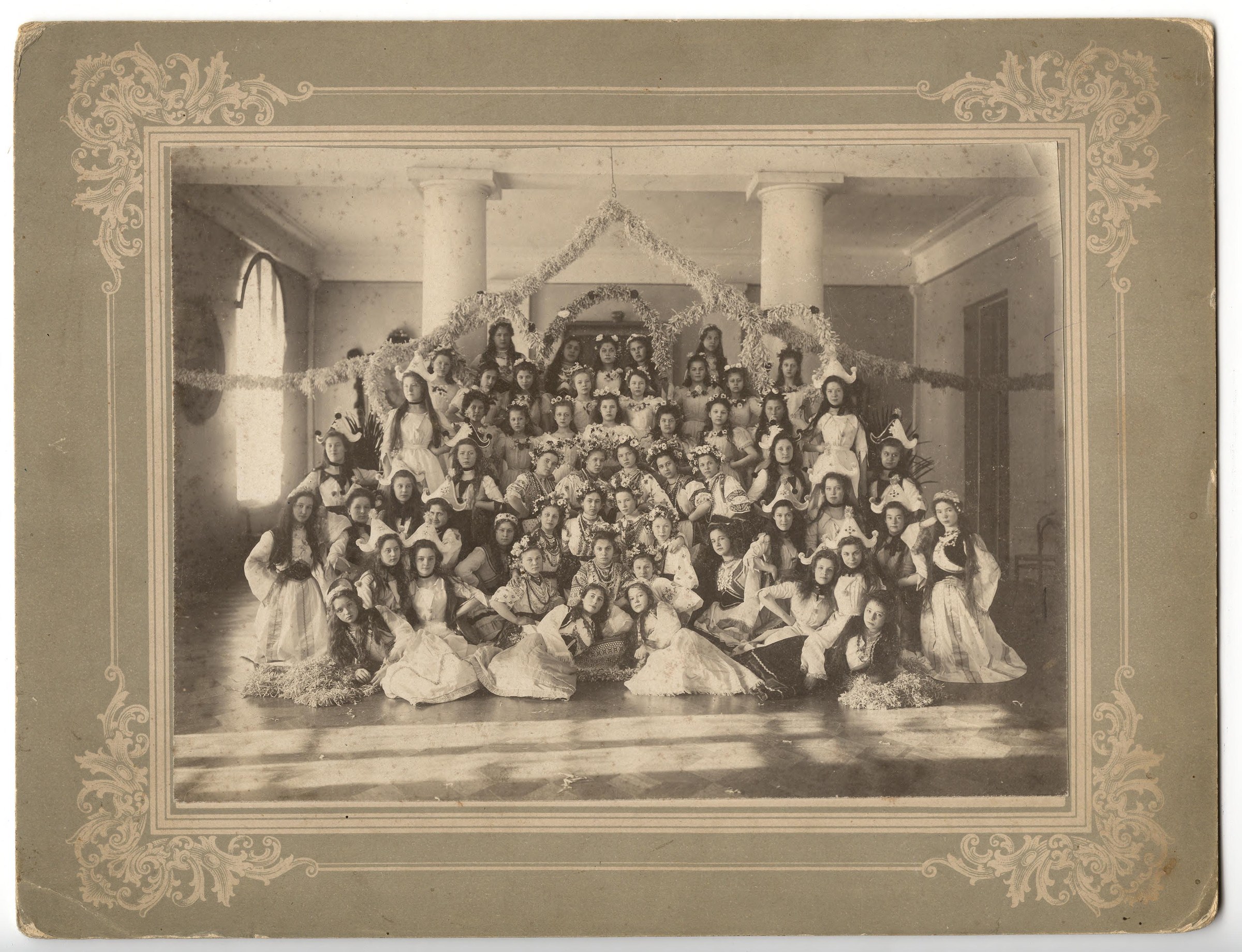
Bal-maskarad v Irkutskom institute blagorodnykh devit︠s︡ imeni Imperatora Nikolai︠a︡ I.
Unknown artist
- Collection:
- Prints & Photographs
- Source:
- Library of Congress
- Rights:
- Rights vary by item — check the source record before reusing this image. Source record ↗
- Recorded as:
- Library of Congress — no known restrictions (verify per item)
This is a rare archival photograph of an institutional ball in Siberia during the imperial period, offering visual evidence of how formal dance and social gatherings functioned in the education of Russian noble women far from Moscow and St. Petersburg. The scale and formality of the event, and the care taken in creating this documentary record, underscore the social and cultural weight placed on such occasions in elite imperial institutions.
What you are looking at
A masquerade ball in a large, high-ceilinged hall lit from tall arched windows. Over eighty figures in white and pale gowns fill the space, many wearing long hair in the fashion of the 1900s. A large decorated structure—possibly a bower or pavilion made of garlands and greenery—dominates the center background, where figures cluster in a rough pyramid formation. The foreground shows dancers scattered across a polished floor in various poses: some seated, some standing, some in pairs or small groups. The lighting from the windows above creates soft shadows across the stone floor. The overall composition suggests a moment of gathering or promenade rather than active dancing—many figures stand still or in contemplative attitudes, creating the theatrical arrangement typical of a formal ball photograph.
The dancing
The figures are distributed across multiple depth planes, creating a tiered, almost sculptural composition rather than a ballroom in motion. Most stand upright in their long gowns with arms at their sides or held loosely; a few seated figures in the foreground appear to rest or observe. The grouping is formal and arranged rather than spontaneous—the pyramid at center and the balanced distribution of standing and seated figures suggests this is a posed photograph meant to show the full assemblage. The positioning of bodies is vertical and static, with no visible partnered holds, arm positions characteristic of specific dances, or weight shifts that would indicate movement.
The dance depicted
This is a ball or formal social dance event at an elite girls' school in Irkutsk. The white gowns, massed gathering, and formal arrangement are consistent with an institutional or ceremonial ball of the Russian imperial period. No specific dance style is visible in individual movement; the photograph captures the assembled participants rather than a moment of choreographed dancing. The masquerade aspect is suggested by the title but not clearly visible in costume detail in this sepia-toned image.
How it was made
This is a sepia-toned photograph, likely printed and hand-mounted or pasted onto a decorated card stock. The ornamental border printed in gold and sepia tones suggests it was produced as a presentation piece—a formal record photograph likely distributed to participants or kept as an institutional archive. The soft focus, indoor artificial or window lighting, and even tonal range are consistent with early 1900s gelatin dry plate or early film photography. The mounting on decorative card indicates this was a valued document, not a casual snapshot.
About this work
A documentary photograph of a masquerade ball held at the Nikolai I Institute for Noble Maidens in Irkutsk in 1902. The image records an institutional social event for an elite girls' school in Siberia, showing the participants in formal dress assembled in a grand hall. It belongs in a dance gallery not because it captures active dancing, but because it documents the social dance culture of imperial Russia and the role of such balls in the education and socialization of privileged young women. The formal arrangement and decorative mounting reveal how important such events were to the school's self-image and to the families of the pupils.
How to look at it
Look first at the composition and staging: the photograph is arranged almost like a theatrical tableau, with the central bower and the tiered distribution of figures creating a composed image rather than a candid moment. Notice the lighting from above, which creates a sense of ceremony and formality. The white gowns dominate the image; look at their silhouettes and the length and fullness typical of early 1900s fashion. The title promises a masquerade, but visual markers of masks or costume disguise are not clearly legible at this resolution and sepia tone—attend instead to the formal arrangement itself as evidence of a curated social ritual.
The period
In the 1900s, masquerade balls and formal social dances were central to the curriculum and calendar of elite imperial Russian schools, particularly institutions for noble girls. Such events served social and educative functions—teaching deportment, social hierarchy, and courtship protocols. The Nikolai I Institute for Noble Maidens was one of the most prestigious schools for daughters of the aristocracy and gentry, and its balls would have been significant social occasions in Irkutsk society. The formal documentation of the event through professional photography reflects both the Edwardian era's embrace of photography as a record-keeping tool and the importance of these institutional ceremonies. This falls in the twilight years of imperial Russia, before the revolutions of 1917.
Where it lives
Held in the Prints & Photographs collection of the Library of Congress. The item's decorative presentation card suggests it was produced in limited quantity for institutional or family distribution, likely an official record of the school's ball.
Dance in this work
Questions about this work
Where is the Nikolai I Institute for Noble Maidens?
It was located in Irkutsk, a major city in Siberia. Irkutsk was far from the imperial capital Moscow and St. Petersburg but was an important administrative and cultural center due to its role in Russian expansion into Siberia.
What was a masquerade ball in an imperial Russian school?
A formal social dance event, typically held at the end of term or on important dates in the school calendar, where pupils (and sometimes invited guests from aristocratic families) danced and socialized under strict supervision. The masquerade aspect meant some costume or mask, though the visual evidence in this photograph is minimal.
Why is everyone in white?
White was the standard dress for young unmarried women of the nobility at formal social events in this era. The color signaled youth, status, and marriageability. School uniforms and ball gowns were typically white or very pale.
Can you tell what dances were performed?
Not from this photograph. The image captures the assembled participants before, after, or during a pause in dancing, not active movement. At an imperial Russian ball of this date, the dances would have likely included waltzes, quadrilles, and mazurkas, but no specific steps or formations are visible here.
More dance artwork





