49 works in this view — arrow keys or swipe to move between them.
Dance in Art
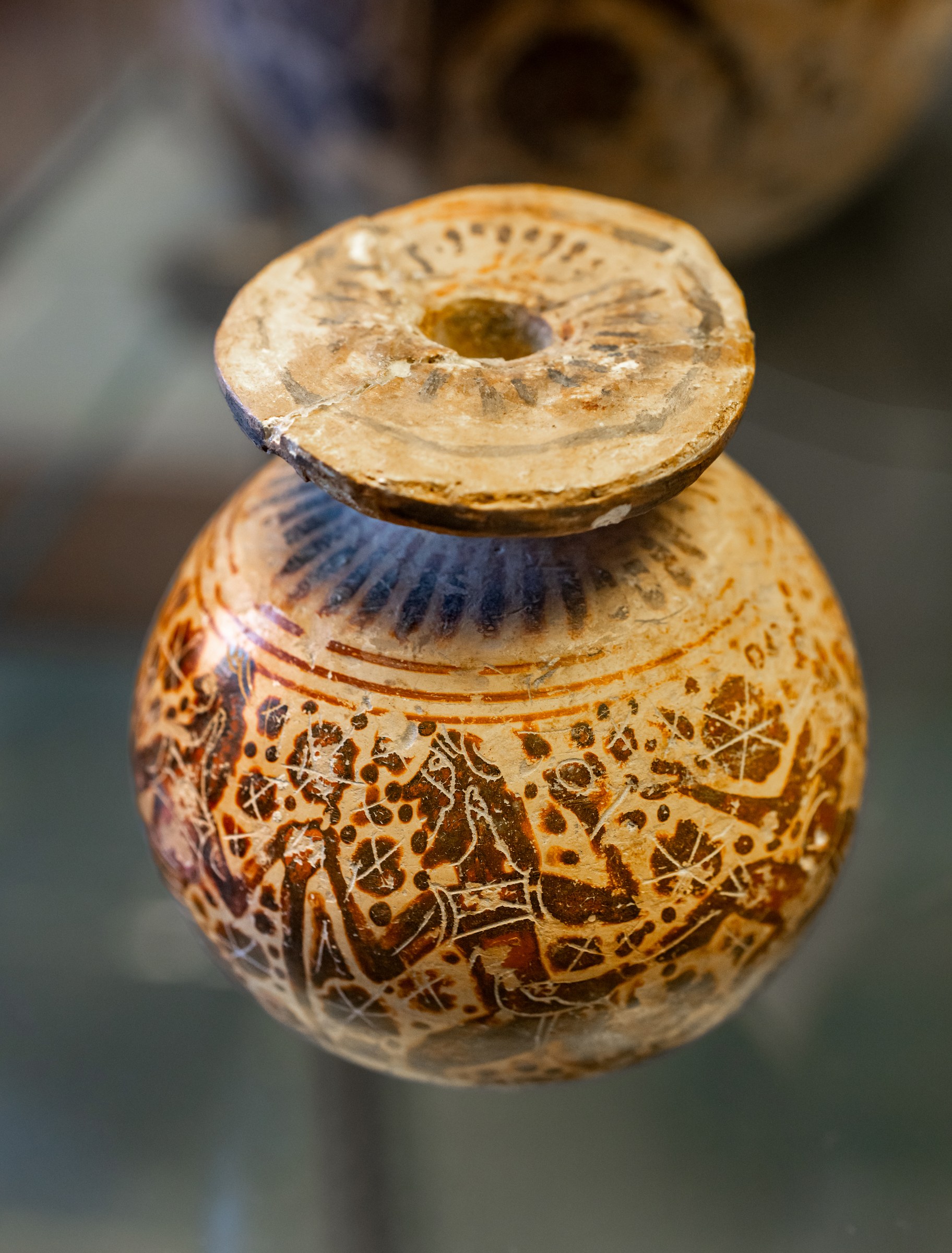
Warrior group - CVPAP 99 16 - padded dancers - Tarquinia MAN RC 3500
ArchaiOptix
- Source:
- Wikimedia Commons
- Rights:
- Reusable with conditions: credit the creator; share any adaptation under the same license. Source record ↗
- Recorded as:
- cc by-sa 4.0
Depictions of ancient Greek dance on decorated pottery are rare and fragmentary; this vessel captures a specific costume and movement vocabulary that might otherwise leave no trace. The padded garments and dynamic postures offer physical evidence of what ancient performance looked like, independent of literary sources or later idealizing depictions. The fact that such performance was commemorated on an exported luxury vessel confirms its cultural prestige in the ancient Mediterranean.
What you are looking at
A small ceramic vessel (aryballos) with a bulbous body and a flat, flared rim, shown against a blurred background suggesting a museum or archaeological setting. The surface is decorated with incised and painted figures in the black-figure technique characteristic of Corinthian pottery. The central band of decoration depicts padded figures in dynamic postures—their bodies thickened with protective padding, suggesting athletic or performance dress. The figures appear to be in motion, their limbs extended, possibly in a moment of combat, acrobatic play, or ritual dance. The surface shows the warm cream and rust tones of ancient clay, with darker pigmentation defining the figures and a deliberate pattern of linear marks around the vessel's widest point.
The dancing
The padded figures wear what appear to be thick, quilted garments that create pronounced outlines around their torsos and limbs—distinctive costume that would have offered protection or signaled performance status. At least two figures are visible in contrasting poses: bodies are bent, twisted, or angled to suggest vigorous movement. The proportions are deliberately stylized rather than naturalistic, emphasizing the geometric rhythm of the composition. The figures' limbs extend broadly into the available space, showing no restraint of frame or closed positioning; movement is expansive and unconfined.
The dance depicted
The catalogue identifies these as padded dancers, and the costume is unambiguous: the thick, segmented padding visible around the bodies is consistent with athletic or performance dress worn by acrobats, wrestlers, or participants in ecstatic rituals in ancient Corinth and Ionia. Whether this depicts a specific dance form or a more general category of padded performance is unclear from the image alone—the postures suggest vigorous, possibly acrobatic movement rather than the measured, geometric patterns of formal court dance. The figures may represent kordax, a Greek theatrical form known for energetic, exaggerated movement, or a related ritual performance. Without inscriptions or more detailed anatomical clarity, the exact dance tradition cannot be named with confidence.
How it was made
This is a Corinthian aryballos (small round perfume or oil vessel) made in clay and decorated in the black-figure technique, where figures and patterns are rendered in dark pigment against the natural clay ground. The technique required incising details into the applied slip and painting with a carbon-based pigment—a laborious process suited to small, precious objects. Black-figure pottery from Corinth, produced between roughly 625 and 550 BCE, was among the most widely exported Greek ceramics, circulating throughout the Mediterranean and into Etruscan territories (as this example's findspot at Tarquinia confirms). The technique's bold graphic quality and durable pigment made these vessels suitable for both use and display, lending them the authority of craft mastery.
About this work
This is a fragmentary witness to ancient Greek performance culture, preserved in clay. The aryballos is a luxury item—small enough to hold in the hand, finely decorated—that circulated as trade goods and prestige objects across the Mediterranean around 600 BCE. The padded figures incised into its surface are not incidental decoration but evidence of a living performance tradition, one that was popular enough and distinctive enough to justify depiction on a costly vessel. The Warrior Group attribution indicates this was the work of a recognizable hand or workshop, one with enough status to attract collection interest even when unsigned. For dancers and historians, the image documents a moment when padded athletic performance was considered worthy of permanent material culture—a claim worth making only about culturally significant practice.
How to look at it
Focus on the padded silhouettes: the thick, quilted outlines around the torsos and limbs are the key diagnostic feature. These are not natural body shapes but protective or ceremonial dress, thickened deliberately to create visual impact. Notice how the figures' poses contradict any sense of static display—the bent knees, extended arms, and angled torsos suggest the moment of maximum exertion or acrobatic engagement. The black-figure technique relies entirely on silhouette and incised line, so the painter had to convey motion and costume through shape and gesture alone. The composition places the figures at the vessel's widest point, where they command maximum visual presence, suggesting the painter understood their importance to the object's meaning.
The artist
The Warrior Group is an unattributed collective of Corinthian black-figure potters active in the Middle Corinthian period (ca. 600–575 BCE), named by modern scholarship for their preference for martial and athletic subjects. Individual painters cannot be securely identified, but their work shows consistent technical competence, bold figure design, and subject matter drawn from performance, athletics, and ritual. The group's output circulated widely, including to Etruscan territories, where local taste and collecting practices helped preserve and concentrate their work.
The period
In the early Archaic period, Corinthian pottery workshops dominated Mediterranean trade and set aesthetic standards for Greek ceramics. The late seventh and early sixth centuries saw intense cultural exchange between Greek poleis and foreign centers, particularly Etruscan Italy. Performance culture in this era was flourishing: athletic games, dramatic performances, and ritual dances were expanding in visibility and prestige. Padded dancers and acrobats appear in Corinthian pottery as a distinctive category, separate from depictions of formal, draped figures. The investment in depicting such performers on valuable vessels suggests they held recognized status—professional or semi-professional entertainers with a visible place in public culture.
Where it lives
This aryballos is held in the Museo Archeologico Nazionale at Tarquinia, Italy (RC 3500), where it was recovered during excavation. Tarquinia was a major Etruscan center, and Corinthian vessels were imported there in quantity during the Archaic period, suggesting both aesthetic appeal and possibly trade or diplomatic relationships. The object's current location in an Italian museum reflects both its ancient circulation routes and modern excavation and collection history.
Dance in this work
Questions about this work
What is an aryballos and why is it so small?
An aryballos is a compact ceramic vessel designed to hold costly liquids—perfumed oils, unguents, or precious balms. Its small size, rounded body, and narrow opening helped preserve contents and made it portable, valuable, and suited to trade. The fine decoration on this example suggests it was a luxury item, not everyday domestic pottery.
How do we know these figures are dancers and not wrestlers or athletes?
The padded costume is the decisive clue. The thick, segmented padding around the body is consistent with protective gear for performance or ritual, distinct from athletic armor or wrestling costume. The dynamic, acrobatic postures and the deliberate artistic attention to the figures suggest performance rather than combat. However, the specific dance tradition cannot be named with certainty from the image alone.
Why was this made in Corinth and found in Italy?
Corinthian pottery was the most widely exported Greek ceramic ware in the Archaic period, distributed throughout the Mediterranean, including to Etruscan Italy. This vessel may have been traded as a commodity, given as a gift, or acquired by Etruscan collectors attracted to Corinthian style and craftsmanship. Its presence at Tarquinia reflects both ancient trade networks and the status of Corinthian work abroad.
What is the Warrior Group and why is the painter unattributed?
The Warrior Group is a modern scholarly collective name for a workshop or group of closely related Corinthian potters whose work shares consistent style, technical skill, and subject matter. Ancient potters rarely signed their work, and when they did, attributions were often lost. Modern scholars use stylistic analysis to identify hands and workshops posthumously.
More dance artwork





