Performer · Choreographer · Popularizer · Stage Icon
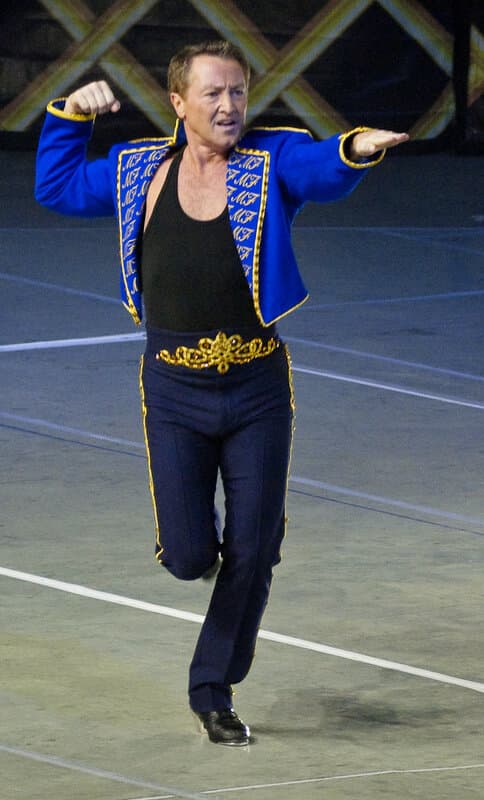
Michael Flatley
Lord of the Dance
Why They Matter
He single-handedly transformed Irish step dance from a niche cultural tradition into a global entertainment phenomenon, inspiring an entire generation to take up Irish dancing.
Known For
Styles Michael Flatley shaped
Each one links to the style’s own page — its origins, music, tempo and video.
Watch
Riverdance — the original 1994 Eurovision interval performance
The seven-minute act with Jean Butler that turned Irish step dance into a global sensation.
Feet of Flames — the Flatley solo
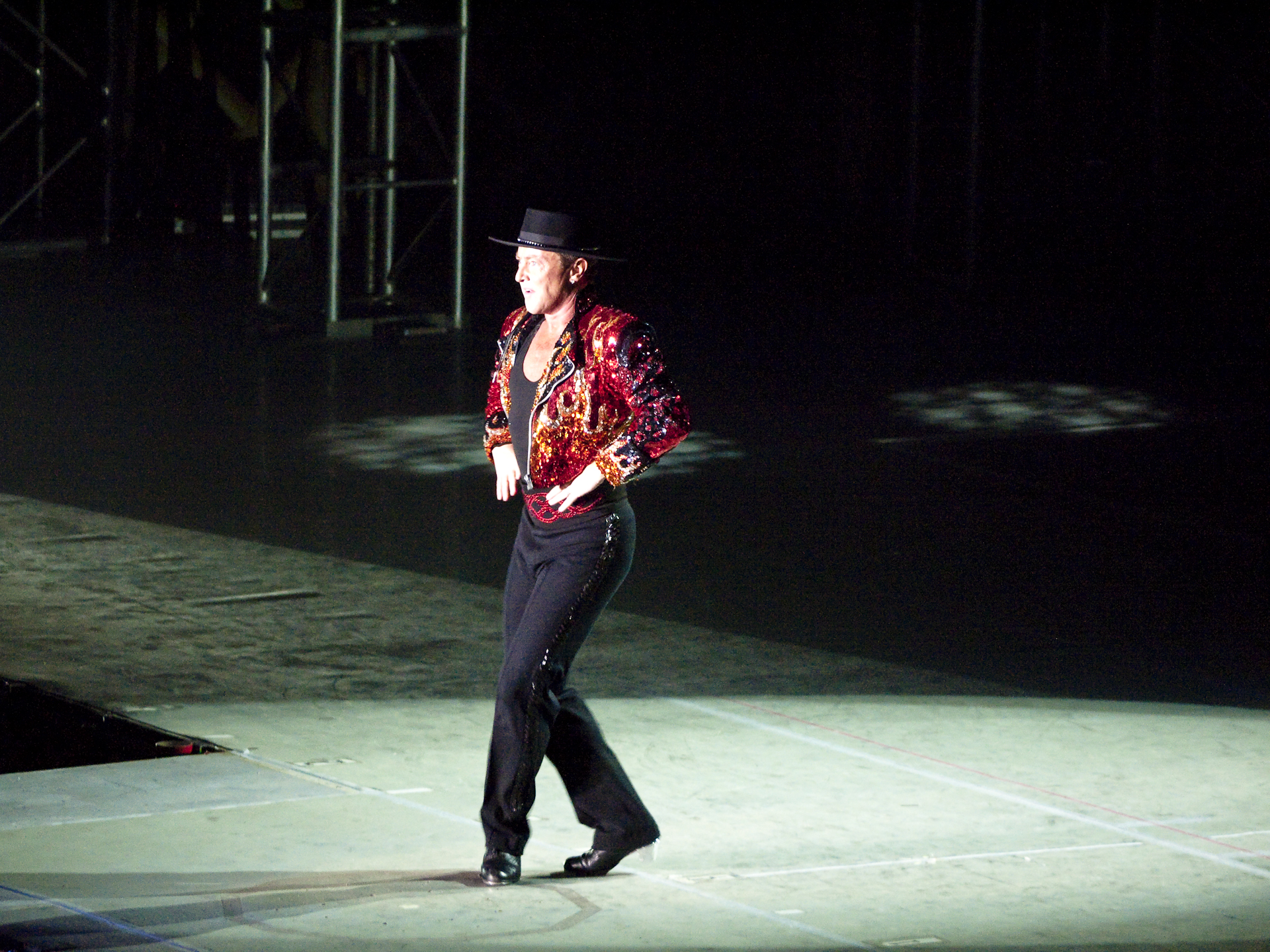
A concentrated view of his virtuoso hard-shoe solo language and stage persona (an edited supercut of the Feet of Flames material).
Lord of the Dance: Planet Ireland
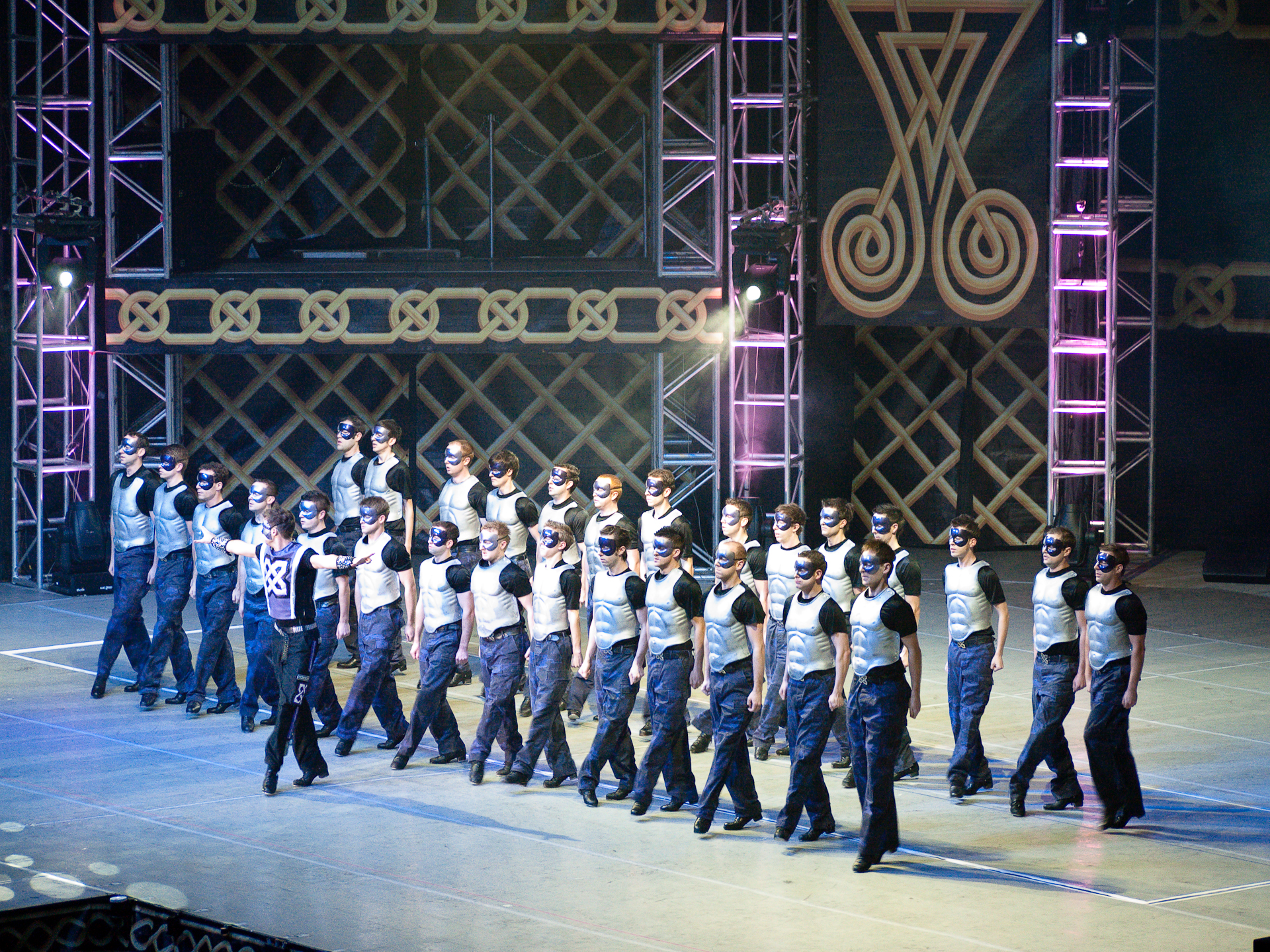
The production’s arena-scale finale grammar — star entrance, massed unison, and climactic tapping across many casts.
Lord of the Dance: Warlords
The muscular male-ensemble vocabulary and rhythmic architecture of one of the show’s foundational numbers.
Celtic Tiger: Yankee Doodle Dancer
Character-led hard-shoe dance framed by historical narrative — Flatley’s use of persona and theatrical staging.
Michael Flatley's Lord of the Dance: Cry of the Celts -- the Supercut
Michael Flatley's Lord of the Dance
Useful for studying how an opening number establishes character, world and ensemble hierarchy.
Michael Flatley's Feet of Flames: The Impossible Tour -- Planet Ireland
Michael Flatley's Lord of the Dance
Long-form evidence of Flatley's large-scale production authorship and the way a soloist is framed by a massed cast.
Biography
Michael Ryan Flatley was born in Chicago on July 16, 1958, and grew up in an Irish immigrant family with roots in County Sligo. He learned the rudiments of Irish step dance from his mother, and when he sought formal training at eleven he was considered a late starter — so he turned the family garage into a practice space, drilling the basic vocabulary while beginning to invent steps of his own.
Competition proved him early: at seventeen he became the first American to win the world Irish-dancing title. He was also an accomplished concert flautist and amateur boxer, and an invitation to tour with the traditional-music ensemble The Chieftains during the 1980s placed his dancing before international audiences. In 1988 the U.S. National Endowment for the Arts named him a National Heritage Fellow for Irish-American step dance — recognition that predated his mass-media fame.
His breakthrough came at the Eurovision Song Contest in Dublin on April 30, 1994, when Flatley and Jean Butler led the seven-minute Riverdance interval performance to Bill Whelan’s score. Its speed, scale and confident theatricality made an immediate cultural impression and helped inspire a new generation of Irish dancers, growing into the full-length Riverdance stage production in 1995. That early work was deeply collaborative — producer Moya Doherty, director John McColgan, composer Bill Whelan, Jean Butler and a large ensemble were all essential to it.
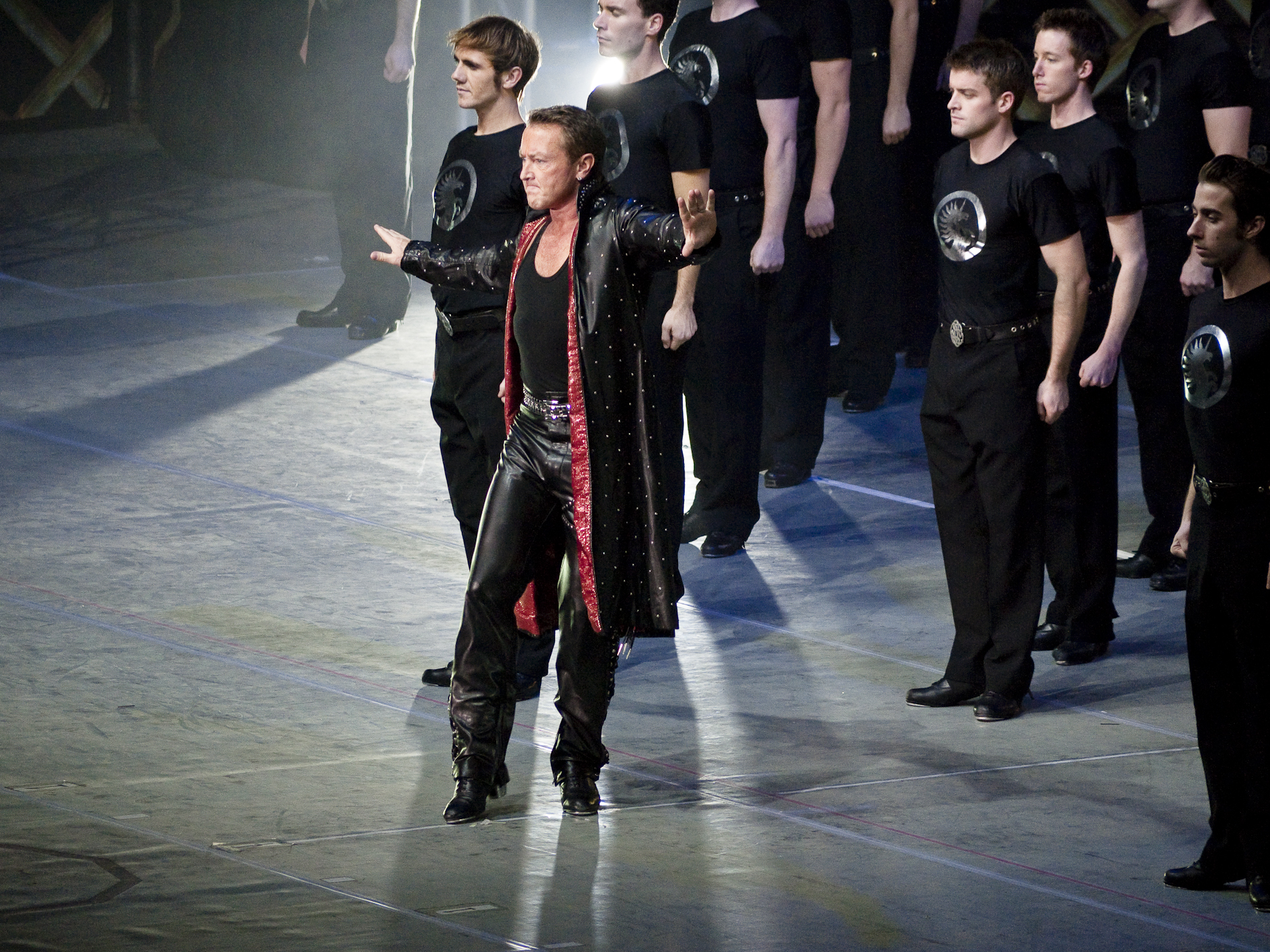
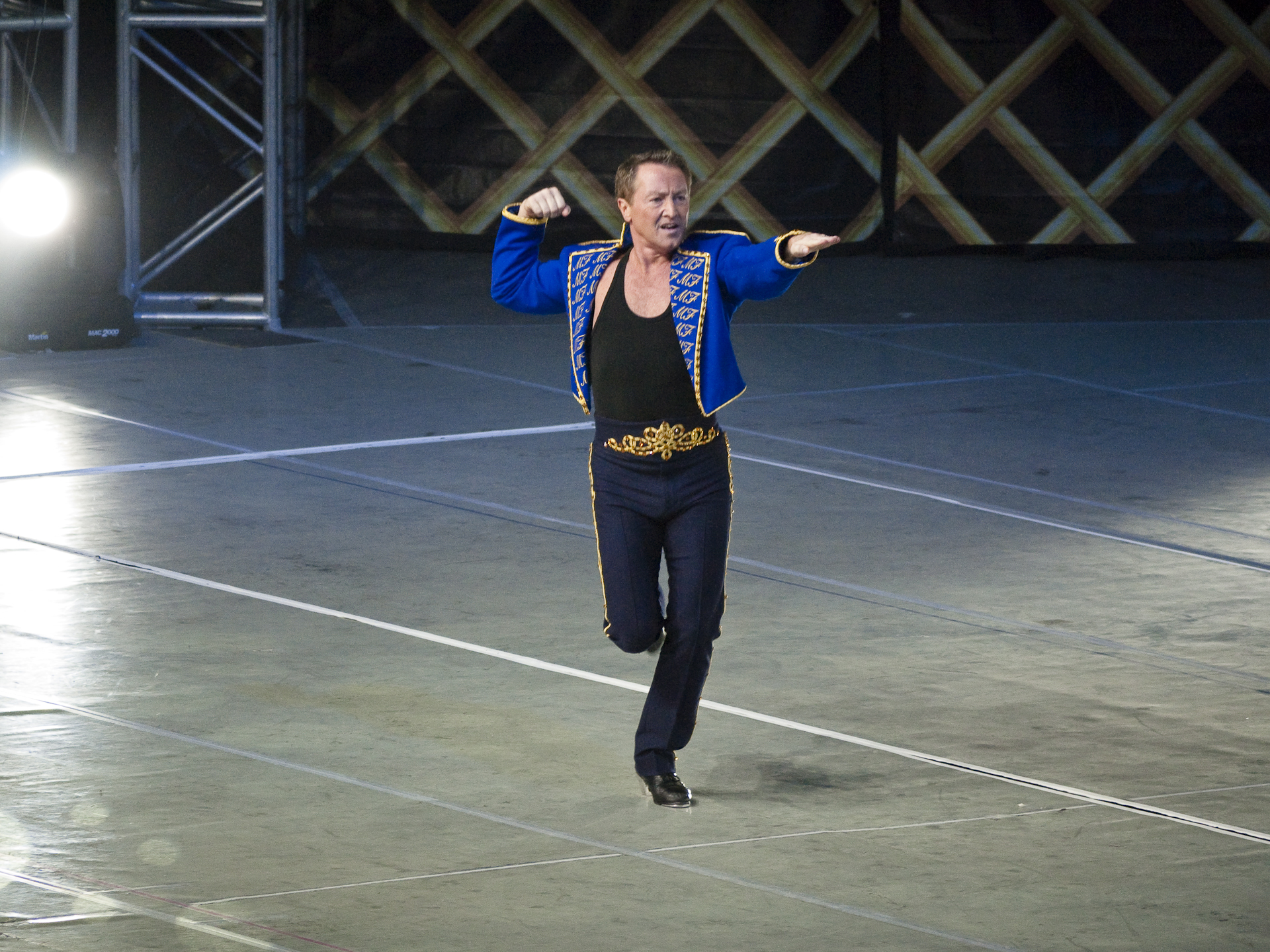
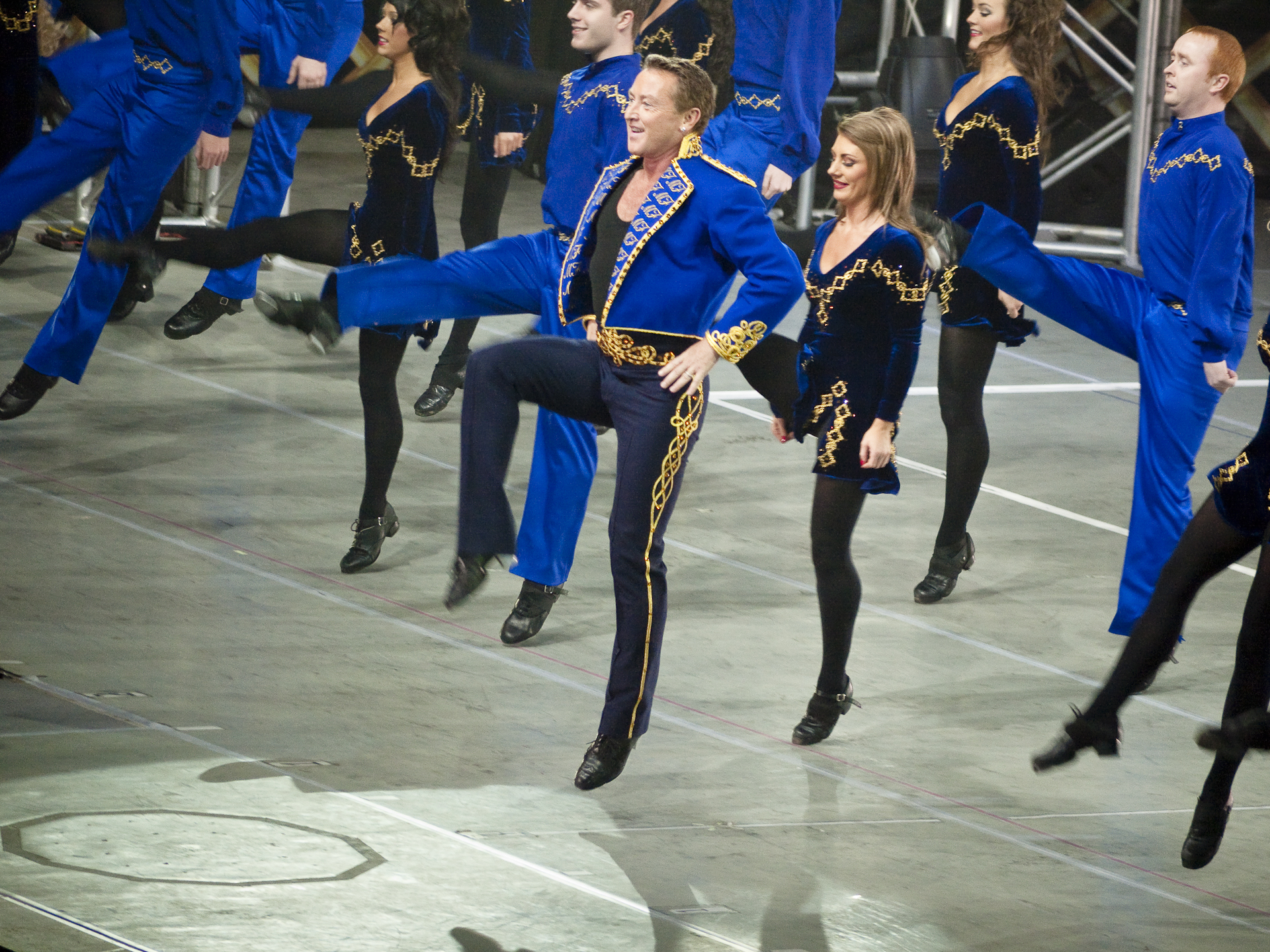
After a creative-control dispute, Flatley left Riverdance in 1995 and built a production under his own name. Michael Flatley’s Lord of the Dance premiered at Dublin’s Point Theatre on July 2, 1996; its mythic good-versus-evil story, solo hero, massed unison ensembles and arena-ready scale established a durable model. The show played thirteen consecutive sold-out performances at Radio City Music Hall in 1997, and in July 1998 Feet of Flames expanded the concept for an outdoor Hyde Park staging.
He continued to fuse Irish dance, historical narrative and popular spectacle — Celtic Tiger (2005) reached Madison Square Garden, and Lord of the Dance: Dangerous Games (2014) played the London Palladium and beyond. His final stage appearance as a dancer came at Caesars Palace in Las Vegas in March 2016; since then he has continued as producer, director and public face of the franchise while successive casts perform the works. A flautist as well as a dancer, he released the album On a Different Note in 2011.
Career Highlights
At seventeen, became the first American to win the world Irish-dancing title.
Named a National Heritage Fellow by the U.S. National Endowment for the Arts. NEA citation
Led the original seven-minute Riverdance interval act with Jean Butler at Eurovision in Dublin. watch the 1994 performance
Michael Flatley’s Lord of the Dance premiered at Dublin’s Point Theatre.
Lord of the Dance played thirteen consecutive sold-out shows at Radio City Music Hall.
Feet of Flames staged in London’s Hyde Park, enlarging the concept for an outdoor spectacle.
Celtic Tiger premiered and reached Madison Square Garden.
Released the flute album On a Different Note.
Lord of the Dance: Dangerous Games premiered at the London Palladium.
Made his final stage appearance as a dancer, at Caesars Palace, Las Vegas.
Gallery
Works
One stage work credited to Michael Flatley.
- Lord of the Dance (1996)Musical theatre · Choreographer
Credits sourced from Wikidata (CC0), one citation per field. Works without a recorded premiere date are listed last. Titles link to the work in Limelight.
Follow & Links
Legacy & Impact
Michael Flatley matters because he joined elite competitive Irish-dance technique to the scale, character and audience address of popular theatre. The 1994 Riverdance interval act supplied the catalytic mass-media moment; Lord of the Dance then proved that an Irish-dance-centered production could run as a long-running international spectacle with multiple casts. He widened the imaginable career path for a generation of Irish dancers and permanently changed the public image of the form — a singular star and production entrepreneur whose work nonetheless depended on composers, producers, directors and large ensembles.


Explore More Legends
Discover the dancers, teachers, choreographers, and cultural icons who shaped how the world moves.
Keep the thread going
Dance history, technique, and the occasional rabbit hole — in your inbox. Thoughtful, infrequent, unsubscribe anytime.
Free. No spam. One click to leave.