Dance in Film · 2006
Hula Girls (2006)
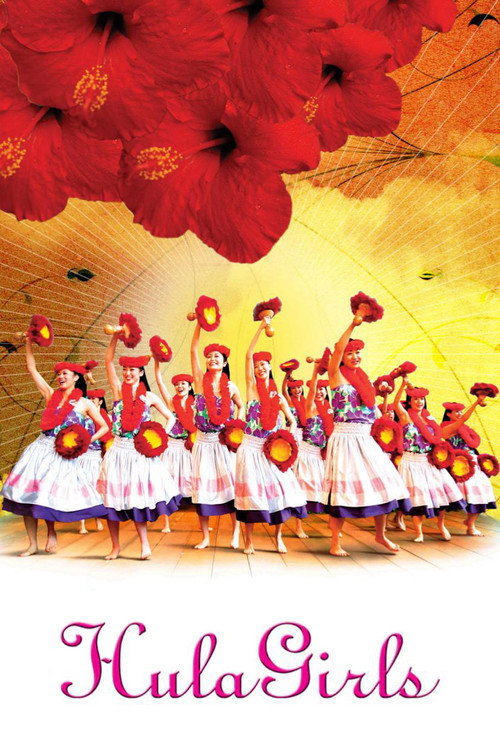
Coal-mining daughters move from stiff first lessons to a resort-opening Polynesian revue. Kaleinani Hayakawa's choreography makes hula gesture, ensemble timing, and Kimiko's explosive Tahitian solo the engine of communal change.
Hula Girls is a 2006 dance feature film centred on Global Pacific Islands & Oceania. For dancers, it's a chance to see the style performed on screen — the phrasing, partnering, and musicality that the same dances carry onto a real floor.
Jump to the 6 indexed dance sequences ↓
Dance styles featured
Where to watch: GAGA maintains a 4K-remastered rights/catalog page; Netflix reports the title unavailable in the current U.S. region and Plex lists no viewing locations, checked 2026-08-08.
The dance sequences in Hula Girls
6 sequences — what is danced, by whom, and where to find it.
Joban Hawaiian Center opening: 'Blue Hawaii' ensemble
HulaDanced by Yū Aoi; Shizuyo Yamasaki; Shoko Ikezu; Eri Tokunaga; ensemble · Choreography Kaleinani Hayakawa
Flower-laden dancers filling the new resort stage as the mining town finally sees the project succeed.
The opening performance pays off the training arc through shared rhythm and a stage picture large enough to hold the whole community. Calm hula phrasing and synchronized arms replace the early tour's uncertainty, while the audience's response completes the dance's civic purpose.
Not currently available to stream; timestamp is for reference.
Kimiko's climactic Tahitian dance solo
Tahitian Dance (Aparima, 'Otea)Danced by Yū Aoi · Choreography Kaleinani Hayakawa
Kimiko in white driving through the rapid solo, rising from a deep backward fall, then smiling through tears at the finish.
Kimiko's faster Tahitian solo changes the finale's energy from flowing ensemble storytelling to athletic attack. Turns, sharply accented hips, and a dramatic floor-level recovery concentrate the entire training journey into one performer before emotion breaks through her final pose.
Not currently available to stream; timestamp is for reference.
Kimiko's solo studio rehearsal witnessed by Chiyo
HulaDanced by Yū Aoi · Choreography Kaleinani Hayakawa
Chiyo silently discovering how completely her daughter has committed to the dance.
Kimiko dances without explanation while her mother watches, letting acquired control and persistence answer months of opposition. The scene strips away costume and audience so improvement reads through concentration, weight shifts, and sustained gesture alone.
Not currently available to stream; timestamp is for reference.
Madoka's first studio demonstration
HulaDanced by Yasuko Matsuyuki · Choreography Kaleinani Hayakawa
Madoka dancing almost unaccompanied in a red skirt while the novice recruits stare from the edge of the wooden studio.
Madoka's solo establishes authority before she says much as a teacher: calm control, coordinated hips and hands, and the sweep of her red skirt turn a dusty practice room into a stage. The recruits' stillness around her makes the gap between demonstration and imitation immediately legible.
Not currently available to stream; timestamp is for reference.
Publicity tour's difficult first performance
HulaDanced by Yū Aoi; Shizuyo Yamasaki; Shoko Ikezu; Eri Tokunaga; ensemble · Choreography Kaleinani Hayakawa
A novice troupe trying to hold the routine together as mistakes multiply and the promotional audience disengages.
The rough performance exposes the craft that rehearsal has not yet stabilized: timing, spacing, and confidence break under an indifferent audience. Its failure gives the later unison real dramatic weight because the troupe must learn to recover together rather than simply acquire steps.
Not currently available to stream; timestamp is for reference.
Train-platform hula message: 'To You Sweetheart, Aloha'
HulaDanced by Yū Aoi; Hula Girls ensemble · Choreography Kaleinani Hayakawa
The students signing their farewell through hula until their teacher leaves the train and returns to them.
Kimiko replaces argument with hula's narrative hand gestures, directing the meaning of the song toward Madoka through the train window. The ensemble joins her, turning learned vocabulary into a collective plea and making dance function as language rather than spectacle.
Not currently available to stream; timestamp is for reference.
More dance films
Poster artwork from TMDB.
 This site uses TMDB and the TMDB APIs but is not endorsed, certified, or otherwise approved by TMDB.