Dance in Film · 1929
St. Louis Blues (1929)
Inside a 1929 rooming house and nightclub, couples answer Bessie Smith’s blues with close, weighted slow drag while Jimmy Mordecai’s sharper solo break turns the bar into a compact record of early Black social dance.
St. Louis Blues is a 1929 dance film centred on Blues & Slow Social Dance. For dancers, it's a chance to see the style performed on screen — the phrasing, partnering, and musicality that the same dances carry onto a real floor.
Jump to the 3 indexed dance sequences ↓
Dance styles featured
Where to watch: Free full-film copy on YouTube and PeriscopeFilm compilation on Internet Archive (verified 2026-08-12).
The dance sequences in St. Louis Blues
3 sequences, 3 with a timestamp — what is danced, by whom, and where to find it.
Danced by Jimmy Mordecai; Isabelle Washington
The couple barely traveling as their bodies carry the rhythm inside the cramped room.
The close-in, nearly stationary partnering makes pulse and weight more important than travel. The cramped room turns slow drag into intimate social evidence rather than a staged showcase.
Watch this sequence · The full film is on YouTube; the link opens at this sequence.
- 00:11:11
Nightclub dance break and Jimmy Mordecai solo
Danced by Jimmy Mordecai
Jimmy taking the center of the nightclub as the crowd’s attention pivots toward him.
The Library of Congress identifies Jimmy’s dance, and the PeriscopeFilm edition marks his move to center stage at this point. The solo interrupts the room’s collective energy with a concentrated individual turn, but the available sources do not name its style.
Watch this sequence · Stream or rental only — the timestamp is for when you have it playing.
Danced by Bessie Smith; Jimmy Mordecai
Bessie and Jimmy moving together while he quietly reaches for her bankroll.
The close embrace and unhurried weight shifts let the musical phrase ride through contact rather than steps designed for display. That restraint holds tenderness and unease in the same image as the story turns.
Watch this sequence · The full film is on YouTube; the link opens at this sequence.
More dance films
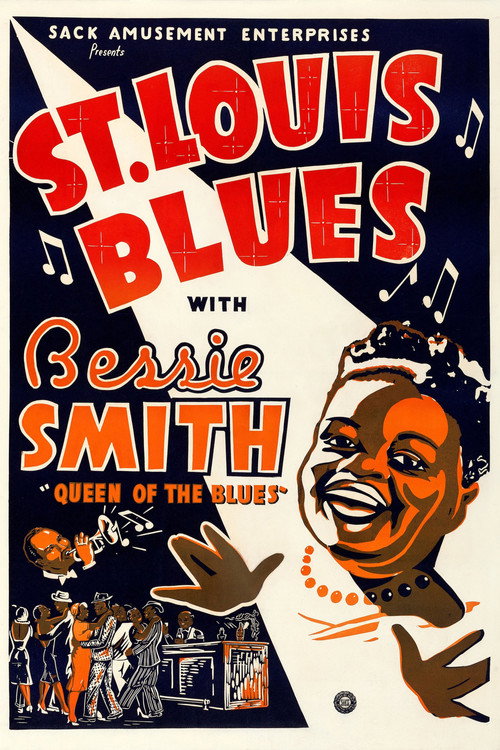
Poster artwork from TMDB.
 This site uses TMDB and the TMDB APIs but is not endorsed, certified, or otherwise approved by TMDB.