Blues & Slow Social Dance
Blues and slow social dance is the family of Black American vernacular partner dances that grew up alongside blues music in juke joints, rent parties and ballrooms — grounded, improvised, close-embrace forms now carried largely by a modern revival scene.
5 dance styles in this genre
Historical Origins
These dances took shape among Black Americans after Emancipation, in the barrelhouses of sawmill and turpentine camps and in the juke joints that spread across the rural South in the early twentieth century. The word juke traces through Gullah joog to the Wolof dzug, to misconduct oneself. The slow drag was already current by the late 1800s; Zora Neale Hurston gave juke culture its first formal anthropological description in 1934, and W. C. Handy documented dancers' response to blues around 1905-1914. The Great Migration carried the idiom north into rent parties, storefronts and ballrooms.
Cultural Significance
Under Jim Crow, the juke joint was one of the few secular spaces Black Americans owned and controlled, and the dancing done there was a claim to pleasure, privacy and self-determination that segregation otherwise denied. Paul Oliver described such venues as a final bastion for Black people seeking refuge from racial pressure. Steps were named, traded and refined inside those communities rather than codified by schools, so the repertoire carried social meaning: who you danced close with, and how, communicated status and relationship. White critics who encountered the forms on stage read them as scandalous, a misreading the dances have never entirely escaped.
Musical Characteristics
The genre spans the whole blues field: Delta and country blues, Piedmont fingerpicking from the Atlantic coast through Appalachia, Texas and West Coast shuffles, electrified Chicago blues, and the slow numbers big bands played between swing tunes. Twelve-bar form, blue notes and call-and-response are constants, as is a shuffle feel that splits the beat into triplets. Handy deliberately worked habanera figures into his compositions to heighten dancers' response. Tempos run from crawling drags under 60 BPM to strutting Delta numbers past 130, and dancers read the rhythm section rather than a fixed count.
Core Movement Principles
Weight stays low through bent, springy knees, with the body grounded into the floor rather than lifted away from it. Movement is polycentric and polyrhythmic — hips, ribcage, shoulders and feet can each answer a different layer of the music — and asymmetry is expected rather than corrected. A continuous pulse runs through the body and through the connection to a partner. Improvisation is the organising principle: there is no pattern vocabulary to execute, only a shared aesthetic within which individual style is developed by watching, absorbing and answering. Call and response operates between partners and between dancer and band.
Modern Usage
The current scene grew out of late-night rooms at Lindy Hop exchanges in the late 1990s and 2000s, which became standalone blues weekends, classes and festivals across North America and Europe; a fusion offshoot split away in the same period. That scene is overwhelmingly white, and the gap is openly contested rather than settled. Grey Armstrong has asked where the Black elders of a supposedly historical dance are, and argued that a dominant culture's assumptions shape the dancing, the clothes and the contest results. Damon Stone frames the distinction as appreciation meaning you come to learn and give back, appropriation meaning you come to sample and alter.
Dance Styles
Ballroomin' Blues
Also known as: Ballroomin', Ballroom Blues, Ballrooming
The upright, traveling branch of blues dance, developed in Northern ballrooms where floor space allowed couples to move along the line of dance to slow jazz-blues.
Juke Joint Blues
Also known as: Jukin', Jookin', Juke Blues
The grounded, close, largely stationary branch of blues dance, shaped by the crowded floors of Southern juke joints and danced to Delta and electric blues.
Slow Drag
Also known as: Slow Draggin', The Drag, Draggin'
The historic close-embrace blues form in which partners hold each other and sway and grind almost in place, documented in the South from the late nineteenth century.
Struttin' / Fishtail
Also known as: Struttin', The Strut, Fish Tail, Fishtail
A strutting and hip-articulating vocabulary danced solo or in an open close embrace, combining showy forward carriage with figure-eight motion through the pelvis.
Fusion Dance
Also known as: Blues Fusion, Fusion, Fusion Partner Dance
A modern improvised partner dance that grew out of the blues revival, blending techniques from tango, contact improvisation, ballet and street dance to whatever music is played.
Legends of Blues & Slow Social Dance
Dancers, choreographers and teachers whose work shaped the styles in this genre.
Blues & Slow Social Dance on screen
Films and television where blues & slow social dance appears, with the sequences worth watching for.
 High Strung: Free Dance (2018)3 sequences indexedCharlie auditions against the rehearsal · 00:36:18 · chor. Tyce DiorioProduction mechanics technical run · 01:15:32 · chor. Tyce Diorio; Phillip Chbeeb; Myles Thatcher; Nakul Dev MahajanFree Dance curtain-up ensemble · 01:27:02 · chor. Tyce Diorio; Phillip Chbeeb; Myles Thatcher; Nakul Dev Mahajan
 Save the Last Dance (2001)2 sequences indexedBallet and hip-hop practice montage · chor. Fatima RobinsonJuilliard audition · chor. Fatima Robinson
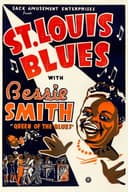 St. Louis Blues (1929)2 sequences indexedBedroom slow drag · 00:03:35Bessie and Jimmy’s nightclub slow drag · 00:12:23
 Step Up (2006)2 sequences indexedTyler and Nora first rehearsal · chor. Anne Fletcher; Rosero McCoy; Jamal Sims; Zachary WoodleeSenior showcase finale · chor. Anne Fletcher; Rosero McCoy; Jamal Sims; Zachary Woodlee
 Take the Lead (2006)2 sequences indexedHip-hop and tango fusion rehearsal · chor. JoAnn Fregalette JansenBallroom competition finale · chor. JoAnn Fregalette Jansen
 The Next Step (2013–2022)2 sequences indexedRepresentative anchor — first A-Troupe dance · chor. Amy Wright (series head choreographer; sequence attribution not verified)Representative anchor — Regionals final · chor. Amy Wright (series head choreographer; sequence attribution not verified)
 Ballet Now (2018)1 sequence indexed1,2,3,4,6 fusion number
 Breakin' (1984)1 sequence indexedStage audition finale
 Flashdance (1983)1 sequence indexedConservatory audition · chor. Jeffrey Hornaday
 High Strung (2016)1 sequence indexedFinal violin-and-dance competition · chor. Dave Scott
Poster artwork from TMDB.
 This site uses TMDB and the TMDB APIs but is not endorsed, certified, or otherwise approved by TMDB.
Blues & Slow Social Dance FAQs
Blues & Slow Social Dance in art
Browse the gallery →Works our catalogue identifies as depicting blues & slow social dance.
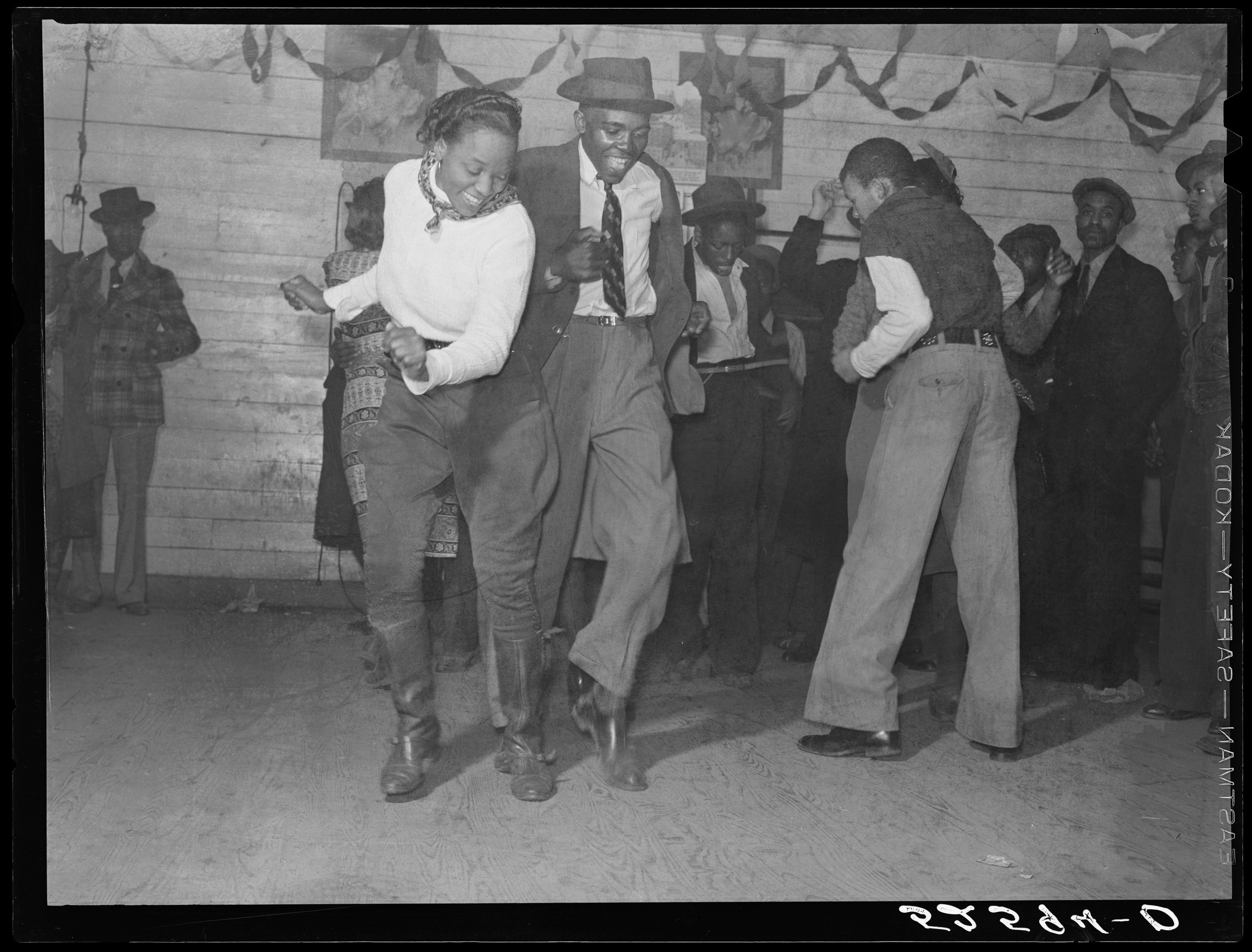
Jitterbug Wolcott FSA
Marion Post Wolcott
public_domain