Joop van Bilsen / Anefo · CC0
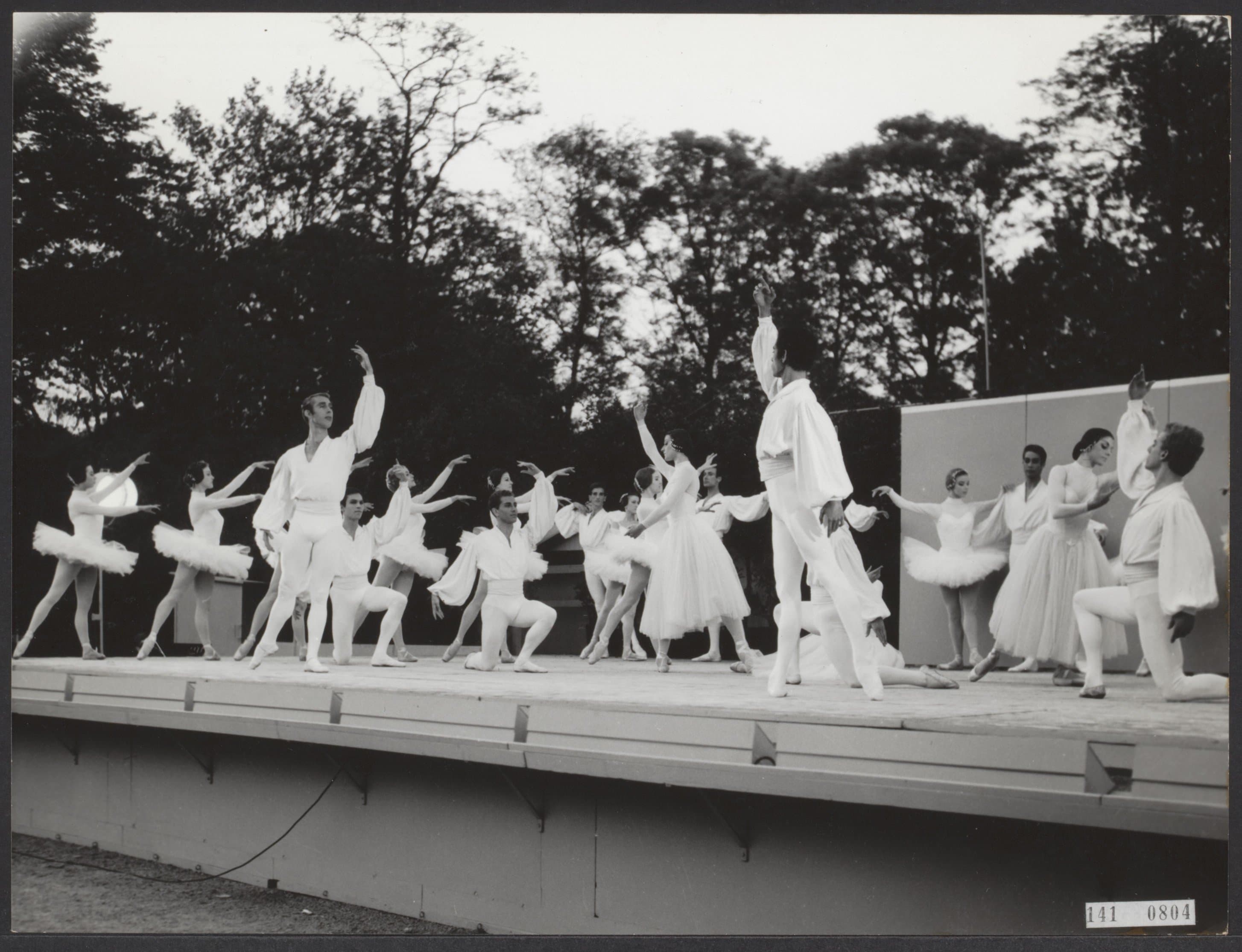
Suite en Blanc is a plotless suite ballet made by Serge Lifar for the Paris Opera Ballet, set to music drawn from Édouard Lalo's earlier ballet Namouna rather than to a newly composed score. The article records its first performance on 19 June 1943 in Zurich, during the German Occupation of France, and describes it as an abstract neo-classical work built around white costuming, a design choice that gave the piece its original title.
What it contains
- Neoclassical Ballet · the whole ballet — A plotless suite of pure-dance movements built on classical ballet technique, explicitly characterised as abstract and neo-classical rather than narrative or character-based. Source: "It was an abstract neo-classical ballet produced during the German Occupation of France."
What is danced
The article's only direct statement about the choreography is that it is 'an abstract neo-classical ballet' — that is, plotless, organised as a suite of dance movements rather than a narrative, and built on classical ballet technique rather than character or folk idiom. Because the piece has no story, the article gives no scene-by-scene breakdown, and no synopsis or numbers list is provided in the source, so nothing further about specific variations, ensembles or named divertissements can be drawn from it.
Context
The article situates the work's creation squarely within the German Occupation of France (1943), noting that this was a plotless, abstract neoclassical piece rather than a topical or narrative one — a detail worth registering for anyone studying how the Paris Opera Ballet's repertoire functioned under Occupation-era conditions. Beyond that framing, the article does not discuss the broader ballet landscape of the period or Lifar's other work at the time.
Staging history
The article notes that the piece premiered in Zurich rather than in Paris, and that its costuming changed in subsequent productions: originally all-white, later productions dressed the male dancers in black, prompting the retitling from Suite en Blanc to Noir et Blanc. No further revival history, companies, or restaging dates are given.
How to watch it
Watch for the absence of narrative: the piece is organised as a suite of dance movements rather than a story, so the interest lies in the patterning and classical vocabulary itself rather than in mime or plot. The costume distinction the article flags — white throughout versus white corps with black-clad men — is a visible marker of which production or version is being staged.
Credits
- composer: Edouard Lalo