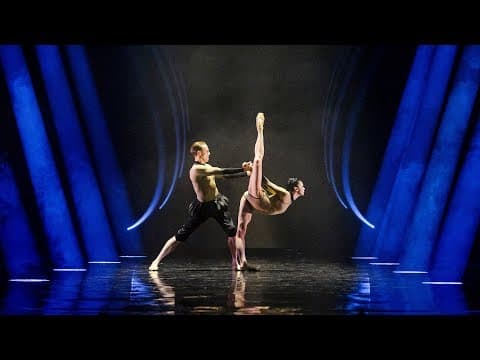
Woolf Works is a full-length contemporary ballet made by Wayne McGregor to a score by Max Richter, drawing on Virginia Woolf's novels, letters, essays and diaries rather than telling a single linear story. It premiered at the Royal Opera House on 11 May 2015 as McGregor's first full-length work for The Royal Ballet, and went on to win the Laurence Olivier Award for Best New Dance Production.
What is danced
The article gives little detail of actual step vocabulary, and only explicitly labels the piece a "contemporary ballet" choreographed by Wayne McGregor — that label, and the fact that it is danced by a classical company (The Royal Ballet, La Scala Theatre Ballet, American Ballet Theatre), is the firmest evidence the source offers about idiom. Beyond that, the notable performance decisions recorded are casting ones with implications for how the movement was built: McGregor deliberately cast Alessandra Ferri, then 52, believing her age suited the central role, which points to a work built around mature, expressive presence rather than pure youthful virtuosity in at least one act.
The three acts are organised around named sections — "I now, I then", "Becomings" and "Tuesday" — each keyed to a different Woolf novel (Mrs. Dalloway, Orlando, The Waves respectively), and the article notes the score mixes classical and electronic sound, with spoken text layered into the dancing: Woolf's own recorded voice reading her essay "On Craftsmanship" opens "I now, I then", and Gillian Anderson's recording of Woolf's suicide note opens "Tuesday". These are staging and dramaturgical facts rather than descriptions of steps, but they indicate a work where spoken text, recorded voice and electronic score are integrated with the choreography rather than kept separate from it.
No synopsis or numbers list in the article breaks down what is danced scene by scene, so specific lifts, partnering patterns or technical set pieces cannot be sourced from it.
Context
The article does not describe the wider dance landscape of 2015, so context here is limited to what it states directly: this was McGregor's first full-length ballet for The Royal Ballet, made while he was an established contemporary-ballet choreographer working with a classical company, and it uses a hybrid score by his frequent collaborator Max Richter that blends classical and electronic sound with literary source material and recorded voice.
Staging history
The original 2015 Royal Opera House production starred Alessandra Ferri and Federico Bonelli, with Mara Galeazzi brought in to cover Ferri's role, though Galeazzi did not actually perform it until 2017. A 2017 revival was filmed for cinema relay, later broadcast on BBC 4 and released on DVD; during the 2019–20 pandemic the Royal Opera House released this recording online, and dancers Edward Watson, Akane Takada and Calvin Richardson performed an excerpt from "I now, I then" at the company's first full performance after the pandemic began. La Scala Theatre Ballet in Milan staged its own production in 2019 with Ferri and Bonelli reprising their original roles, and the work reached North America on 11 April 2024 at Segerstrom Center for the Arts, danced by American Ballet Theatre.
How to watch it
Watch for how the three acts shift character with their literary sources — Mrs. Dalloway, Orlando and The Waves — since the article frames each act as a discrete world rather than a continuous plot. Pay attention to the interplay between Max Richter's classical-electronic score and the recorded spoken text (Woolf's own voice, and Gillian Anderson reading Woolf's suicide note), since these are cued to open specific acts rather than run as background.
Structure
- Act I · I now, I thenInspired by Mrs. Dalloway; opens with a recording of Virginia Woolf reading her essay "On Craftsmanship".
- Act II · BecomingsInspired by Orlando.
- Act III · TuesdayInspired by The Waves; opens with Gillian Anderson's recorded voice reading Woolf's suicide note.
Structure read from an encyclopaedia article, not from a libretto or score we hold. Confirm against a programme before treating the numbering as authoritative.
Credits
- composer: Max Richter
Related works
Other staged works in the register connected to this one by author or lineage.

