American Cha-Cha
Also known as: American Rhythm Cha-Cha
- Origin
- United States
- Era
- 1950–1965
- Rhythm
- 4/4 time
- Tempo
- 120-128 BPM
- Character
- Syncopated triple-step rhythm; upright upper body with hip action driven by knee flexion; compact, figure-oriented choreography
History & Cultural Context
American Cha-Cha developed in the United States during the 1950s-1960s as American dancers adapted Cuban cha-cha traditions for American rhythm competition. While maintaining the characteristic Cuban motion and hip action, American Cha-Cha allows for greater separation between partners and more varied choreographic approaches than International Latin. The dance became central to American Rhythm competition when that category was formalized in the 1960s. American Cha-Cha emphasizes contemporary styling and individual expression while preserving Latin character.
Cultural Significance
American Cha-Cha represents American adaptation of Cuban traditions within competitive ballroom contexts. The dance emphasizes contemporary styling and theatrical presentation while honoring its Latin roots.
Characteristic Movement & Technique
American Cha-Cha is defined by the characteristic 'cha-cha-cha' rhythm—a distinctive three-step syncopation that creates the dance's playful, rhythmic character. The name derives from the shuffling sound of the feet during the two consecutive quick steps, which create a staccato quality different from the flowing action of Rumba. Dancers maintain an erect, independent upper body while hips respond to leg action and Cuban motion. The feet are held close to the floor with compact, rhythmic stepping that emphasizes weight placement and syncopation. Hip action occurs naturally as a result of knee bending and straightening during weight changes, with some hip movement permitted at the end of forward steps. The characteristic action is more compact than Rumba, with less traveling and more figure-oriented choreography. The 'cha-cha-cha' step pattern creates a percussive quality that dancers must interpret musically. Open and closed positions are both common, allowing for varied choreography and spatial relationships. The overall quality emphasizes playfulness, rhythm, and contemporary styling while maintaining Latin character and connection to Cuban traditions.
Partnering Dynamics
American Cha-Cha permits both closed and open position dancing, allowing for greater choreographic flexibility than International Latin. In closed position, partners maintain frame connection while executing figures and hip action. Open positions permit dancers to separate while maintaining lead-follow connection through arms and body orientation. The leader communicates direction through frame and arm styling, while the follower responds with precision and styling. The characteristic quick steps and compact movement require both partners to maintain sharp, clear timing and synchronization. Followers must respond precisely to the leader's direction during syncopated passages, requiring active listening to the music and the leader's guidance. Contemporary American Cha-Cha often includes figures featuring dramatic separation and reconnection, requiring flexible, responsive partnership. The overall relationship emphasizes playful interaction, musical responsiveness, and contemporary styling while maintaining clear lead-follow communication. Partnership in American Cha-Cha often showcases flirtation and theatrical presentation alongside technical precision.
Competitive Context
American Cha-Cha is one of five American Rhythm dances featured at all competitive levels from amateur preliminaries through professional world championships. Competition is organized by NDCA and USA Dance with standardized techniques and permitted figures at each proficiency level. Judges evaluate Cuban motion quality, rhythm interpretation, timing precision, frame control, and choreographic creativity and presentation. Competition tempos range from 120-128 BPM, selected to permit execution of varied figures while maintaining clear rhythmic interpretation. American Cha-Cha competitions showcase dancers' ability to balance technical precision with personality and contemporary styling. Professional Cha-Cha competitions emphasize artistic interpretation and choreographic innovation alongside technical excellence. The dance is popular at all competitive levels due to its approachable tempo, energetic character, and opportunities for personality expression. Major competitions including USA Dance National Championships and NDCA events feature prestigious American Cha-Cha competitions alongside other American Rhythm dances.
Regional Variations
American Cha-Cha has been standardized through NDCA and USA Dance rules, creating consistency across competitive venues. However, coaching schools emphasize different interpretive approaches to Cuban motion and frame flexibility. East Coast American Cha-Cha tends toward more technical choreography and precise figure execution. West Coast approaches often emphasize fluidity, contemporary styling, and dramatic frame variations. Arthur Murray and Fred Astaire dance studio chains maintain their own stylistic traditions emphasizing exaggerated Cuban motion and theatrical presentation. Professional choreographers show creative variations particularly in open position choreography and spatial relationships, with some emphasizing dramatic separations while others focus on intricate frame connections. Social dance American Cha-Cha incorporates contemporary influences and fusion styles, particularly in urban contexts. Regional variations appear more in artistic interpretation and choreography than fundamental technique, consistent with American ballroom's emphasis on accessible, expressive dancing.
Common Misconceptions
A frequent misconception is that American Cha-Cha Cuban motion is identical to International Latin Cha-Cha motion; in reality, American Rhythm motion is more pronounced and fluid, responding more directly to the syncopated rhythm. Beginners often create excessive hip action by focusing only on the hips rather than understanding that proper hip movement results from controlled knee action and weight placement. Another common error is losing frame in open positions, when American Cha-Cha open positions should maintain active connection through arms and body positioning. Many dancers mistake the fast 'quick steps' for the entire cha-cha-cha rhythm, losing track of the syncopated timing that defines the dance. Some dancers incorrectly approach American Cha-Cha as 'just like Rumba but faster'; in reality, the rhythmic character and emphasis differ significantly. Followers often anticipate Cha-Cha figures rather than responding to the leader's timing, creating disconnection during syncopated passages. Another misconception is that American Cha-Cha technique is easier than International Cha-Cha due to greater choreographic freedom; in reality, maintaining proper Cuban motion while permitting frame flexibility requires sophisticated control. Finally, dancers sometimes treat all American Rhythm dances as having identical rhythm and character, when each dance has distinctive rhythmic and movement characteristics.
Peak Popularity
Signature Figures
- Basic Step
- Shoulder Check
- Hand to Hand
- Hockey Stick
Notable Codifiers
- American ballroom teachers
- Arthur Murray
- Fred Astaire
- DVIDA (Dance Vision International Dance Association)
- NDCA (National Dance Council of America)
- Arthur Murray International
- Fred Astaire Dance Studios
Dance Lineage
American Cha-Cha Playlists
Curated collections on the LODance YouTube channel — performances to watch, lessons to learn from, and the right music to practice with. Tap a collection to play.
▶ Performances · Open on YouTube →
American Cha-Cha Music & Tempo
Drawn from 4,047 American Cha-Cha tracks in the LODance music library.
Example tracks at practice tempo
- Made You Look — Meghan Trainor128 BPM
- Love’s Just a Feeling — Lindsey Stirling feat. Rooty124 BPM
- Efecto — Bad Bunny128 BPM
- Gata Only — FloyyMenor & Cris MJ128 BPM
- Sway — Michael Bublé124 BPM
- Die for You — The Weeknd & Ariana Grande127 BPM
Seen on Dancing with the Stars
Recent celebrity Cha-Cha routines from Dancing with the Stars — tap a name to watch.
▶ Robert Irwin — Cha Cha · Season 34 · scored 22/30
Who governs American Cha-Cha
Federations, councils and examining bodies with a recorded role in this style. No single organisation can tell you this — each one knows only itself.
American Cha-Cha on screen
Films and television where American Cha-Cha appears, with the sequences worth watching for.
 Dance With Me (1998)1 sequence indexedCha-cha time at Excelsior · chor. Daryl Matthews; Liz Curtis
 Dirty Dancing (1987)1 sequence indexedLove Is Strange — studio cha-cha duet · 01:06:49 · chor. Kenny Ortega
 Marilyn Hotchkiss' Ballroom Dancing & Charm School (2005)1 sequence indexedCha-cha partner round — Frank meets Meredith · 00:45:38 · chor. JoAnn Fregalette Jansen
 West Side Story (2021)1 sequence indexedDance at the Gym — Cha-Cha and meeting · chor. Justin Peck
 West Side Story (1961)1 sequence indexedDance at the Gym — Cha-Cha · 00:39:40 · chor. Jerome Robbins
Poster artwork from TMDB.
 This site uses TMDB and the TMDB APIs but is not endorsed, certified, or otherwise approved by TMDB.
American Cha-Cha in performance
One staged work in the Limelight catalogue contains American Cha-Cha — 1 of them in a named act or number.
- West Side Story1957Musical theatre · Jerome RobbinsAct I · Dance at the Gym
Act I, 'Dance at the Gym' — A discrete Cha-Cha movement in the score corresponds to the gym scene's social-dance sequence preceding Tony and Maria's meeting. Source: "Mambo (Meno presto), Cha-Cha (Andantino con grazia)"
Every claim above is quoted from a cited source and names where in the work the style appears. Claims we could not place or could not quote are held back from this list and shown on the work’s own page instead. Browse the full performance catalogue →
What to Wear
Attire guidance for American Cha-Cha and other American Rhythm dances. Each card below is sized to the moment — class, practice, social, or competition — because the wardrobe shifts as the stakes do.
Reading the cards
In Class
Comfortable clothing that allows free hip movement. Fitted tops, stretchy pants or dance skirts. Layers for warm-up.
Social Dancing
Smart casual to dressy. For women: cocktail dresses, dance skirts, or fitted separates. For men: dress shirts, slacks, or dark jeans with a nice top.
Competition
Women: Latin-style dresses with embellishments, fringe, or sequins — shorter hemlines to showcase leg action. Men: fitted Latin shirts (often open-collared or V-neck) with high-waisted trousers. Both: costumes become more elaborate at higher levels.
Shoes
Women: open-toe Latin sandals with 2.5–3" heels and suede soles. Men: Latin dance shoes with 1.5" Cuban heels. Suede soles are essential for controlled pivoting.
In Practice
More serious than class but less polished than social. Form-fitting practice wear that lets a teacher or partner see hip and ribcage articulation: tight tank or crop, fitted leggings or short practice skirt, low Latin practice shoe. Bring a separate pair of clean dance shoes for studio floors.
By Role
Leaders
Class: Fitted T-shirt or Latin practice shirt tucked into stretchy trousers. Avoid loose button-downs — leaders need their torso line legible to followers and instructors.
Competition: Fitted Latin shirt (open collar or V-neck), high-waisted trousers held by suspenders or elastic waistband — never a belt. American Rhythm allows slightly looser sleeves and an optional vest layer for Rumba/Bolero. Off-the-rack dress shirts and suit trousers will untuck and bunch — do not substitute.
Followers
Class: Fitted top with stretchy pants or short practice skirt. Hip scarf optional but useful for early Cuban motion training.
Competition: Short, fitted, embellished dress with fringe, crystals, or asymmetric drape. American Rhythm leans softer than International Latin — more drape, more flowing handkerchief hemlines, more skirt float for the slow Rumba. Skin-toned underlayment becomes standard at higher levels for structural support and silhouette continuity.
Common Pitfalls
- ✗Wearing a normal dress shirt and suit trousers — they untuck, bunch, and restrict shoulder movement.
- ✗Buying International Latin shoes by mistake; the Rhythm heel is half an inch lower (2.5–3" vs 3–3.5") and the geometry differs.
- ✗Loose, draped tops that hide hip and ribcage articulation from judges and instructors.
Price Range
- Budget: Practice wear $30–80 total; entry-level Latin shoes $80–130 (Capezio, Very Fine, So Danca).
- Mid: Off-the-rack competition dresses or men's Latin shirts $300–800; mid-tier shoes $150–250 (Supadance, International Dance Shoes).
- Premium: Custom dressmaker gowns $2,000–5,000+; bespoke men's Rhythm shirts and trousers $400–900; premium shoes $250–400.
Key Terms
- Cuban heel
- 1.5" angled heel on men's Latin shoes — sets the foot at the geometry the technique was designed for.
- Skin-toned underlayment
- Nude mesh inserts at chest/back/sides/thighs that turn cutouts into structured panels and anchor the dress during fast spins.
- Float
- Layers of soft fabric in the skirt that travel through the air in a controlled wake behind the moving dancer.
Quick Tips
- •Suede-soled shoes allow controlled sliding and pivoting — essential for most partner dances.
- •Avoid rubber soles on dance floors; they grip too much and can cause knee injuries.
- •Bring a separate pair of clean shoes for the dance floor to keep it in good condition.
Recommended Gear for American Cha-Cha
Essential equipment and apparel selected for dancers learning American Cha-Cha.


Women's Ballroom, Latin, American Rhythm, Tango, Salsa Dress Top
Lets Dance Store
$100–$200

Women's Ballroom, Latin, American Rhythm, Tango, Salsa, Practice Demure Powermesh Top
Lets Dance Store
$100–$200

Women's International Latin, American Rhythm Dress Brand New Made to Order Color Fuchsia
Lets Dance Store
$400+

Men's Black Patent & Black Leather & Latin Heel Latin, American Rhythm Dance Shoes
Lets Dance Store
$100–$200

International Ballroom, American Rhythm, Smooth, Latin Kid's Shoes Girls' Dance Shoes
Lets Dance Store
$50–$100
As an Amazon Associate, LODance earns from qualifying purchases. Affiliate disclosure
Sources & Further Reading
Syllabi (instructional standards, not citable sources)
Competitive technique and choreographic standards are maintained by:
- • ISTD (Imperial Society of Teachers of Dancing) and WDSF (World DanceSport Federation) official syllabi and technique manuals
- • DVIDA (Dance Vision International Dance Association) materials for American dance variants
- • USA Dance and other national governing body resources
- • WDC (World Dance Council) competition rules and adjudication standards
Cultural & Historical Context
American Cha-Cha emerged from United States during the 1950s—1965. Understanding the cultural roots, musical traditions, and social circumstances of this era enriches appreciation for the dance's characteristics and significance.
Formative Influences
Codifiers & Standardizers:
American ballroom teachers, Arthur Murray, Fred Astaire, DVIDA (Dance Vision International Dance Association), NDCA (National Dance Council of America), Arthur Murray International, Fred Astaire Dance Studios
Signature Movement Vocabulary:
Basic Step, Shoulder Check, Hand to Hand, Hockey Stick
Primary Source Documents
The Library of Dance contains public-domain primary sources for dance history. Copyrighted modern syllabi are indexed with purchase links to their respective copyright owners. Search by dance name or codifier to discover primary source documents.
Last reviewed: October 2026 — This dance profile synthesizes historical research, cultural documentation, and contemporary practice knowledge to provide authoritative context.
More in American Rhythm
American Rumba
American Rumba adapted Cuban rumba for American rhythm competition, emphasizing hip action and Cuban motion while allowing greater partner separation and choreographic flexibility.
American East Coast Swing
East Coast Swing is a standardized American competition swing dance featuring quick rhythms and energetic leg action, derived from 1930s-1940s swing traditions.
American Bolero
American Bolero is a slower, romantic rhythm dance developed for American competition, emphasizing cuddling position and contemporary styling while maintaining Latin character.
American Mambo
American Mambo adapted Cuban mambo traditions for American rhythm competition, emphasizing sharp rhythmic action and contemporary styling with greater partner separation.
What did dancers wear?
American Cha-Cha belongs to the Modern Competition (1950s–present) era. See how attire shaped the choreography — and the other way around.
Explore Modern Competition attire →Our Library of Dance corpus skews to historical public-domain sources (pre-1925). Modern competitive technique citations require additional rights-cleared sources — see roadmap.
American Rhythm in art
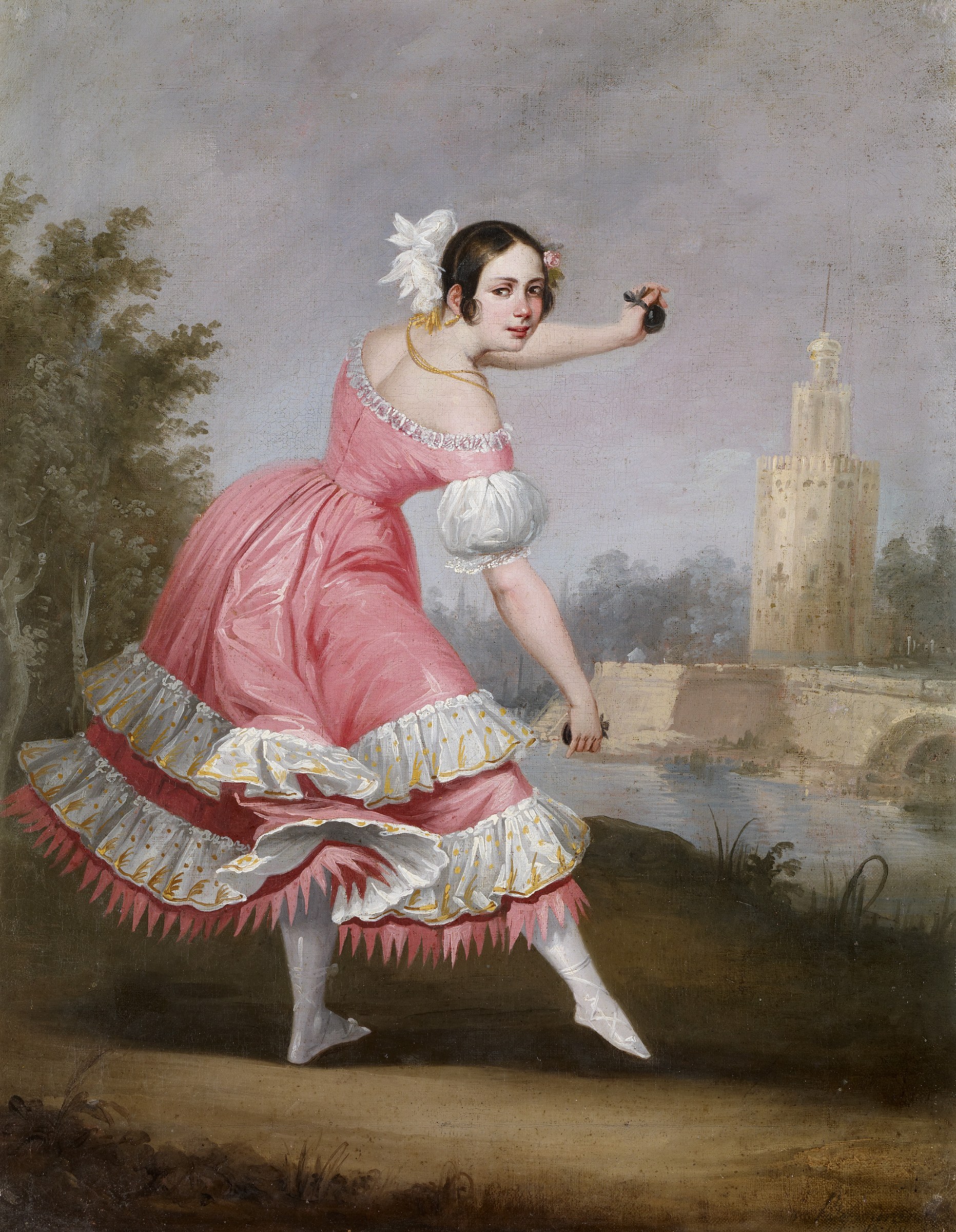
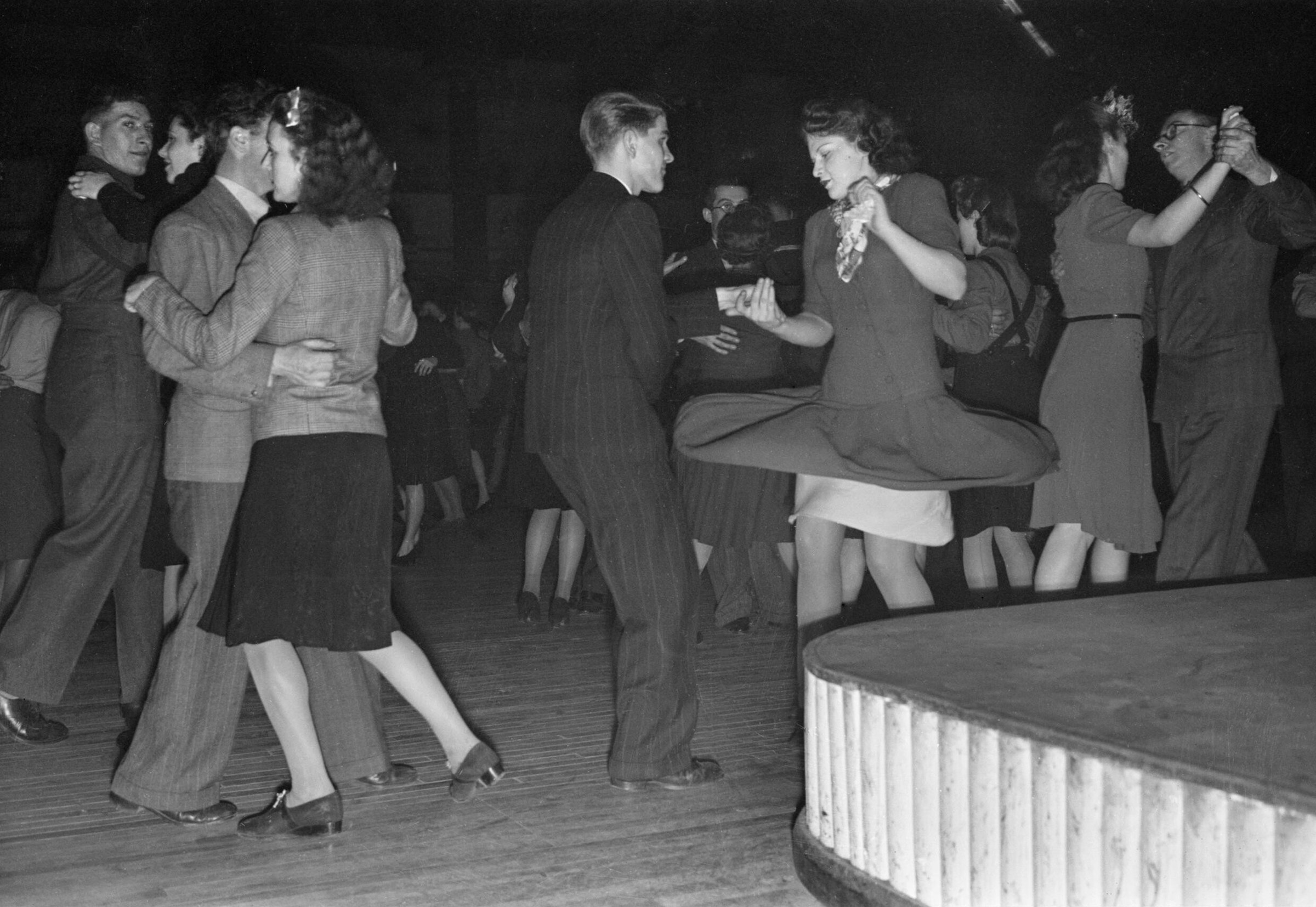
Browse the gallery →Works from the wider American Rhythm tradition — we have not yet identified enough that depict American Cha-Cha specifically.
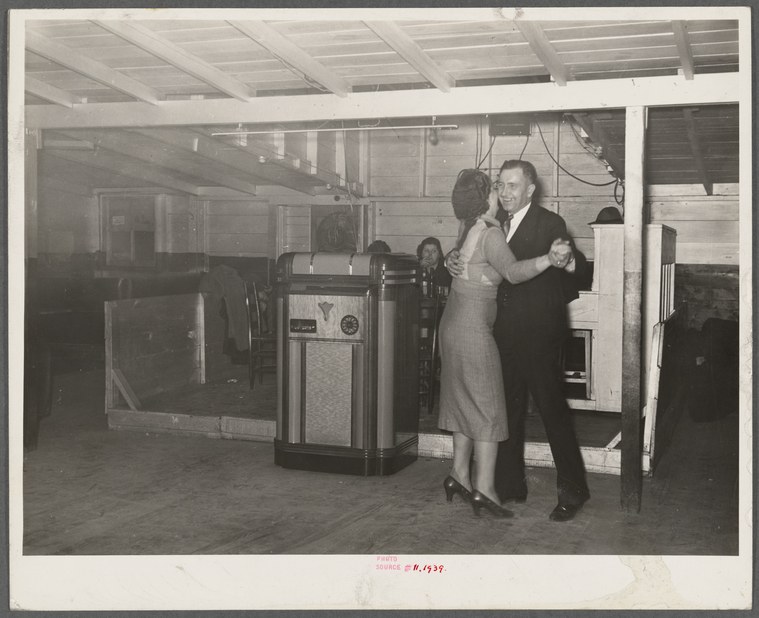
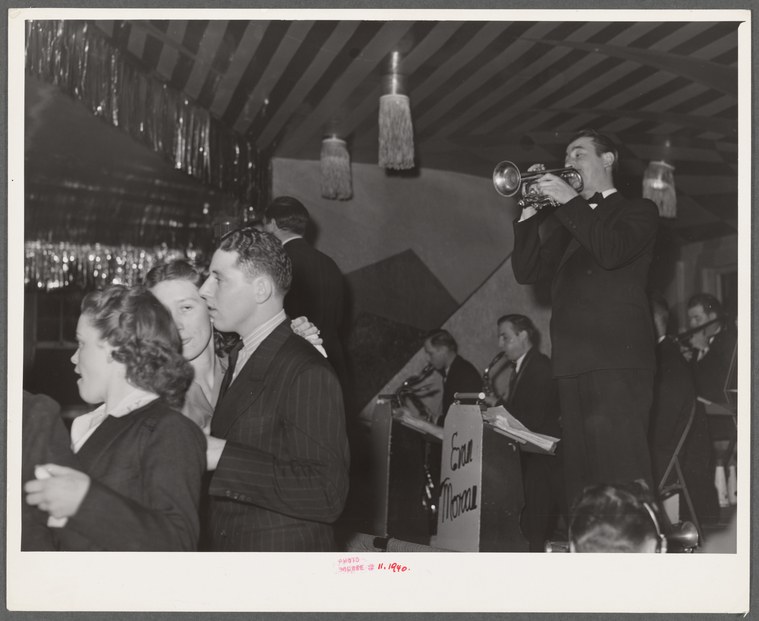
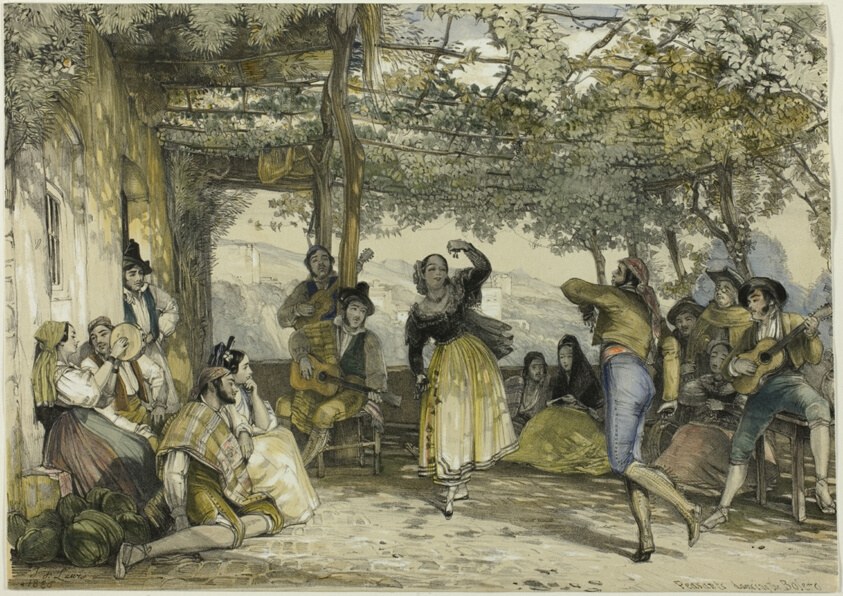
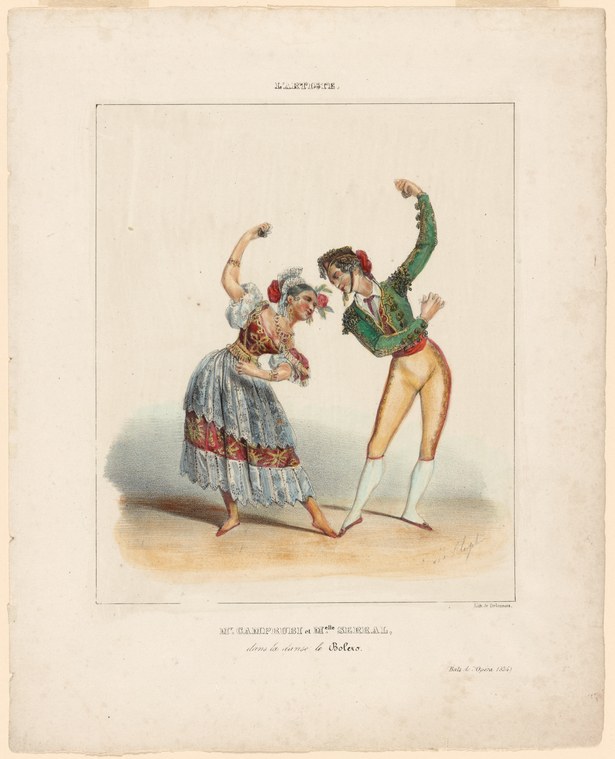
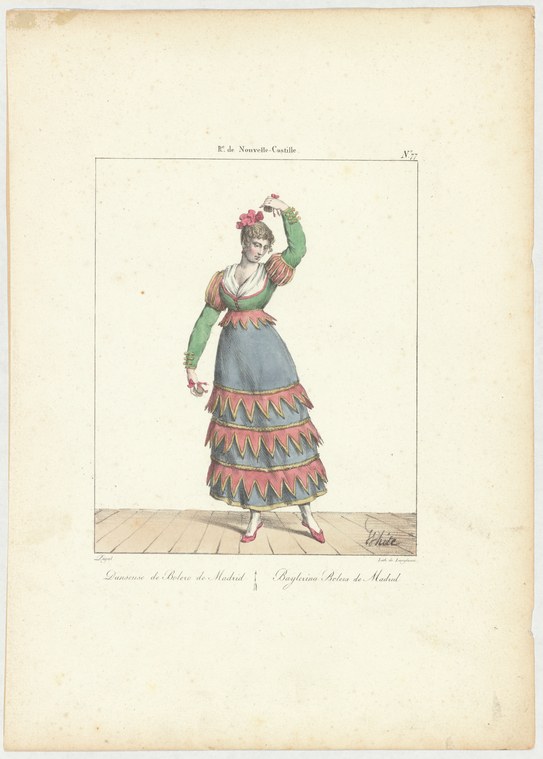
Bolero dancers
Unknown artist
Public Domain
Continue Exploring
Lineage of Dance
500 years of dance evolution
Champions of Dance
Winners of marquee national & world titles
Language of Dance
161 dance terms & translations
Listening of Dance
Tempo, timing & musicality tools
Gallery of Dance
5,700+ artworks from museum collections
Attire of Dance
Evolution of dance dress across eras
Keep the thread going
Dance history, technique, and the occasional rabbit hole — in your inbox. Thoughtful, infrequent, unsubscribe anytime.
Free. No spam. One click to leave.