Country Swing
Also known as: Country Western Swing, Country East Coast Swing, Cowboy Swing
History & Cultural Context
The underlying structure is six-beat swing — most often triple-step, triple-step, rock-step, with the triples dropped to single steps as tempo climbs — but the styling is looser and lower than studio East Coast Swing, with less bounce, a flatter foot and a boot-friendly economy of motion. What distinguishes it socially is the figure library: long sequences of wraps, pretzels, tunnels, cradles and lassos strung together without returning to an open basic, so the dance is often described by its shapes rather than by its rhythm. The name itself is contested. On the UCWDC-style circuit the equivalent competitive category is generally titled East Coast Swing, and many teachers use country swing to mean simply East Coast Swing danced to country music; in the Mountain West, and especially in the college and youth scene, country swing names a broader and more acrobatic vernacular that includes dips, drops and lifts no competition floor would accept. Both usages are current, and neither is wrong so much as local.
Cultural Significance
It spread through dance halls and college towns rather than through studios, and much of its repertoire travels by imitation on the floor and, since the 2010s, by video. That gives it a fast-moving and regionally uneven vocabulary, with figures that are standard in one town and unknown two states away. It also carries a genuine safety conversation: neck wraps, drops and lifts are common in the social vernacular and are the main reason many halls and most competitions restrict them.
Characteristic Movement & Technique
The knees stay soft and the action stays low, with the pulse taken in the legs rather than as a vertical bounce of the body. Triples are compact and often barely travel, and the rock-step is small. The arms do much of the visible work, since the wrap and pretzel repertoire depends on managing several hand connections without losing the beat, and the follow's arms need enough tone to be wound and unwound without strain.
Partnering Dynamics
Both hands are in play far more than in the other country dances, and the hold cycles rapidly between two-hand, one-hand, wrapped and shadow positions. The connection is elastic rather than framed: leads are given through compression and tension in the arms, and the follow keeps tone without locking elbows or shoulders. Because so many figures pass arms over heads and behind backs, the lead's responsibility for the follow's shoulders and neck is unusually direct.
Competitive Context
On the UCWDC and CWDI circuits, the swing category a country dancer actually enters is generally titled East Coast Swing, and the competitive version is cleaner, longer-lined and far more conservative than the social vernacular — the aerials, drops and neck wraps that define social country swing are restricted or barred in most divisions. Judging follows the same criteria as the other partner dances rather than rewarding figure count. Rules and division structures change, so treat the shape of the circuit as the reliable part.
Regional Variations
Texas halls use swing as one dance among several and keep it comparatively contained, since floor space is committed to progressive two-stepping. The Mountain West treats it as the primary partner dance, and it is there that the acrobatic vernacular is strongest. Circuit dancers, wherever they live, dance a version that reads clearly as East Coast Swing with country styling.
Common Misconceptions
The frequent error is treating it as a separate dance with separate technique; structurally it is East Coast Swing, and a dancer with a solid ECS basic can dance it immediately. The second is assuming the acrobatic version is the definition — that is one regional and generational strand, not the whole. The third is assuming direct descent from 1930s and 1940s swing dancing; the lineage runs through 1980s country venues adapting a studio-taught swing.
Peak Popularity
Signature Figures
- Inside turn
- Outside turn
- Cuddle (wrap)
- Sweetheart
- Pretzel
- Tunnel
- Basket
- Lasso
- Cradle
- Dip
Notable Codifiers
- United Country Western Dance Council (UCWDC)
- Country Western Dance International (CWDI)
Country Swing Playlists
Curated collections on the LODance YouTube channel — performances to watch, lessons to learn from, and the right music to practice with. Tap a collection to play.
▶ Performances · Open on YouTube →
Country Swing Music & Tempo
Drawn from 32 Country Swing tracks in the LODance music library.
Example tracks at practice tempo
- Dance of the Sugar Plum Fairy — Lindsey Stirling144 BPM
- Crazy for Christmas — Lindsey Stirling feat. Bonnie McKee142 BPM
- Darkside — Lindsey Stirling136 BPM
- Warmer in the Winter — Lindsey Stirling feat. Trombone Shorty136 BPM
- Boot Scootin' Boogie — Brooks & Dunn136 BPM
- Good Hearted Woman — Waylon Jennings144 BPM
What to Wear
Attire guidance for Country Swing and other Country & Western dances. Each card below is sized to the moment — class, practice, social, or competition — because the wardrobe shifts as the stakes do.
Reading the cards
In Class
Casual Western wear. Jeans, boots, plaid or plain shirts. Comfortable and broken-in — the scene is unpretentious.
Social Dancing
Classic Western: jeans, cowboy boots, Western shirts, belt buckles. Women: denim skirts or fitted jeans with boots. The look is part of the culture.
Competition
Polished Western: coordinated outfits, rhinestone-embellished Western shirts, fitted jeans or dance pants, quality boots. Two-step and WCS competitions may differ in dress standards.
Shoes
Cowboy boots with smooth leather soles (not rubber-soled work boots). Dance boots with low heels and suede or leather soles. For Two-Step: boots are traditional. For Country WCS: dance shoes acceptable.
In Practice
Broken-in dance boots are essential — new boots blister. Country WCS practice often uses dance sneakers instead of boots once technique gets serious.
By Role
Leaders
Class: Western shirt or fitted T-shirt, jeans, broken-in dance boots. Belt buckle is traditional but avoid anything that digs into your partner during close hold.
Competition: Coordinated Western outfit: rhinestone or embellished Western shirt, fitted dark jeans or dance pants, polished dance boots. Two-Step leans classic cowboy; WCS leans modern and fashion-forward.
Followers
Class: Fitted top, jeans or denim skirt, broken-in dance boots or low dance heels.
Competition: Rhinestone-embellished Western dress or coordinated separates, polished dance boots. Two-Step keeps the traditional Western aesthetic; Country WCS allows more modern styling.
Common Pitfalls
- ✗Rubber-soled work boots — grip the floor and lock the foot.
- ✗Brand-new stiff leather boots without break-in time — blisters within an hour.
- ✗Ranch boots with deep treads — the wrong category of boot entirely; dance boots are smooth-soled.
Price Range
- Budget: Entry dance boots $80–150; Western shirts and jeans from existing wardrobe.
- Mid: Quality dance boots (Tony Lama, Lucchese) $200–400; embellished Western shirts $80–200.
- Premium: Custom dance boots $400–900; rhinestone competition Western shirts $250–700.
Key Terms
- Dance boots
- Western-style boots with smooth leather soles (not rubber treads) — allows sliding, pivoting, and spins on hardwood floors.
- Belt buckle etiquette
- Leaders should check that oversized belt buckles do not dig into the follower during close hold. Smooth, flush-mount buckles are safest.
Quick Tips
- •Suede-soled shoes allow controlled sliding and pivoting — essential for most partner dances.
- •Avoid rubber soles on dance floors; they grip too much and can cause knee injuries.
- •Bring a separate pair of clean shoes for the dance floor to keep it in good condition.
Recommended Gear for Country Swing
Essential equipment and apparel selected for dancers learning Country Swing.

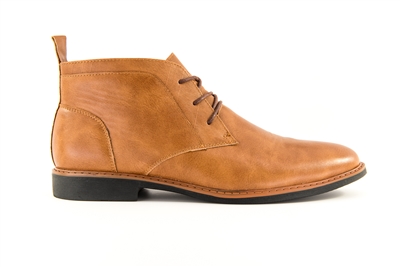
VF Black Leather mens Low Ankle Boot - Dance Footwear
Blue Moon Ballroom Dance Supply
$100–$200
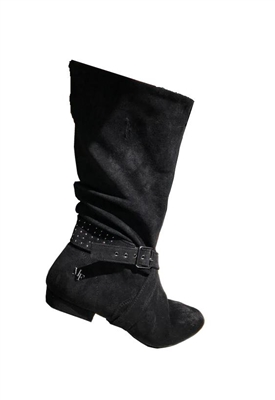
Style GFranco Boston Mens Dance Boot - Gfranco Dancewear
Blue Moon Ballroom Dance Supply
$100–$200
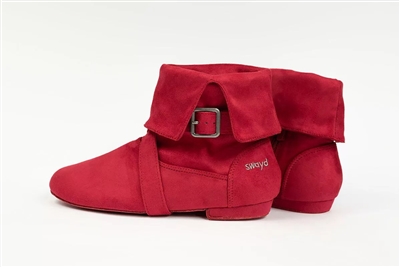
Style MF Aurora Black Dance Boot - Womens Dance Boots
Blue Moon Ballroom Dance Supply
$50–$100
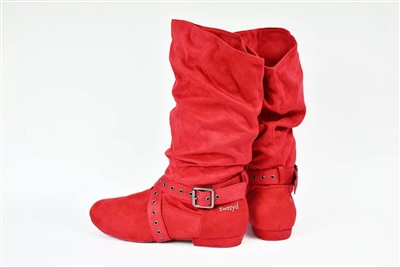
Swayd Urban Vibe Red Dance Boot - Womens Dance Boots
Blue Moon Ballroom Dance Supply
$100–$200
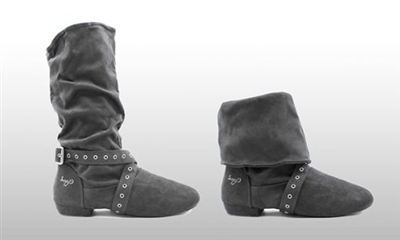
Swayd Urban Step Gray Dance Boot - Womens Dance Boots
Blue Moon Ballroom Dance Supply
$100–$200
As an Amazon Associate, LODance earns from qualifying purchases. Affiliate disclosure
Sources & Further Reading
Where This Dance Is Documented
UCWDC rules; studio syllabi
An editor's note on where the technique for this dance is actually written down — sometimes a named book, sometimes the fact that no such book exists. A judgement, not a count of what we hold.
Cultural & Historical Context
Country Swing emerged from American West and Southwest country dance halls during the 1980s—present day. Understanding the cultural roots, musical traditions, and social circumstances of this era enriches appreciation for the dance's characteristics and significance.
Formative Influences
Codifiers & Standardizers:
United Country Western Dance Council (UCWDC), Country Western Dance International (CWDI)
Signature Movement Vocabulary:
Inside turn, Outside turn, Cuddle (wrap), Sweetheart, Pretzel, Tunnel, Basket, Lasso, Cradle, Dip
Primary Source Documents
The Library of Dance contains public-domain primary sources for dance history. Copyrighted modern syllabi are indexed with purchase links to their respective copyright owners. Search by dance name or codifier to discover primary source documents.
Last reviewed: September 2026 — This dance profile synthesizes historical research, cultural documentation, and contemporary practice knowledge to provide authoritative context.
More in Country & Western
Country Two Step
Country Two-Step is an American couple dance with forward-moving progression and a quick-quick-slow-slow rhythm danced to country and western music. Sometimes called 'the poor man's foxtrot,' it remains the cornerstone of country dance halls across Texas and the American West.
Country Waltz
Country Waltz is the American Western interpretation of the classic 3/4-time waltz, danced in a continuous counterclockwise line of dance to country ballads. It keeps the waltz's romantic character but trades ballroom formality for relaxed posture, looser frame, and unpretentious styling.
Line Dance
Line Dance is a partnerless choreographed group dance performed in lines or formations, where every participant executes the same sequence of steps facing one of two or four 'walls.' Originally tied to country and western music, it now spans pop, Latin, R&B, and electronic genres and is one of the most globally distributed dance forms.
Country Polka
Country Polka is the Western American adaptation of the European Polka, featuring a bouncy, traveling two-step pattern danced to lively country music with strong Czech, German, and Polish immigrant influences.
Country Cha-Cha
Country Cha-Cha applies the Cha-Cha-Cha triple step and 4/4 syncopation to country music. It is one of eight competitive dances in the United Country Western Dance Council (UCWDC) couples and pro-am syllabus and is also danced socially at country-western events.
CW Nightclub Two-Step
CW Nightclub Two-Step adapts the smooth, romantic Nightclub Two-Step for country music, creating a versatile slow dance for country-western venues and competitions.
CW West Coast Swing
CW West Coast Swing brings the slotted, elastic West Coast Swing into the country-western context, danced to mid-tempo country music with country-western styling and competitive structure under UCWDC.
American Country
The umbrella social style of American country dance halls: not one pattern dance but the shared idiom that the two step, country waltz, country swing, polka and the progressive dances live inside. It is defined by its floor conventions, its compact and unfussy hold, and a figure vocabulary that carries across every dance in the evening.
Triple Two
A progressive country dance built on two walking steps and two triple steps, travelling down the line of dance to slower country music. It emerged from the 1980s and 1990s competition and teaching boom and is one of the standard couples dances on the UCWDC-style circuit.
Waltz
The 3/4 partner dance as done in country halls and on the UCWDC-style circuit: progressive around the line of dance, held closer and more informally than its ballroom relatives, and phrased to country songs rather than to Standard or Viennese tempos. It is one of the few country dances that almost every hall dancer knows.
Continue Exploring
Lineage of Dance
500 years of dance evolution
Champions of Dance
Winners of marquee national & world titles
Language of Dance
161 dance terms & translations
Listening of Dance
Tempo, timing & musicality tools
Gallery of Dance
5,700+ artworks from museum collections
Attire of Dance
Evolution of dance dress across eras
Keep the thread going
Dance history, technique, and the occasional rabbit hole — in your inbox. Thoughtful, infrequent, unsubscribe anytime.
Free. No spam. One click to leave.