49 works in this view — arrow keys or swipe to move between them.
Dance in Art
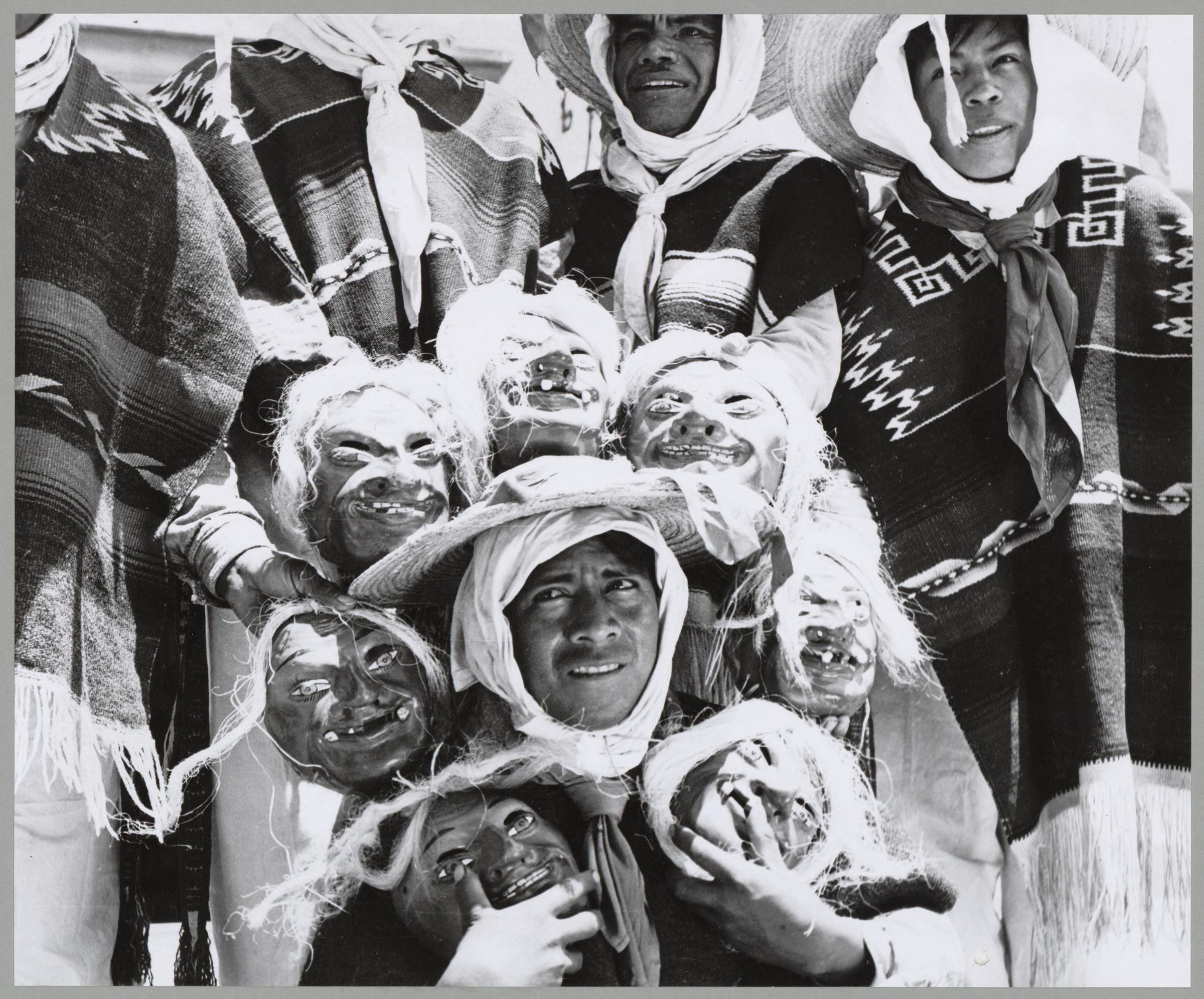
Masks Used in Native Dance.
Unknown artist
- Collection:
- Prints & Photographs
- Source:
- Library of Congress
- Rights:
- Rights vary by item — check the source record before reusing this image. Source record ↗
- Recorded as:
- Library of Congress — no known restrictions (verify per item)
This image documents an indigenous ceremonial tradition that sits largely outside the canon of dance history as traditionally taught. The masks themselves are sophisticated sculptural objects with centuries of cultural function; their presence in this photograph asserts that indigenous dance involves transformation, embodied material culture, and collective ritual that cannot be reduced to body movement alone. For dancers and historians, the work challenges narrow definitions of dance and prompts consideration of how ceremony, costume, and community constitute dance practice.
What you are looking at
A black-and-white photograph shows a group of Indigenous people wearing traditional masks and wrapped head coverings. The composition is tightly framed, with figures arranged in multiple layers—some seated or crouched in the foreground, others standing or partially visible behind them. The masks are carved with exaggerated features: broad smiles, prominent noses, and deeply set eyes. Most figures wear light-colored wrappings around their heads and shoulders, contrasting with darker woven or textured garments beneath. The photograph captures an intimate, frontal view of the group, as if documenting a ceremonial gathering or performance moment. The black-and-white medium emphasizes the sculptural quality of the masks and the texture of the fabrics.
The dancing
The dancers and participants display varied postures suggesting both formal presentation and natural gathering. Some figures lean toward the camera with direct, frontal orientation; others tilt or angle their heads. The wrapped textiles create vertical lines around shoulders and necks. While no single coordinated hold or frame is visible, the density of the group and the alignment of masked faces toward a shared focal point suggests collective participation. The heavy textile wrapping restricts visible arm and leg movement, making the masks themselves the dominant visual element of individual expression.
The dance depicted
This appears to document a Native American ceremonial or powwow context, most likely from the American Southwest or Pacific Northwest based on the mask style and wrapping conventions. The masks and their formal arrangement suggest sacred or seasonal ceremony rather than secular social dance. The photograph captures what may be preparation, gathering, or a moment within a larger ceremonial performance. Without visible footwork, arm positions, or body movement, the image documents the visual and material culture of the dance rather than its kinetic vocabulary. The specific dance tradition cannot be firmly identified from stillness alone, though the masks and wrapping suggest indigenous North American ceremonial practice.
How it was made
This is a black-and-white photograph, likely gelatin silver print or similar mid-20th-century photographic medium. The date of 1970 and the collection source (Library of Congress Prints & Photographs) indicate professional or semi-professional documentary photography. The medium's capacity for sharp detail renders the mask carving and fabric texture with clarity, while the black-and-white palette emphasizes form and composition over color variation in dress. The photographic approach—frontal, densely framed, direct—suggests ethnographic documentation rather than artistic or performative staging.
About this work
This photograph documents a Native American ceremonial gathering centered on the wearing of carved masks and traditional textiles. The 1970 date places it in a period of renewed attention to indigenous cultural documentation and performance. The work functions as both a record of material culture—the masks themselves are skilled craft objects—and a snapshot of communal ceremony. The close framing and formal arrangement create a portrait-like quality despite the group size, lending dignity and presence to the participants and their masks.
For a gallery of dance in art, this work represents the visual and material dimensions of indigenous ceremony that Western dance history often overlooks. The masks are not merely costume but active participants in transformation and meaning-making. The photograph preserves a moment of cultural practice while raising questions about the relationship between stillness and movement, between documentation and performance.
How to look at it
Attend first to the masks themselves: their carving, expression, and individuality despite their formal arrangement. Notice how the photograph frames them frontally, almost like a portrait gallery, which elevates the masks as subjects in their own right rather than subordinating them to body movement. Observe the wrapping and textiles—how they constrain and frame the upper body, creating a formal silhouette. The stillness of the photograph preserves the masks' visual impact but erases the movement, sound, and sequence that would animate this ceremony in its full context; consider what the photograph shows and what it cannot show.
The period
The 1970 date coincides with a broader movement of indigenous cultural revitalization and increased documentation of Native American ceremonies. This period saw growing institutional interest in preserving indigenous cultural practices, partly through photography and ethnographic work. However, the photograph's origins and purpose remain unclear from the catalogue record—it may derive from academic research, arts documentation, museum collection, or indigenous community archiving. The timing suggests it predates the later wave of indigenous self-documentation and community-controlled representation, which became more prominent from the 1980s onward.
Where it lives
This photograph is held in the Library of Congress Prints & Photographs collection. The catalogue record provides minimal information beyond title and date, suggesting it may be part of a larger but uncatalogued series or collection. The lack of artist attribution and limited metadata are typical of documentary photography from this era, particularly work focused on indigenous subjects.
Dance in this work
Questions about this work
What kind of masks are these?
The catalogue record does not identify the specific tribal origin or mask tradition. The carved style and context suggest indigenous North American ceremonial masks, possibly from the Southwest or Pacific Northwest, but definitive attribution would require additional research. The masks display exaggerated facial features and are individually carved, suggesting a tradition with depth and variation.
Is this a dance performance or a ceremony?
The photograph documents what appears to be a ceremonial gathering rather than a staged performance for an audience. The frontal arrangement and documentary style suggest the photographer was documenting cultural practice. In indigenous contexts, the distinction between ceremony and dance is often artificial—masks and their use are typically inseparable from movement, song, and collective ritual action.
Why does the image only show people sitting and standing still?
Photographs freeze a single moment and cannot capture the full kinetic and temporal dimension of dance or ceremony. This stillness is a limitation of the medium. The masks, wrapping, and group arrangement suggest movement and transformation occur around these visible elements, but the photograph preserves only one moment in what would be a continuous ceremonial practice.
Who took this photograph?
The catalogue record does not identify the photographer. The Library of Congress attribution and 1970 date indicate it was likely acquired by or through an institutional source, but the original documentarian remains unknown. This gap in attribution is common in ethnographic photography and reflects historical inequities in how such work was credited and preserved.
More dance artwork