49 works in this view — arrow keys or swipe to move between them.
Dance in Art
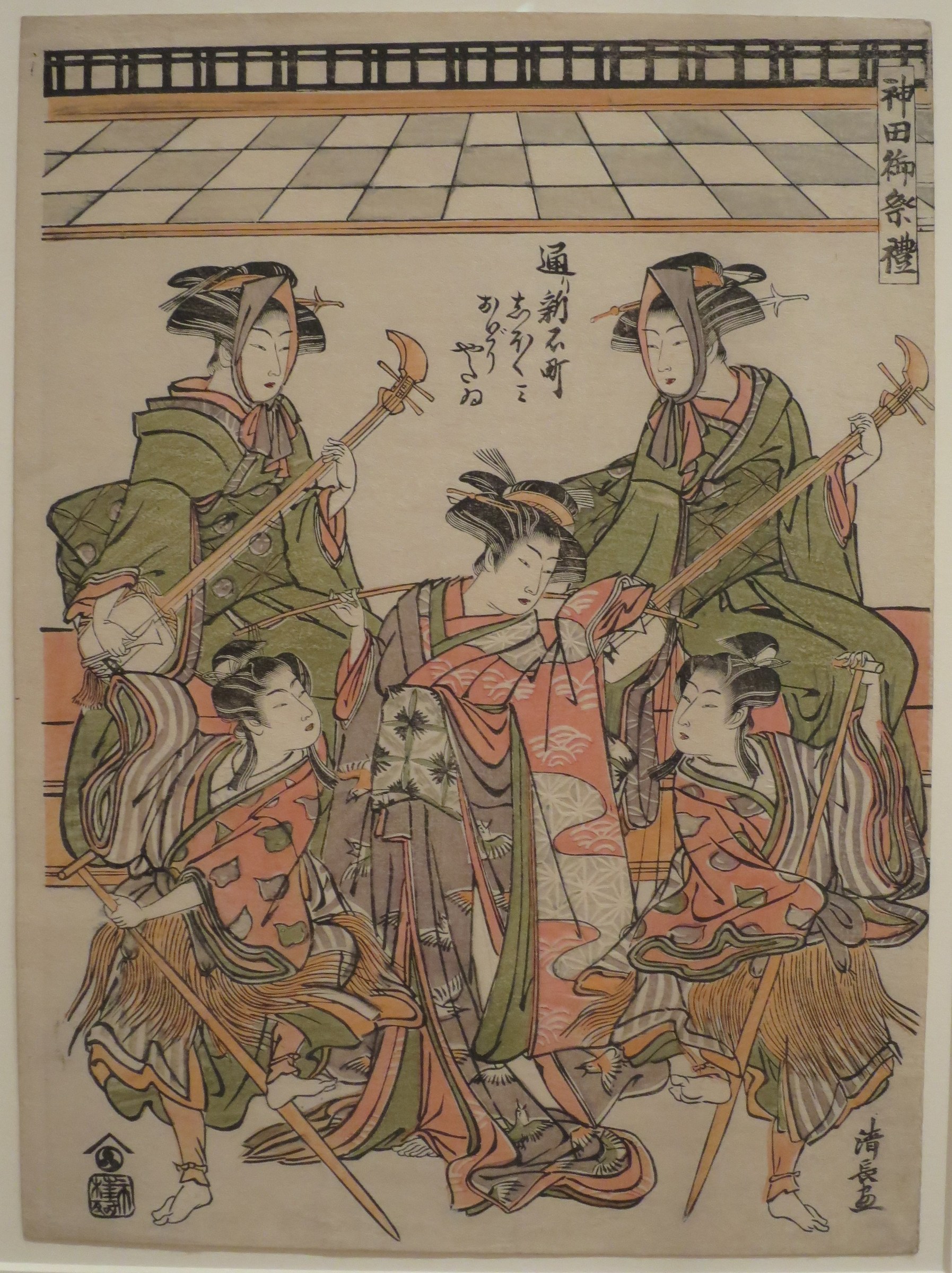
A Float Representing the Dance 'Shiokumi' by Torii Kiyonaga
Torii Kiyonaga
- Source:
- Wikimedia Commons
- Rights:
- Public domain — free to use, share and adapt.
- Recorded as:
- public_domain
This image is a primary document of Japanese theatrical dance in the 18th century, capturing the *Shiokumi* performance tradition and the role of women in festival and theatrical entertainment during the Edo period. Torii Kiyonaga's prints are among the most reliable visual records we have of how these performances looked, what performers wore, and how they were staged—information that historical scholarship depends on. The print also demonstrates how woodblock portraiture made performance culture visible and shared it with audiences who could not attend live theater.
What you are looking at
This woodblock print depicts a festive scene centered on a float or platform stage, likely from an Edo-period theatrical or festival context. The composition shows six figures arranged on a raised stage with geometric tile-patterned flooring viewed in perspective. At the top of the image is a decorative latticed railing in dark wood. The central figure is a woman in an elaborate coral-red robe with dark patterning, flanked by four attendants in green garments with coral accents. Two additional figures at the rear stand elevated, also in green, holding what appear to be fan-like implements or props. The palette is restrained—coral, olive green, black ink, and cream paper—creating a harmonious, dignified composition. The setting suggests a performance space, possibly a temporary stage or festival float, with the geometric floor design emphasizing the theatrical framing.
The dancing
The bodies are arranged in a loose, non-linear formation rather than a closed partnered hold. The central figure stands with arms relaxed at her sides, wearing the elaborate dress of a high-status woman or role. The four attendants adopt similar standing postures with minimal arm articulation, their bodies upright and frontal or slightly angled. The two rear figures hold what may be props or implements—possibly fans or implements used in the dance—at waist to shoulder height. There is no evidence of active footwork, complex weight shift, or the dynamic frame characteristic of ballet or partner dance. The bodies suggest a formal procession or presentation rather than vigorous movement.
The dance depicted
The catalogue identifies this as representing the *Shiokumi* dance, a Japanese theatrical or festival form. The image shows what appears to be a scene from *kabuki* or a related Edo-period theatrical tradition, where *Shiokumi* (salt-drawing or salt-scattering dance) was performed. This was a type of entertainment or interlude dance often featuring young women or courtesans in elaborate dress. The static, processional arrangement and the presence of props or fans suggest a stylized, theatrical presentation rather than social dance or Western-influenced performance. The formal staging and elevated platform are consistent with *kabuki* or festival performance contexts of the late 18th century.
How it was made
This is a Japanese woodblock print (*ukiyo-e*), identifiable by the bold outlines, flat color planes, and compositional principles typical of the genre. The catalogue record lists the date as 1799 and notes it as a woodblock; the print shows the characteristic hand-coloring or possibly multiple blocks layered to achieve the green and coral tones. The technique allowed for mass production and wide circulation, making images of theatrical and festival performances accessible to a broad urban audience. The style and subject matter suggest this print documented or celebrated a specific performance or theatrical spectacle of the period.
About this work
This is a documentary or celebratory image of the *Shiokumi* dance, a theatrical performance form from late Edo-period Japan, created by the renowned woodblock artist Torii Kiyonaga. The print captures a formal stage presentation featuring elaborately dressed women arranged on a raised platform, documenting a type of entertainment dance that was part of the visual and theatrical culture of urban Japan. The work belongs in a dance history context as evidence of Japanese performance traditions and the visual documentation of theater through the *ukiyo-e* tradition, which made performance imagery accessible to the public and helped establish a visual record of theatrical forms that might otherwise leave no trace.
How to look at it
Attend to the formal, processional arrangement rather than expecting dynamic individual movement. The artist has chosen a static moment of presentation rather than a peak of physical action—this reflects the *shiokumi* aesthetic, which was stylized and theatrical rather than acrobatic. Notice how Kiyonaga uses the raised platform, the geometric floor, and the regular spacing of figures to create a sense of theatrical formality and controlled elegance. The elaborate dress and careful positioning of the central figure suggest that the work is documenting both the dance and the social status and visual spectacle that accompanied it.
The artist
Torii Kiyonaga (1752–1815) was one of the most accomplished and prolific woodblock print designers of the Edo period, succeeding Torii Kiyomitsu II as the head of the Torii school. He is celebrated for full-color woodblock prints (*nishiki-e*) depicting beautiful women (*bijin-ga*), actors, and theatrical scenes. Kiyonaga's work is noted for refined composition, elegant line work, and a sophisticated approach to color and spatial arrangement. He worked across the full range of *ukiyo-e* subjects but was especially known for theater documentation and the portrayal of performers and performance contexts, making his prints valuable historical records of Edo theatrical culture.
The period
This print dates to 1799, near the end of Kiyonaga's career and in the mature phase of the Edo period (1603–1868). Japanese theater in the late 18th century was dominated by *kabuki*, which had evolved from earlier popular performance forms into a highly stylized, codified art. The *Shiokumi* dance would have been part of the repertoire of interlude entertainment, comic or decorative pieces performed between main dramatic acts. In visual culture, woodblock prints had become the primary means of circulating images of theater and performers to a mass urban audience. The sophistication of Kiyonaga's compositions in the 1790s reflects a period of mature technical and aesthetic refinement in the *ukiyo-e* tradition.
Where it lives
According to the catalogue record, this print is in the James Michener Collection at the Honolulu Museum of Art (accession 15986) and was sourced via Wikimedia Commons. Michener's collection is one of the major repositories of Japanese prints in North America, and this work is part of the museum's public holdings.
Dance in this work
Questions about this work
What was the Shiokumi dance?
Shiokumi was a type of theatrical or festival dance performed in Edo-period Japan, often as an interlude or entertainment piece in *kabuki* performance. It typically featured elaborately dressed women and was more stylized and decorative than physically vigorous. The exact movements and conventions of the form are not fully documented, making prints like this one valuable historical records of how it was staged and presented.
Who was Torii Kiyonaga and why does his work matter?
Torii Kiyonaga was the leading woodblock print designer of the late Edo period, renowned for refined compositions and sophisticated color work. His prints documented theater, performers, and performance contexts in detail, making him a crucial visual historian of Japanese theatrical culture. Because his images circulated widely and were technically accomplished, they remain among our most reliable visual sources for understanding what Edo-period theater actually looked like.
Why is this print on a dance history page if nobody is actively moving?
This print documents a historical dance form and its performance context. Even in a static moment, it tells us how the *Shiokumi* was staged, what performers wore, how many performers participated, and the theatrical framing used for the piece. For dances from the pre-film era, prints and paintings are often the only visual record we have; understanding the dance depends on reading these images carefully.
Is this a painting or a print?
This is a woodblock print, likely hand-colored. Woodblock was the dominant medium for theater documentation in Edo Japan because it allowed for affordable mass production. A single popular image could be printed in hundreds of copies, making performance imagery accessible to urban audiences beyond those who could attend live theater.
More dance artwork





