49 works in this view — arrow keys or swipe to move between them.
Dance in Art
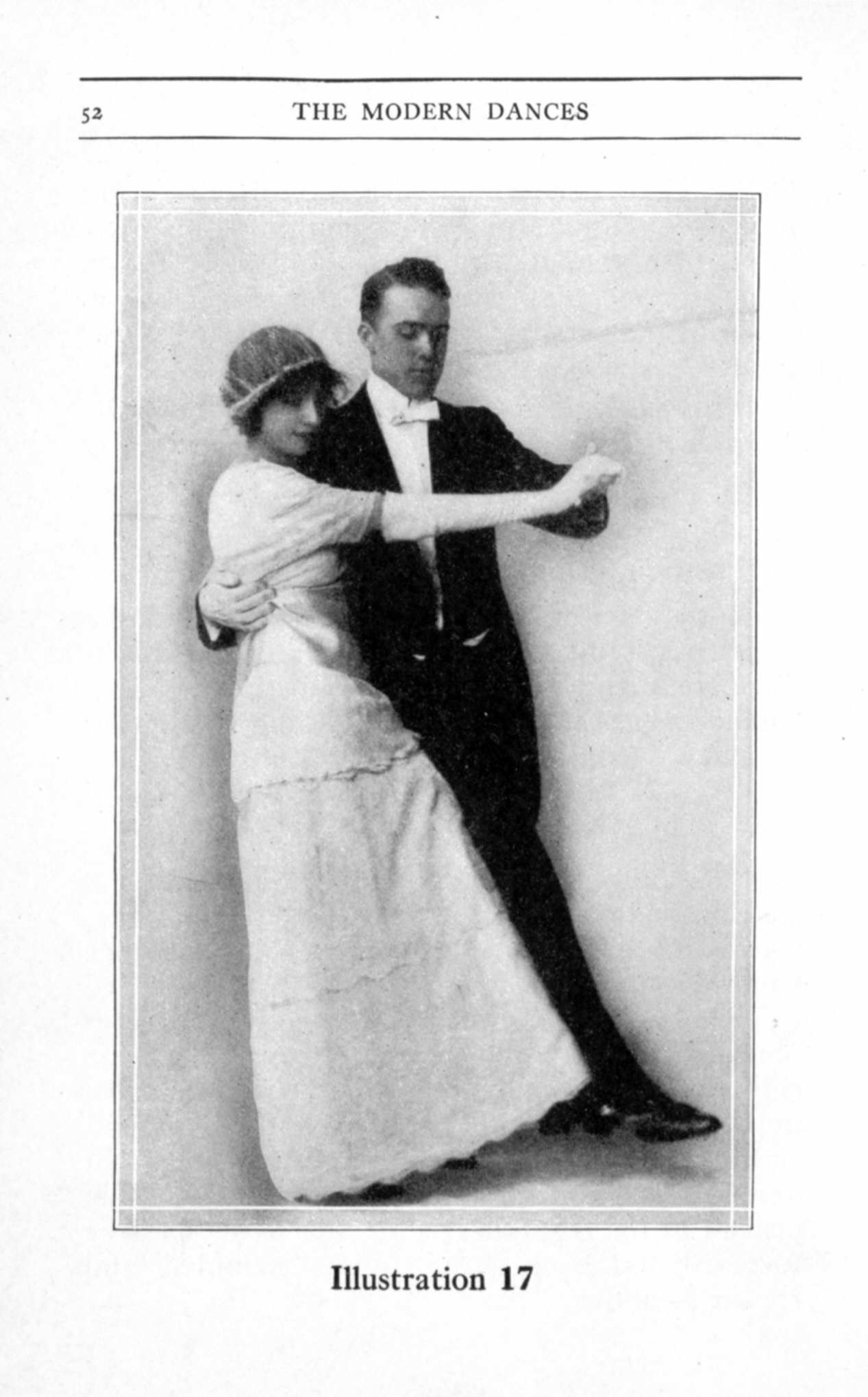
The Modern Dances - How to Dance Them (1914) - Illustration 17 HQ - Hesitation Waltz
Archibald Studio, Chicago, published by Saul Brothers, Chicago
- Source:
- Wikimedia Commons
- Rights:
- Public domain — free to use, share and adapt.
- Recorded as:
- public_domain
This image documents a crucial moment in the democratization of ballroom dance: the shift from private instruction by a dancing master to mass-market instruction via the printed photograph. The Hesitation Waltz itself exemplifies the American appetite for modern, up-to-date dances in the 1910s—a period when new social dances arrived from Europe and were rapidly absorbed and rebranded as fashionable novelties. For historians of dance pedagogy and ballroom culture, the image is evidence of how dancing was taught, standardized, and circulated to ordinary people learning to perform respectable courtship rituals.
What you are looking at
A man in formal evening dress—dark tailcoat, white shirt front, white bow tie—dances with a woman in a long white gown with short puffed sleeves and a close-fitting bodice. The woman wears a cloche hat pulled low over her eyes. They stand against a plain light background, posed mid-movement. The man's right arm encircles the woman's waist; her left arm rests on his shoulder. Both face forward with measured composure rather than exuberance. The photograph is taken in full length, capturing their posture from head to foot. The setting is studio: stark, neutral, focused entirely on the dancers' bodies and their formal hold.
The dancing
The couple stands in a closed ballroom hold: the man's right hand at the woman's waist, his left arm extended horizontally, her right hand resting in his. Her left hand and arm rest lightly on his upper arm and shoulder. Both dancers are upright and squared forward, with weight centered and knees slightly soft. The frame is compact and controlled, with no twist or sway visible. The man's posture is steady and protective; the woman's body angles very slightly into his, her skirt draping long and straight. The positioning suggests a moment of pause or deliberate demonstration rather than energetic movement.
The dance depicted
This is a lesson photograph documenting the Hesitation Waltz, a modern ballroom dance of the early 20th century. The Hesitation Waltz was a variation on the standard waltz that introduced a slower, more deliberate rhythm and characteristic pauses—the 'hesitations' that gave it its name. The dance was fashionable in the 1910s as a more restrained alternative to the faster Austrian waltz and the energetic one-step. The pose shown here emphasizes proper frame and posture rather than mid-stride action: it is a teaching image, meant to show the correct closed position and hold that students should adopt before learning the footwork. The formal evening dress of both partners reflects the social context of ballroom dancing as a courtship ritual conducted in respectable company.
How it was made
This is a black-and-white photograph, likely a gelatin silver print, reproduced as a halftone illustration in a bound instructional manual. The photographic medium allowed precise documentation of body position and hold, making it ideal for dance pedagogy. The lighting is even and shadowless, characteristic of studio photography of the era, which clarifies the dancers' forms without dramatic effects. Reproducing the photograph as a halftone in a printed book made it accessible to a mass audience learning modern dances at home or in dance studios. This method of instruction—combining photograph with text—was a common and influential approach to teaching ballroom dance in the early 20th century.
About this work
This is one of seventeen instructional photographs from 'The Modern Dances—How to Dance Them,' a 1914 manual published in Chicago and intended to teach ballroom styles to an American middle-class audience. The Hesitation Waltz was one of several fashionable modern dances featured in the book. The photograph shows not the dramatic moment of a dance performance, but the fundamental teaching position: the closed hold, the frame, and the posture from which students would learn the footwork. The manual itself was a product of the standardization of ballroom dancing in the early 20th century, when dance instruction moved from live dancing masters to printed guides, photographs, and eventually film. The Archibald Studio of Chicago, which produced the photographs, was one of many commercial photography studios that served the dance instruction market.
How to look at it
Attend to the frame: this is a teaching image, not a performance photograph. The dancers are frozen in the fundamental position, the closed hold, rather than captured mid-stride. Notice the alignment of the bodies—squared, upright, without sway or rotation—which was the ideal posture for the waltz of this era. The woman's cloche hat and long skirt, and the man's formal tailcoat, mark this as a respectable social dance for the urban middle class, not theatrical performance or working-class recreation. The neutral studio background and frontal pose signal that this is instructional documentation: the photographer has eliminated all context to focus the viewer's attention on the bodies and their relationship to each other.
The artist
The Archibald Studio was a commercial photography studio based in Chicago. The studio specialized in instructional and theatrical photography, including dance documentation. In the early 20th century, such studios played an important role in the nascent dance publishing industry, producing photographs for instruction manuals, theatrical programs, and dance journals. The studio's work was distributed by Saul Brothers, a Chicago publisher. Beyond these facts the biographical record is limited.
The period
The Hesitation Waltz emerged in the 1910s as part of a rapid succession of modern social dances that captivated ballroom dancers in the United States and Europe. The one-step, the turkey trot, the tango, and the foxtrot all arrived in quick succession, each perceived as scandalously modern by critics concerned about propriety. The Hesitation Waltz was a compromise: it retained the 3/4 time and fundamental character of the traditional waltz while introducing the slower tempo and deliberate pauses that reflected contemporary taste for restraint and control. By 1914, when this manual was published, the dance craze had created a huge market for instruction books, photographs, films, and dancing masters. Ballroom dance was being standardized and codified at exactly this moment—a process that would lead eventually to the amateur and professional competitions that dominated ballroom dance in the later 20th century.
Where it lives
This illustration is from the published manual 'The Modern Dances—How to Dance Them,' produced by the Archibald Studio in Chicago and published by Saul Brothers. The manual was a commercial product sold to the general public. This particular scan comes from Wikimedia Commons.
Dance in this work
Questions about this work
What makes this a 'modern' dance?
In 1914, the Hesitation Waltz was modern because it introduced contemporary variations on the traditional waltz: slower tempo, deliberate pauses, and a more controlled frame. The term 'modern dances' in the book's title refers to fashionable ballroom dances of the 1910s, not to what would later be called 'modern dance' as a concert form. To dancers of that era, these dances represented up-to-date social style.
Why is the woman's face covered by her hat?
The cloche hat was the fashionable women's hat of the 1910s-1920s, worn at social events including dances. For a teaching photograph, however, the brim's shadow does obscure her face. This may be incidental—the hat is period dress—or it may reflect a convention of instructional photography in which the focus was on the body's frame and hold rather than facial expression or character.
Is this a performance or a lesson?
This is a lesson photograph. The dancers are posed in the fundamental closed position rather than captured mid-movement, and they display calm, measured composure rather than the energy or expression of performance. The purpose is to show students the correct frame, posture, and hold they should adopt. Performance photographs of the era usually show a more dynamic moment and more expressive faces.
How was this book used?
Manuals like this were purchased by couples, dance studios, and individual learners who wanted to keep up with the latest ballroom fashions. A reader could study the photographs and accompanying text to practice at home or prepare for lessons with a dancing master. The photographs provided a visual model of correct posture and positioning that would have been difficult to convey in words alone.
More dance artwork





