49 works in this view — arrow keys or swipe to move between them.
Dance in Art
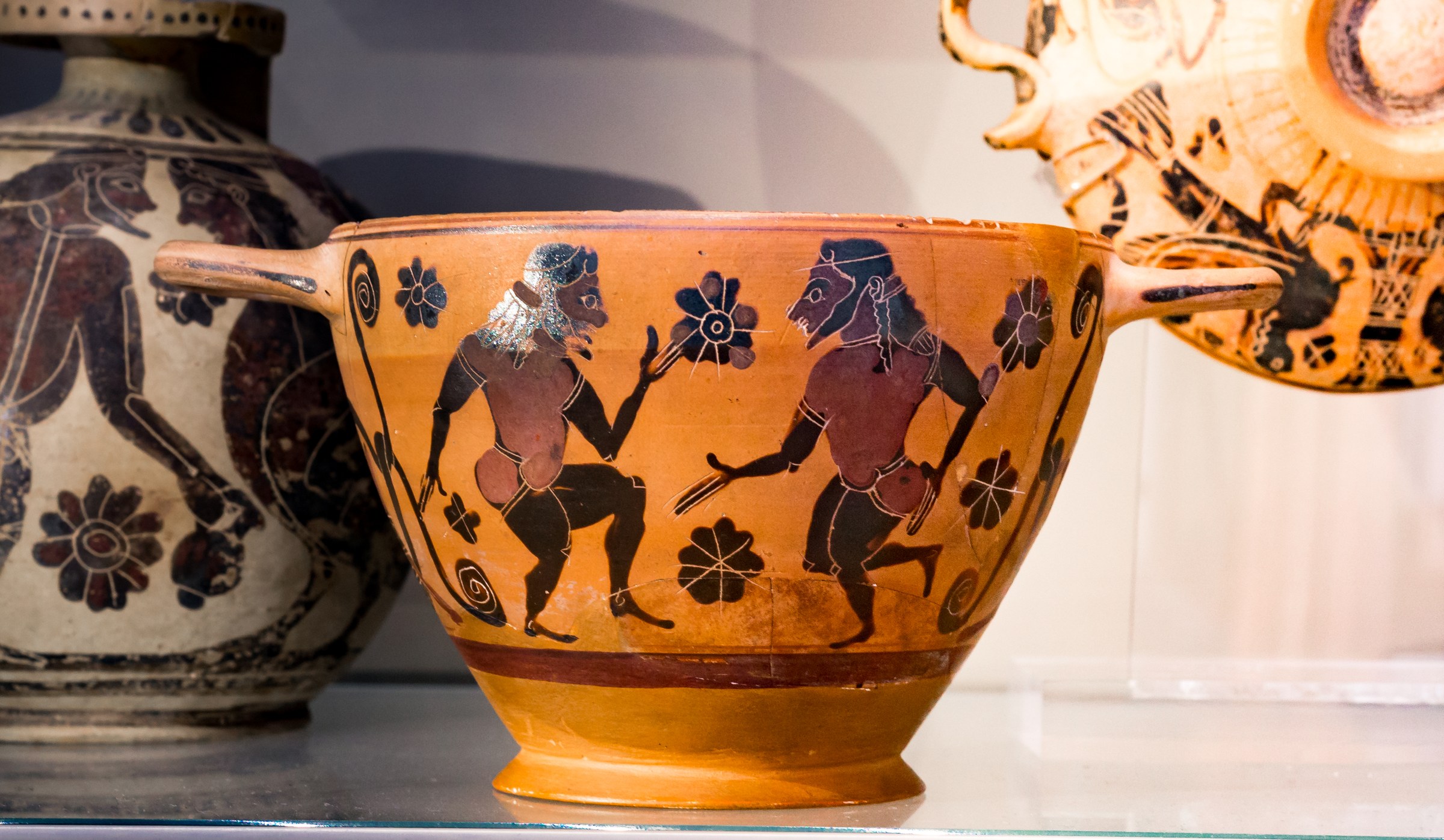
KX Painter - ABV 25 22 - padded dancers - Athens NM 528
ArchaiOptix
- Source:
- Wikimedia Commons
- Rights:
- Reusable with conditions: credit the creator; share any adaptation under the same licence. Source record ↗
- Recorded as:
- cc by-sa 4.0
For historians of ancient Greek dance, this image is nearly unique: it is a near-contemporary depiction of an actual performance practice, rendered by an artist who knew the tradition intimately. The padded costume and dynamic posture are ethnographic evidence for the physical vocabulary of komos—a genre that shaped later Greek comedy and left few other clear visual records. For dancers and movement specialists, it raises questions about the relationship between comic exaggeration, theatrical costume, and the recovery of ancient movement practices from two-dimensional evidence.
What you are looking at
A terracotta skyphos (drinking cup) painted in the Attic black-figure technique shows two bearded male figures in padded costumes facing each other in what appears to be a comic or theatrical performance. Both men wear thick, quilted body suits that emphasize their torsos and limbs, and their heads are rendered in profile with detailed beards. They stand in dynamic poses with bent knees and flexed limbs, their bodies angled toward one another in a confrontational or interactive stance. Between and around them are scattered simple floral motifs—star-like flowers with four or five petals—that fill the decorative field. The figures occupy the upper register of the vessel, rendered in dark gloss against the warm orange clay. The composition is balanced and symmetrical, with the two dancers mirroring one another's energy across the central axis of the cup.
The dancing
Both dancers display pronounced flexion in the knees and hips, with weight distributed forward on the balls of the feet—a posture suggesting active movement or effort rather than repose. Their arms are held at the sides or bent at the elbows, with hands positioned close to the body. The padded costumes obscure the underlying musculature but emphasize volume and weight, making the figures appear squat and powerful. The frontal and profile view of each figure conveys simultaneous solidity and dynamism. Their engagement with each other across the pictorial space suggests a duet or paired performance.
The dance depicted
This appears to depict komos dancing—the ritual comic performance that was central to Greek symposium culture and religious festivals. The padded costumes (korykoi) are the signature dress of komast dancers, who performed satirical, often bawdy routines as part of Dionysian celebration. The symmetric pairing, active stance, and deliberate rendering of the exaggerated body suits all point to this tradition. The flower motifs may reference fertility and festival context. Without additional inscriptions, the specific narrative or song cannot be recovered, but the image documents the physical vocabulary of this popular performance genre as it was understood in early Archaic Athens.
How it was made
This is a terracotta vessel decorated in the black-figure technique, in which figures are rendered as dark silhouettes against the natural clay ground, with details incised into the gloss. The skyphos form—a deep, wide drinking cup with two horizontal handles—was designed for communal or festive use, meaning this image reached symposium guests repeatedly during a drinking session. The durability of fired clay allowed such vessels to be both functional and iconic records of cultural practice. The technique's boldness and high contrast made the comic physicality of the dancers immediately legible even at a distance or by torchlight.
About this work
This is an Attic black-figure skyphos from the early Archaic period (circa 580–570 BCE), decorated with two padded male dancers confronting each other in the characteristic stance and costume of komos performance. It is a primary visual document of how Greeks represented comic, Dionysian ritual dance during the symposium—the male drinking party that was central to aristocratic social and religious life. The vessel itself was part of the performance context: the image would have been seen repeatedly by drinkers, reinforcing the association between wine, festival, and the transgressive physicality of komast entertainment. The work survives in the National Archaeological Museum in Athens and is catalogued in the Beazley Archive as a product of the KX Painter, a prolific artist of the Komast Group whose work documents early Greek attitudes to the body, performance, and celebration.
How to look at it
Attend first to the exaggerated padding of the costumes—the artist has made no attempt at naturalism but instead distorted the male body into a comic, almost abstract form. This distortion was deliberate and meaningful: it marked the dancer as both superhuman (enlarged, powerful) and subhuman or animal (squat, padded, grotesque). Notice also the careful symmetry of the composition and the frontal orientation of the figures: despite the profile rendering of the heads, the bodies are presented as if performing for the viewer of the cup, not for each other. The bent knees and forward lean suggest not a static pose but a frozen moment within active movement—the artist has captured the physical effort and weight of the performance. The scattered flowers are not merely decorative but situate this performance within a ritual or festival context.
The artist
The KX Painter was a prolific Athenian black-figure artist active in the early Archaic period, named by John Beazley for the shape of his signature motifs. He was a member of the Komast Group, a cohort of vase painters whose work overwhelmingly focused on the representation of padded male dancers and the symposium world. The frequency and consistency of the Komast Group's output suggests either high demand for such imagery or a deliberate aesthetic program celebrating this form of performance. Little else is known of the KX Painter as an individual, but his body of work documents a moment in which comic, ritual male performance was a dominant visual subject in Athenian ceramics.
The period
The early Archaic period in Athens (circa 580–570 BCE) was a time of increasing prosperity, expanded trade, and the development of distinctive Athenian cultural forms. The black-figure technique itself had recently been perfected and was becoming the dominant decorative mode in Athenian pottery. Komos dancing was deeply embedded in religious life—it formed part of festivals honoring Dionysus and other deities, and was also a standard entertainment at private male drinking parties. These gatherings were not merely social but ideological: they reinforced bonds among the aristocratic men who ran the city-state and celebrated a particular vision of masculine physicality, transgression, and communal belonging. The profusion of komast imagery on vessels suggests that by this period, the padded dancer had become an iconic figure of Athenian identity.
Where it lives
The vessel is held in the National Archaeological Museum in Athens (accession number 528, also catalogued as CC 634) and is documented in the Beazley Archive Pottery Database (entry 300300). It was identified and catalogued by John D. Beazley in his foundational study Attic Black-Figure Vase-Painters (Oxford, 1956), and appears in the Corpus Vasorum Antiquorum (CVA Athen 4, plate 4.1-4). The museum permits photography for private, educational, and scientific non-commercial purposes.
Dance in this work
Questions about this work
What are the padded costumes?
These are korykoi or padded suits, the standard dress of komast dancers in ancient Greek festival and sympotic performance. The padding exaggerated the male torso and created a comic silhouette. The suit was often phallically suggestive and contributed to the transgressive, fertility-focused character of komos dancing.
Is this the same as Greek comedy?
Komos was a precursor tradition to Greek comedy but not identical to it. Komos was ritual, often participatory, and could occur in various contexts; Greek comedy (as seen in the plays of Aristophanes) was a more formalized theatrical genre. Both traditions shared a comic physicality and often bawdy content, but komos was older and broader in application.
Why is this image on a drinking cup?
Symposium vessels were functional objects used in the male drinking party, and their decoration reinforced the social values and entertainments of that context. Showing padded dancers on a skyphos reminded drinkers of the performances they enjoyed and celebrated the symposium as a site of cultural performance and display.
What can we learn about movement from this image?
The bent knees, forward-leaning posture, and active stance suggest dynamic, weight-driven movement rather than static display. The exaggeration of the costume makes it hard to see the underlying body, but the overall physicality suggests vigorous, perhaps improvisational movement that emphasized strength, comic distortion, and audience engagement.
More dance artwork





