49 works in this view — arrow keys or swipe to move between them.
Dance in Art
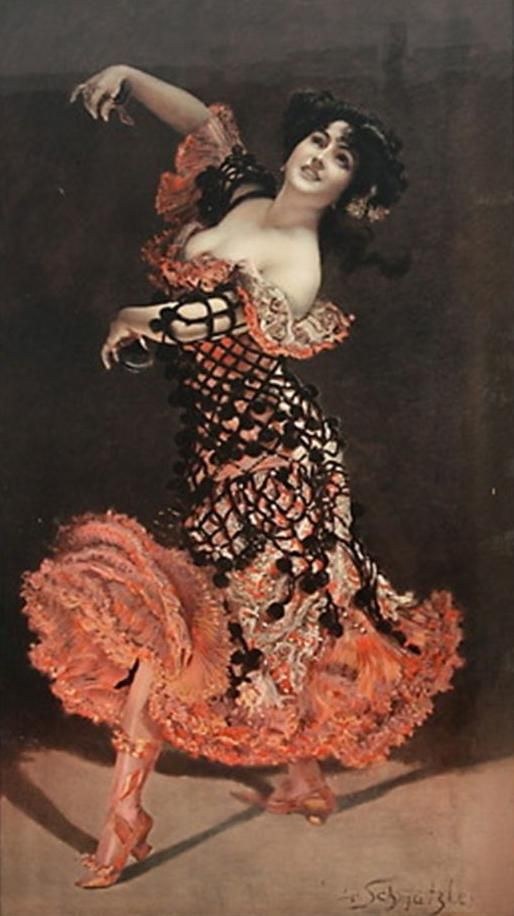
The flamenco dancer (Leopold Schmutzler)
Leopold Schmutzler
- Source:
- Wikimedia Commons
- Rights:
- Public domain — free to use, share and adapt.
- Recorded as:
- public_domain
This photograph documents flamenco at a crucial moment of international visibility and theatrical transformation, capturing both the technical and emotional intensity of the dance as it was presented to European audiences in the early 1900s. For historians of flamenco and theatrical dance, the image is valuable evidence of costume construction, the physical vocabulary of the dance, and the relationship between professional performers and the emerging entertainment industry of the period.
What you are looking at
A female dancer is photographed against a dark, neutral background in a dynamic pose of exuberant movement. She wears an ornately patterned costume in coral and black tones: a short, heavily ruffled skirt with layered flounces in coral silk, a black latticed or netted bodice with decorative elements, and coral lace accents at the neckline and sleeves. Her dark hair is styled in waves typical of early 20th-century fashion, adorned with what appears to be a comb or ornament. Her body is arched backward in an open, expansive position, with her right arm raised and extended expressively upward, her left arm bent across her torso. Her weight appears to be on her left leg while her right leg extends, creating a sense of suspended motion. The photograph captures the vivacity of a moment rather than a static pose, emphasizing the performer's command of the stage and the visual spectacle of the costume.
The dancing
The dancer occupies the frame alone, isolated against the dark background to draw full attention to her form and costume. Her body creates an extended, open frame with significant arch through the spine and torso—a position that demands control and flexibility. The arm positions are expressive rather than formally structured, suggesting emotional or gestural rather than balletic precision. Her posture and the momentum frozen in the photograph suggest weight carried in the lower body with an upward lift through the upper back and raised arm, characteristic of passionate, earthy movement rather than the vertical alignment of classical ballet.
The dance depicted
This is a flamenco dancer, as indicated by the title and the distinctive costume elements: the tiered ruffled skirt (falda) in the traditional flamenco style, the patterned bodice, and the overall presentation. The photograph captures the performer in a moment of emotional intensity and physical abandon that characterizes flamenco's expressive vocabulary. The open, arched posture and upward gesture suggest a moment of alegrías or similar alegre (joyful) palo, where the dancer displays exultant emotion and dynamic extension of the body. The costume and photographic presentation indicate this was a professional stage performer, likely in the early 1900s, when flamenco was gaining international recognition through theatrical presentations.
How it was made
This is a hand-colored photograph, a common method for creating chromatic images in the early 20th century before color film became standard. The artist's signature visible in the lower right corner indicates this was a professional studio photograph rather than a candid image. The coloring technique—evident in the vivid coral tones of the ruffles and the black patterning—gives the image the appearance of watercolor or hand-applied tints over a photographic base. This method of production was expensive and labor-intensive, indicating the dancer was a celebrated performer whose image was worth the cost of artistic enhancement for circulation as a postcard, promotional print, or theatrical documentation.
About this work
This is a studio photograph of a flamenco dancer from the early 20th century, documented in a moment of dynamic, emotionally charged movement. The image captures both the technical command and the theatrical presentation that made flamenco a sensation in European and international entertainments during this period. The hand-coloring and professional composition signal this was a work of significant artistic attention and commercial value—a record of a celebrated performer and the visual spectacle of the flamenco tradition as it was staged for theater audiences of the era. Leopold Schmutzler, as the credited photographer, was documenting the emerging theatrical presentation of flamenco as a modern performance art, at a moment when the dance was transitioning from Spanish regional tradition to international theatrical spectacle.
How to look at it
Attend to the moment the photographer has chosen to freeze: not a poised, completed position but a moment of maximum extension and emotional expression, with the body in full motion. Notice how the costume—particularly the ruffled skirt—is caught mid-movement, the layers suggesting the dynamic motion of the dance. The upward gesture of the raised arm and the backward arch of the torso convey the emotional excess and physical abandon that characterizes flamenco, rather than the restrained control of classical theatrical dance. The background is deliberately empty and dark, a modern photographic convention that emphasizes the performer's body and costume as the sole subject, separating the dancer from any theatrical context.
The artist
Leopold Schmutzler was an early 20th-century photographer active in theatrical and portrait documentation. The signature on this work indicates his professional practice of creating hand-colored photographic prints, a specialized and prestigious form of theatrical photography in the period. Schmutzler's work appears to have focused on capturing performers in theatrical costume and dramatic poses, creating images suitable for circulation as promotional materials and artistic prints.
The period
This photograph dates from the early 20th century, a period of intense European fascination with flamenco as both an exotic tradition and a modernist performance form. Flamenco was being extracted from its regional Spanish context and reconstructed for theatrical presentation in Paris, London, and other major European cities. Simultaneously, photography itself was becoming a major medium for documenting and promoting theatrical performance, replacing earlier printed engravings and lithographs. Hand-colored photographs like this one represented the cutting edge of theatrical promotion and artistic documentation.
Where it lives
This hand-colored photograph comes from Wikimedia Commons and is attributed to Leopold Schmutzler. The object is a professional theatrical photograph, likely produced as a promotional print or theatrical documentation, and subsequently reproduced and circulated widely enough to appear in digital archival collections.
Dance in this work
Questions about this work
What style of flamenco is this dancer performing?
The open, expansive posture and upward gesture suggest an alegre palo such as alegrías, where joy and emotional exuberance are central to the dance's character. The costume and pose indicate a stage presentation rather than a folkloric or regional form, so this is flamenco as it was being constructed for theatrical audiences in the early 1900s rather than as it was traditionally danced.
How was this image colored?
This is a hand-colored photograph, a technique in which an artist applied watercolor, oils, or other pigments directly to a black-and-white photographic print. This was a labor-intensive and expensive process, indicating the dancer was significant enough to justify the cost of artistic enhancement for promotion and sale.
When was flamenco becoming popular in Europe?
Flamenco began gaining international attention in the 1890s and became a sensation in European theaters in the early 1900s, when dancers and performers brought the tradition to Paris, London, and other major cities. This photograph documents that moment of theatrical transformation and intercultural fascination.
More dance artwork





