49 works in this view — arrow keys or swipe to move between them.
Dance in Art
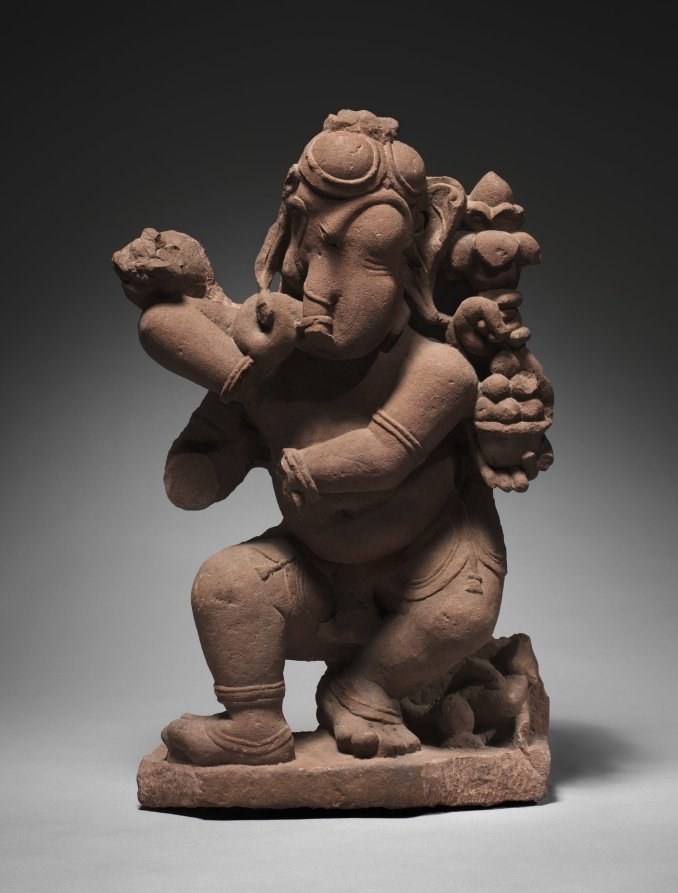
Dancing Ganesha
Unknown artist
- Medium:
- sandstone
- Collection:
- Indian and Southeast Asian Art
- Source:
- Cleveland Museum of Art
- Rights:
- Public domain — free to use, share and adapt.
- Recorded as:
- CC0
This sculpture preserves a vision of sacred dance as it was conceived and carved in medieval India, before the modern codification of classical Indian dance forms. The work shows that dance was integral to devotional theology and artistic practice centuries before the classical Bharatanatyam tradition took its modern form—it was not a peripheral performance but a central way of imagining and representing divine power and relationship. For anyone studying how dance functions in religious and artistic traditions globally, this object demonstrates the deep antiquity and sophistication of dance as a subject worthy of major sculptural investment in stone.
What you are looking at
A sandstone sculpture of Ganesha—the Hindu deity with an elephant head—stands in a dynamic, dancing posture on a rectangular base. The figure is rendered in warm brown sandstone with careful naturalistic detail. Ganesha's distinctive elephant head sits atop a rotund, human torso and legs; the body is adorned with ornamental bracelets at the wrists and ankles. What sets this work apart from typical Ganesha depictions is its multiplicity: the deity has six arms rather than the canonical four, each holding attributes or extended in gestures of movement. The left side of the figure holds what appears to be a bowl or vessel (the "bowl of sweet cakes" noted in the catalogue), while other hands gesture outward in dynamic poses. A small animal—possibly a rat or mouse (Ganesha's vahana or mount)—sits at the base near the deity's feet, a detail characteristic of Ganesha iconography. The sculptor has captured the figure mid-movement, with the weight distributed in a contrapposto-like stance that suggests the moment of dance rather than static repose. The surface shows the natural aging and weathering of medieval Indian stone carving.
The dancing
Ganesha's body is presented in a standing posture with the torso angled slightly, suggesting forward momentum and rhythm. The six arms extend variously: some raised in arcs away from the body, others bent at the elbow in gestures of offering or blessing. The legs are firmly planted, one slightly advanced, supporting the rotund torso in a position that reads as both stable and animated. The raised arms create a vertical composition that draws the eye upward through the layered gestures, simulating the kinetic energy of performance. The carving shows understanding of how a moving body fills space: the arms do not hang passively but arc and bend to suggest the continuous motion of dance.
The dance depicted
This sculpture depicts Ganesha in a form of devotional or cosmic dance (likely a regional South Indian tradition) that mimics the tandava or dynamic dance of Shiva—the deity's patron and spiritual superior in Hindu mythology. The catalogue notes that Ganesha dances to imitate and honor Shiva, inspiring affection and laughter in his followers through humorous mimicry; the extra two arms and the substitution of sweet cakes and a radish for more fearsome attributes reinforce this playful, devotional character. The dance here is not a codified classical form with prescribed steps and hand-positions visible in the sculpture, but rather a visualization of divine movement—a way of rendering the metaphysical idea of the dancing god into stone. The work belongs to Hindu devotional sculpture tradition where dance (and the pose of dancing) represents spiritual ecstasy, cosmic order, and the cyclical nature of creation.
How it was made
The work is carved from sandstone in the round—a technique requiring the sculptor to plan complex spatial relationships before cutting. Sandstone, softer than granite or basalt, permitted the fine detailing visible in facial features, jewelry, and the articulation of the multiple limbs. The stone retains tool marks and a somewhat granular surface quality characteristic of medieval Indian carving, suggesting this was not polished to a glossy finish but left with a matte, natural surface that would catch changing light across the day. The technique of undercutting—visible between the raised arms and torso—creates shadow and a sense of three-dimensional space, allowing the viewer to walk around the piece and discover new aspects of the pose from each angle.
About this work
This is a devotional sculpture from 10th-century India, likely from a temple context in South or Central India where Ganesha worship was prominent. It represents the deity engaged in a sacred dance that honors Shiva while demonstrating Ganesha's playful, beloved character within Hindu theology. The work sits at the intersection of spiritual devotion and artistic virtuosity: the sculptor had to convey both the theological idea (Ganesha dancing in imitation of Shiva) and the physical reality of a moving body in three-dimensional stone. The six-armed format, the attributes, and the dynamic pose all carry specific religious meaning while also showcasing the carver's technical skill in rendering complicated spatial relationships and balanced composition.
For viewers of dance, the work offers a window into how movement was understood and valued in Hindu religious culture—not as entertainment but as a mode of spiritual expression and cosmic order. The idea that a deity dances, and that this dancing is simultaneously graceful, reverent, and humorous, reflects a theology where the divine is not remote but intimate and relatable to human worshippers.
How to look at it
Look first at the posture: the angled torso and planted legs that suggest the figure is caught mid-step rather than standing at rest. Then trace the six arms and how each one breaks the silhouette differently—they are not symmetrical or uniform, but rather create an impression of continuous motion, as if the sculpture shows multiple instants of a dance compressed into one object. Notice how the sculptor has used the extended arms to create visual 'balance' even though the body is not centered: this too is a choreographic choice. Finally, observe the face and expression: serene and benevolent rather than fierce, reinforcing the playful, devotional character described in the iconographic tradition. The artist chose to show energy and humor in movement rather than power or terror.
The period
In the 10th century, when this sculpture was carved, Hindu temple culture in India was flourishing, and Ganesha worship was increasingly important across regions. The period saw the development of elaborate stone temple sculpture as a primary religious and artistic medium. While the later codified classical dances (Bharatanatyam, Kathak, and others) would not reach their standardized forms until centuries later, dance—particularly ecstatic, devotional movement—was already a recognized and theologically significant practice in temple worship and mythology. Sculptures and reliefs of dancing gods (especially Shiva in his cosmic dance, or nataraja) were common in temple decoration, and this Ganesha sculpture participates in that broader tradition of rendering divine movement in stone.
Where it lives
The sculpture is held in the Indian and Southeast Asian Art collection of the Cleveland Museum of Art (CMA) and is dated to circa 990 CE. It is carved from sandstone, the primary sculptural medium of medieval Indian temple culture.
Dance in this work
Questions about this work
Why does this Ganesha have six arms instead of four?
In Hindu iconography, the number of arms can vary depending on the specific form and legend being depicted. In this case, the extra arms emphasize Ganesha's cosmic dance—multiple limbs suggest multiplicity of action and power. The catalogue notes that these additional arms hold the attributes of sweet cakes and a radish rather than more fearsome objects, reflecting Ganesha's role as a beloved, beneficent deity who mimics Shiva's dance in a humorous and playful manner.
What is the relationship between this dance and Shiva's dance?
According to Hindu theology, Ganesha—as lord of Shiva's attendant spirits (ganas)—dances in imitation of Shiva's cosmic dance (tandava). This is not mockery but devotion and mimicry meant to inspire affection. Shiva's dance represents the cyclical creation and destruction of the universe; Ganesha's dance, performed by a rotund and comic figure, brings that cosmic principle down to a more intimate, humorous level that helps Shiva's followers feel connected to divine power.
What is the animal at Ganesha's feet?
The small creature is Ganesha's vahana (vehicle or mount), typically depicted as a rat or mouse. In Hindu iconography, every major deity has a vahana that represents an aspect of their character or power. The rat for Ganesha symbolizes intelligence and the ability to navigate obstacles—fitting for a deity associated with success and the removal of impediments.
Where would this sculpture have been displayed?
Based on its style, size, and subject matter, this work likely belonged to a Hindu temple, either as a standalone shrine figure or as part of a larger sculptural program decorating a temple structure. Temple sculpture in medieval India served both devotional and didactic purposes, teaching worshippers about deity forms and their stories while inviting prayer and ritual engagement.
More dance artwork





