49 works in this view — arrow keys or swipe to move between them.
Dance in Art
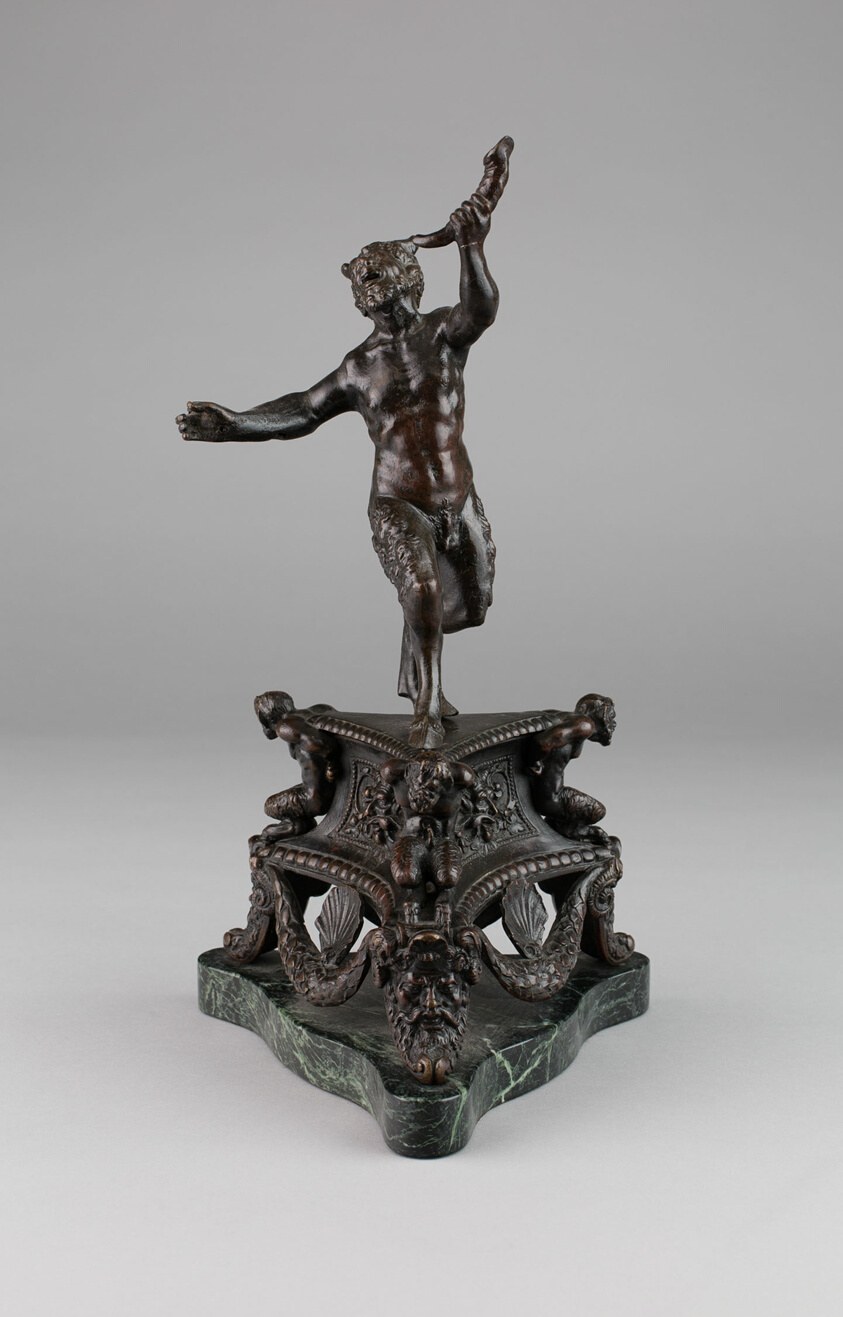
Dancing Satyr on Socle
Style of Andrea Riccio (Italian, 1470–1532)
- Medium:
- Bronze, dark brown patina
- Collection:
- Painting and Sculpture of Europe
- Source:
- Art Institute of Chicago
- Rights:
- Public domain — free to use, share and adapt.
- Recorded as:
- CC0 (Public Domain)
This work shows how Renaissance artists used mythological dancing figures to explore human movement and emotion outside the formal constraints of courtly or religious dance. For historians of dance and embodiment, it documents how the classical body—and particularly the satyr's uninhibited physicality—became a model for expressing joy and sensuality in a period obsessed with recovering antique art and ideas.
What you are looking at
A bronze statuette of a youthful male figure stands in contrapposto on an ornately carved socle (base). The figure is nude save for drapery at the hips and displays the idealized anatomy of classical sculpture. His left leg is planted while the right is relaxed, and his arms are raised asymmetrically—the right arm stretched upward and outward as if reaching or presenting something, the left arm extended to the side at shoulder height. His head is tilted upward toward the raised arm. The pose suggests joyful exuberance or revelry. The socle beneath him is elaborate: it features two bearded male heads (satyr masks) flanking the front, shell and scroll ornaments, and acanthus leaf decoration typical of Renaissance design. The base itself is green marble, providing visual weight and contrast to the dark patinated bronze figure above. The whole composition conveys vitality and movement frozen in bronze.
The dancing
A single male figure in a standing position with visible weight distribution emphasizing the right leg. The raised right arm reaches high and backward, palm open, while the left arm extends outward at chest height with apparent ease. The torso twists slightly to face the viewer while the head gazes upward toward the raised arm, creating a sense of upward momentum and joy. The musculature is rendered with anatomical precision—lean, youthful, and energetic. The pose is one of celebration rather than dance steps, with the body expressing emotional rather than technical movement.
The dance depicted
This depicts a satyr—a figure from classical mythology—rather than human dance. Satyrs were companions of Dionysus associated with wine, fertility, and unbridled joy, and they appear frequently in Renaissance art as symbols of revelry and the sensual pleasures of ancient ritual. The raised, reaching gesture and the upturned gaze suggest ecstatic movement or celebration, possibly evoking the frenzied dances associated with Dionysian worship in antiquity. However, this is not depiction of a recognizable dance form but rather an expression of mythological license and Renaissance fascination with the antique. The figure conveys the *idea* of dance—spontaneous, joyful movement—rather than the technique of any specific style.
How it was made
This is a cast bronze sculpture, likely created by the lost-wax process, with a dark brown patina indicating age and exposure. The work shows the high finish and precise anatomical detail characteristic of Renaissance bronze casting, particularly the school of Northern Italy. The socle is carved from marble and embellished with relief details of exceptional fineness. Bronze allowed the artist to achieve dynamic poses and slender proportions that would be impossible in stone, and the small scale and precious material indicate this was a collector's object—a studiolo piece for a wealthy patron rather than a public monument.
About this work
This Renaissance bronze statuette represents a satyr in a pose of joyful abandon, carved with the anatomical precision and mythological erudition of early 16th-century Italian sculpture. The work belongs to the tradition of classicizing small bronzes that flourished in Northern Italy, particularly among the workshop of Andrea Riccio and his followers. Satyrs and other mythological figures offered Renaissance artists a vehicle for exploring the human body in dynamic movement and expressing ideas about sensuality, nature, and the recovery of classical antiquity. The figure's pose—reaching upward with apparent ecstasy—captures a moment of emotional intensity rather than codified dance steps, yet communicates movement and vitality through its asymmetrical balance and energetic gesture. The work exemplifies how Renaissance artists drew on ancient sources and contemporary observation to reimagine the body in motion.
How to look at it
Observe the figure's contrapposto stance and how the upper body twists toward the viewer while the weight settles through the right leg. The raised arm and upturned gaze direct attention upward and suggest a moment of ecstatic celebration. Note how the artist has used the marble socle—particularly the satyr masks flanking the piece—to anchor this figure of mythological wildness within a framework of refined, collected taste. The small scale invites close, intimate viewing, and the details of the drapery, musculature, and ornamental base reward careful attention.
The artist
The attribution to the style of Andrea Riccio (1470–1532) reflects the widespread practice of his workshop and immediate followers in early 16th-century Padua. Riccio was the preeminent bronze sculptor of his era and a master of both monumental works and small virtuoso pieces. His workshop produced a vast number of bronzes—many now in major museums—that combined technical brilliance with imaginative subject matter drawn from classical literature, natural history, and contemporary observation. The satyr was among Riccio's favored subjects, appearing in multiple versions and variations across his oeuvre.
The period
The early 16th century saw an explosion of interest in classical mythology among Italian artists and collectors, driven by the recovery of antique texts and objects and by the cultural prestige of Greco-Roman civilization. Dance in this period was divided sharply: the nobility performed courtly dances like the pavane and galliard, which were highly formalized and rule-bound; popular culture had its own dances; but the classical satyr offered a mythological space where the body could express unrestrained joy and sensuality. Renaissance humanism celebrated the recovery of the human form and its capacities, and the satyr—ancient, half-wild, devoted to pleasure—became an ideal vehicle for that expression in art.
Where it lives
Held in the Painting and Sculpture of Europe collection at the Art Institute of Chicago (aic). The work is catalogued as bronze and represents the type of collector's bronze—typically small, precious, and technically masterful—that formed the core of Renaissance private collections and studioli.
Dance in this work
Questions about this work
Is this a dancer?
No—it is a satyr, a mythological figure from classical antiquity. But satyrs were closely associated with dancing and revelry in ancient and Renaissance culture, and this particular figure is posed to convey joyful, uninhibited movement. Renaissance artists used mythological figures like satyrs to explore ideas about the body, emotion, and sensuality that formal human dance could not easily express.
What is the marble base for?
The base, or socle, serves both practical and aesthetic purposes. Structurally, it provides stability for the bronze figure. Decoratively, it elevates the bronze to the status of precious collected art and adds ornamental richness. The satyr masks on the socle connect the dancing figure above to its mythological identity and the culture of classical collecting.
Why are there satyr heads on the base?
The satyr masks reinforce the mythological identity of the figure above and connect it to the tradition of theatrical and ritual representation. In the Renaissance, satyrs appeared in ancient drama, as decorative motifs, and as symbols of unrestrained nature. Including satyr faces on the base emphasizes the classical pedigree and thematic coherence of the object.
How would this have been made?
The bronze figure was likely created using the lost-wax casting process: a sculptor modeled the figure in wax, created a mold around it, and heated the mold to remove the wax, then poured molten bronze into the cavity. The marble socle was separately carved and decorated by a stonemason. The two pieces were then fitted together. This labor-intensive process was expensive and placed such works within reach only of wealthy collectors.
More dance artwork





