49 works in this view — arrow keys or swipe to move between them.
Dance in Art
La Danse
Wilhelm, C. RI
- Collection:
- Theatre costume
- Source:
- Victoria and Albert Museum
- Rights:
- Rights vary by item — check the source record before reusing this image. Source record ↗
- Recorded as:
- V&A — check rights per item
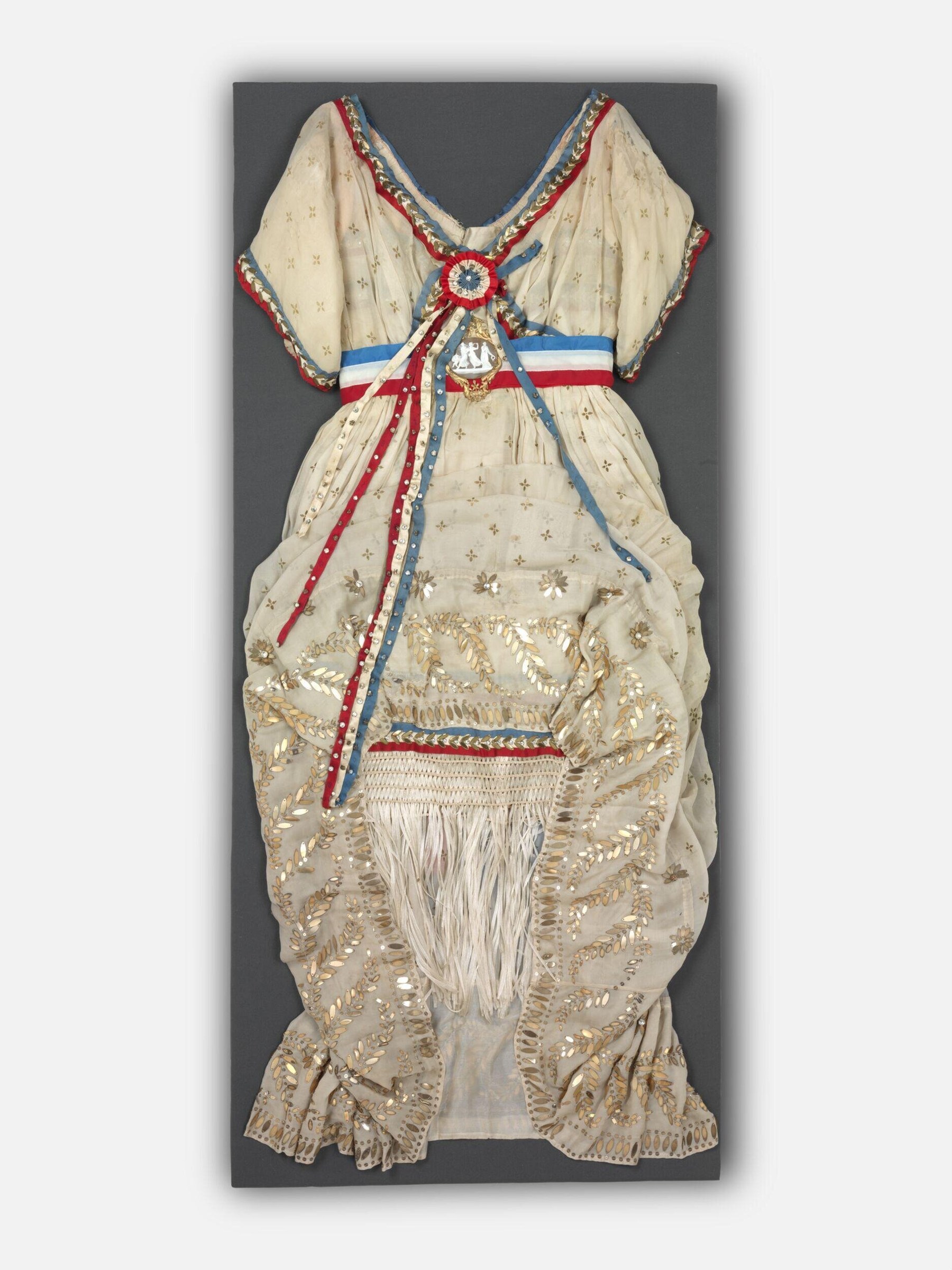
This costume exemplifies how Belle Époque theater merged allegory, nationalism, and female physicality on stage, using dress as a vehicle for patriotic performance and spectacle. The garment's construction reveals the practical demands of early 20th-century theatrical choreography—the massive skirt volume and elaborate trim were engineered for visibility, swirl, and impact in stage lighting. For dance historians, the costume documents how nationalism and gender were performed through silhouette and ornamentation in the years surrounding World War I.
What you are looking at
A theatrical costume is displayed flat against a neutral ground, presenting a woman's ensemble from the early 20th century. The dress is constructed from cream or pale ivory silk or linen, scattered throughout with small floral or star-like golden embroidered motifs. The dominant visual feature is a dramatically gathered skirt that extends to the floor with voluminous pleats and deep flounces at the hem, creating a silhouette of considerable width and movement potential. At the waist sits a decorative ribbon or sash in tricolor red, white, and blue—the French national colors—cinched with a central ornament (possibly a military insignia or medal). The neckline is cut wide and low, with short cap sleeves that sit off the shoulder. Coordinating the ensemble are elaborate red and blue braided trim elements edging the neckline and armholes, and matching decorative braiding frames the hem. The overall effect is one of patriotic theater costume: the silhouette and ornamentation suggest a French female dancer or allegorical figure from the Belle Époque or early interwar period.
The dancing
This is a costume object rather than a depiction of a dancer in motion, so no living body or specific gesture is present. However, the garment's construction reveals much about how it was worn and moved: the extreme volume of the skirt, gathered at the waist and released into multiple tiers, was designed to create sweeping, swirling effects in performance. The weight of the fabric and the depth of the flounces suggest the costume accommodated rapid rotational movement, lifts, or ensemble choreography where the skirt's mass and shimmer would read across a theater. The low neckline and off-shoulder placement indicate the arms and torso were meant to be visible and mobile.
The dance depicted
The costume appears designed for a French allegorical or patriotic theatrical dance of the early 20th century, likely associated with a character representing France or victory. The tricolor insignia, national ribbon work, and celebratory silhouette suggest a formal theatrical context—possibly a ballet or pantomime rather than social dance. The extreme skirt volume and formal ornamentation point to a solo role or featured ensemble piece, rather than couple work. Without additional documentation, the specific dance form and narrative role remain uncertain, though the period and style align with Belle Époque theatrical dance productions that blended ballet, music hall, and allegorical spectacle.
How it was made
This is a three-dimensional textile costume object photographed flat for documentation purposes. The dress is constructed from woven silk or linen base fabric with applied embroidery (likely metal thread or silk chenille in gold, and silk embroidery for the floral motifs) throughout the bodice and skirt. The trim elements are separately woven ribbon or braid in red, white, and blue, sewn to the edges. The gathering and pleating of the skirt required skilled hand-sewing or period pleating techniques. The photograph is archival documentation, likely made to record the costume for the theater's collection records, allowing study of construction, materials, and design without handling the fragile textile.
About this work
This is a French theatrical costume from approximately 1912, designed for a female dancer or allegorical character. The dress combines Edwardian silhouette (low neckline, short sleeves, gathered waist) with patriotic French symbolism (tricolor ribbon, military decoration), suggesting it was created for a nationalistic or victory-themed performance during the Belle Époque. The costume's extreme skirt volume and decorative emphasis indicate it was designed for visibility and movement in a formal theatrical setting—likely a ballet, pantomime, or music-hall number rather than concert or social dance. The title "La Danse" and the artist's name "Wilhelm, C. RI" suggest this was a commissioned or documented creation, though archival details are limited.
How to look at it
Examine the costume's proportions: the extreme volume of the skirt relative to the fitted bodice creates a silhouette designed to dominate the stage and read clearly from a distance. Notice the placement of color and pattern—the tricolor ribbon and central medal draw the eye to the waist and center front, establishing the figure's authority and identity before the eye travels to the dramatic sweep of the skirt. The embroidered motifs scattered across the pale ground create shimmer and movement even in stillness, suggesting that in motion the costume would have created flowing, visual spectacle. The contrast between the austere upper body (bare shoulders, narrow waist) and the lavish lower body signals a dancer meant to be watched from the front, with the skirt designed for rotational or traveling movement across the stage.
The artist
The record attributes this costume to Wilhelm, C. RI (date 1912). Wilhelm may refer to a costume designer, dressmaker, or theater workshop; the abbreviation "RI" is unclear without access to collection records. Early 20th-century French theater costumes were often created by specialist ateliers or named craftspeople working for major Paris theaters, music halls (such as the Folies-Bergère), and opera companies. Without further documentation, the artist's full identity and practice cannot be established.
The period
In the years 1910–1914, French theatrical dance existed at the intersection of classical ballet (still dominated by the legacy of the Opéra and Russian Imperial influence via the Ballets Russes), music-hall spectacle, and avant-garde modernism. Patriotic and allegorical themes gained prominence as European tensions rose toward World War I; female dancers in elaborate costumes representing France, Victory, or abstract ideals were common subjects in theaters from the Opéra Comique to the music halls. The extreme silhouette and ornamentation of this costume reflect the Edwardian moment's theatrical excess, combining corsetry and gathered skirts with military or civic symbolism. By this period, theatrical costume design had become a recognized art form, with designers of national reputation creating elaborate spectacles for both highbrow theater and popular entertainment.
Where it lives
The costume is held by the Theater collection under source designation "va" (notation clarification needed). It is catalogued as a theater costume, indicating it was a working garment from a performance context rather than a created artwork for display.
Dance in this work
Questions about this work
What does the tricolor ribbon and medal signify?
The red, white, and blue French national colors and the central ornament (likely a military or civic medal) indicate this costume represented a patriotic character or allegorical figure of France itself—possibly in a victory-themed ballet or theatrical spectacle. The symbolism was typical of Belle Époque theater, which frequently created elaborate fantasies around national pride and female beauty.
Could a dancer actually move in a skirt this large?
Yes. The gathered construction allows the skirt to lift and swirl dramatically in rotation, and the multiple tiers (flounces) are designed to catch light and air during movement. The weight and volume would create sweeping visual effects—a key aesthetic goal in early 20th-century theatrical dance, where the costume's motion was part of the choreography.
What kind of dance was this costume made for?
The formal silhouette, ornamentation, and patriotic symbolism suggest a ballet, pantomime, or music-hall number rather than social dance or concert modern dance. The costume's design prioritizes theatrical visibility and allegorical character over virtuosity, so it was likely worn by a featured dancer in an ensemble or solo piece rather than in a narrative ballet requiring complex footwork.
More dance artwork





