49 works in this view — arrow keys or swipe to move between them.
Dance in Art
Guy Little Theatrical Photograph
Walker, Samuel Alex
- Collection:
- Photograph
- Source:
- Victoria and Albert Museum
- Rights:
- Rights vary by item — check the source record before reusing this image. Source record ↗
- Recorded as:
- V&A — check rights per item
The photograph documents the visual culture of Victorian theatrical performance at a moment when photography was becoming the primary means of recording stage costume and character. For historians of performance, pantomime, and popular entertainment, it provides concrete evidence of how comic theatrical characters were embodied and presented to audiences. The work also illustrates the breadth of performance tradition that coexisted with ballet and social dance in the 1860s.
What you are looking at
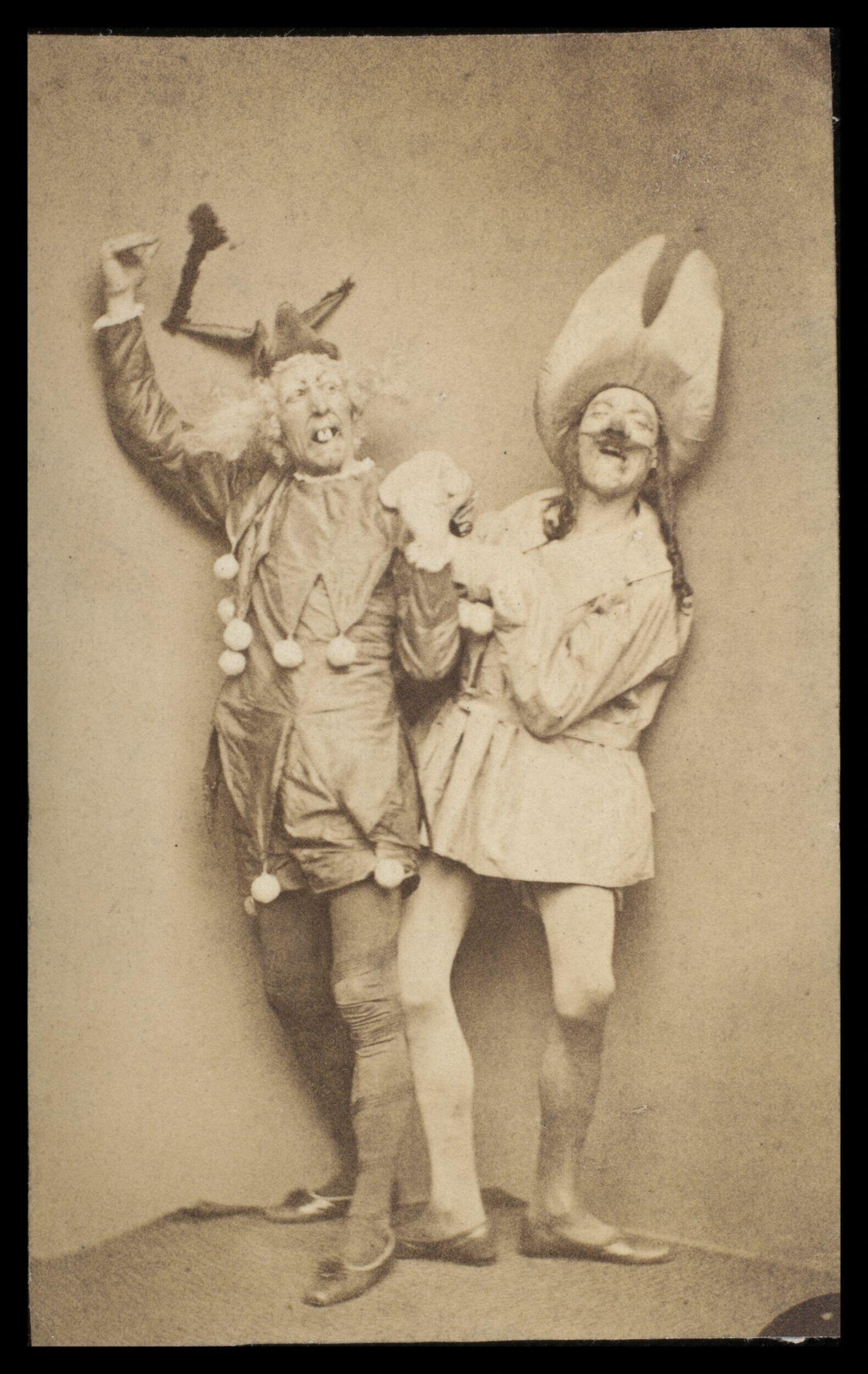
Two figures in elaborate theatrical costume dominate this sepia-toned photograph. Both wear tall, ornate headdresses: the figure on the left sports a feathered or plume-like structure, while the figure on the right wears an equally tall, stiffened headdress in a pale fabric. Both are grinning widely with exaggerated expressions. The figure on the left, dressed in a patterned tunic or short jacket with ball-button decoration down the front, strikes a theatrical pose with one arm raised dynamically. The figure on the right wears a pale, loose garment and stands with a more restrained posture. Both wear tights or close-fitting hose and flat shoes suited to stage movement. The background is a plain, neutral studio setting typical of theatrical photography of the 1860s—no scenery, no props beyond the costumes themselves. The composition is frontal and portrait-like, presenting the figures as theatrical characters to be viewed directly.
The dancing
The two performers occupy a shallow stage plane, arranged in an asymmetrical composition. The figure on the left leans slightly forward with knees bent in an active, playful stance, one arm extended upward in a gesture of exuberance or address; the figure on the right stands more upright and centered. Both maintain the theatrical facial expressions and body language of comic or pantomimic characters rather than dancers in a formal dance hold. Neither figure displays the closed position, frame, or regulated posture of ballroom, classical ballet, or social partner dance; the movement vocabulary appears to belong to theatrical pantomime or music-hall performance.
The dance depicted
This is most likely theatrical pantomime or music-hall entertainment from the mid-Victorian era, not a codified dance form. The exaggerated expressions, comic gestures, and character costumes point toward the visual language of pantomime or burlesque rather than classical dance. Without additional context about the performance or the character roles they represent, the specific narrative or dance idiom cannot be determined. The title 'Guy Little Theatrical Photograph' may refer to a character name, a performer, or a performance title, but the image alone does not reveal it.
How it was made
This is a photograph, most likely an albumen print or similar gelatin-based process common in the 1860s. The sepia tone, even lighting, and smooth surface are consistent with studio portraiture of that period. Photography allowed theatrical performers to be documented in costume in a fixed, formal composition—cheaper and more durable than hand-drawn illustration, and more widely circulated. The frontal, staged presentation suggests this was a promotional or documentation photograph, likely produced for sale to the public or for the theatrical company's own archive. The photographic medium made such theatrical documentation routine and affordable by the 1860s.
About this work
This 1866 theatrical photograph documents two performers in exuberant pantomimic costume and character, captured in a studio setting. It records a moment in the Victorian theatrical tradition when music hall, pantomime, and popular stage comedy flourished alongside more formal concert dance. The performers' comic expressions and dynamic gestures reveal the vocabulary of theatrical entertainment of the era—a visual language now largely preserved only in photographs and playbills. The work belongs in a dance gallery because theatrical performance, pantomime, and comic stage movement are integral to the history of performance and spectacle, even when they sit outside the technical vocabulary of 'dance' proper.
How to look at it
Attend to the performers' faces and hand gestures—the exaggerated grin, the raised arm, the overall 'mugging' for the camera that marks this as theatrical character rather than balletic or social dance performance. The tall, stiffened headdresses are key markers of theatrical fantasy costume, not everyday dress or ballroom fashion. Notice the slight forward lean and bent knees of the left figure, and the stillness of the right; the photograph freezes a moment of theatrical expression rather than dance technique. The sepia tone and even studio lighting are typical of the 1860s photographic process, which required long exposure times and encouraged formal, held poses.
The artist
Samuel Alex Walker was a theatrical photographer active in the mid-nineteenth century, working in the tradition of studio portraiture and performance documentation. Theatrical photographers of this period occupied an important niche: they captured performers in costume for promotional purposes, archival records, and sale to the public. Walker's work is consistent with the conventions of 1860s theatrical photography—frontal composition, plain background, emphasis on costume and character.
The period
In the 1860s, Victorian theatrical culture encompassed classical ballet (still a prestige form imported largely from France), but also the more popular music halls, pantomime, and burlesque that entertained broader urban audiences. Photography had only recently become practical for studio use, and theatrical photographers quickly recognized that documenting performers in costume was both commercially viable and culturally important. This photograph dates to the period when pantomime and music-hall entertainment were at their height in Britain, before those forms gradually ceded dominance to music-hall revue and the later developments of musical theatre.
Where it lives
The work is catalogued as a theatrical photograph by Samuel Alex Walker in the Virginia collection. It is described simply as a 'Guy Little Theatrical Photograph' with a date of 1866, but further catalogue details on provenance, performance context, or the identity of the two performers are not recorded.
Dance in this work
Questions about this work
Are these dancers?
These are theatrical performers in a pantomimic or music-hall tradition, not dancers in the sense of ballet or formal social dance. Their vocabulary is comic gesture and character expression rather than codified movement technique. They represent the broader world of Victorian theatrical performance that coexisted with dance.
Why is the photograph so still and posed?
Studio photography in the 1860s required long exposure times, so performers could not move during the shot. Photographers worked with models who held poses; theatrical photographers asked performers to strike characteristic attitudes or expressions that conveyed character. The result is a 'frozen' moment of theatrical presentation rather than a captured movement.
What do the tall headdresses mean?
In Victorian pantomime and theatrical costume, tall, ornate headdresses were markers of fantasy, magic, or comic character. They were impractical in everyday life and immediately signaled to the audience that they were watching a fictional or heightened theatrical world. The headdresses are as much part of the character as the exaggerated facial expressions.
Who was Guy Little?
The catalogue does not specify whether 'Guy Little' refers to a character, a performer, or a performance title. Without additional documentation, the identity remains uncertain. The photograph is the primary record of this theatrical moment.
More dance artwork





