49 works in this view — arrow keys or swipe to move between them.
Dance in Art
Dancer
Derby Porcelain Factory
- Collection:
- Figure
- Source:
- Victoria and Albert Museum
- Rights:
- Rights vary by item — check the source record before reusing this image. Source record ↗
- Recorded as:
- V&A — check rights per item
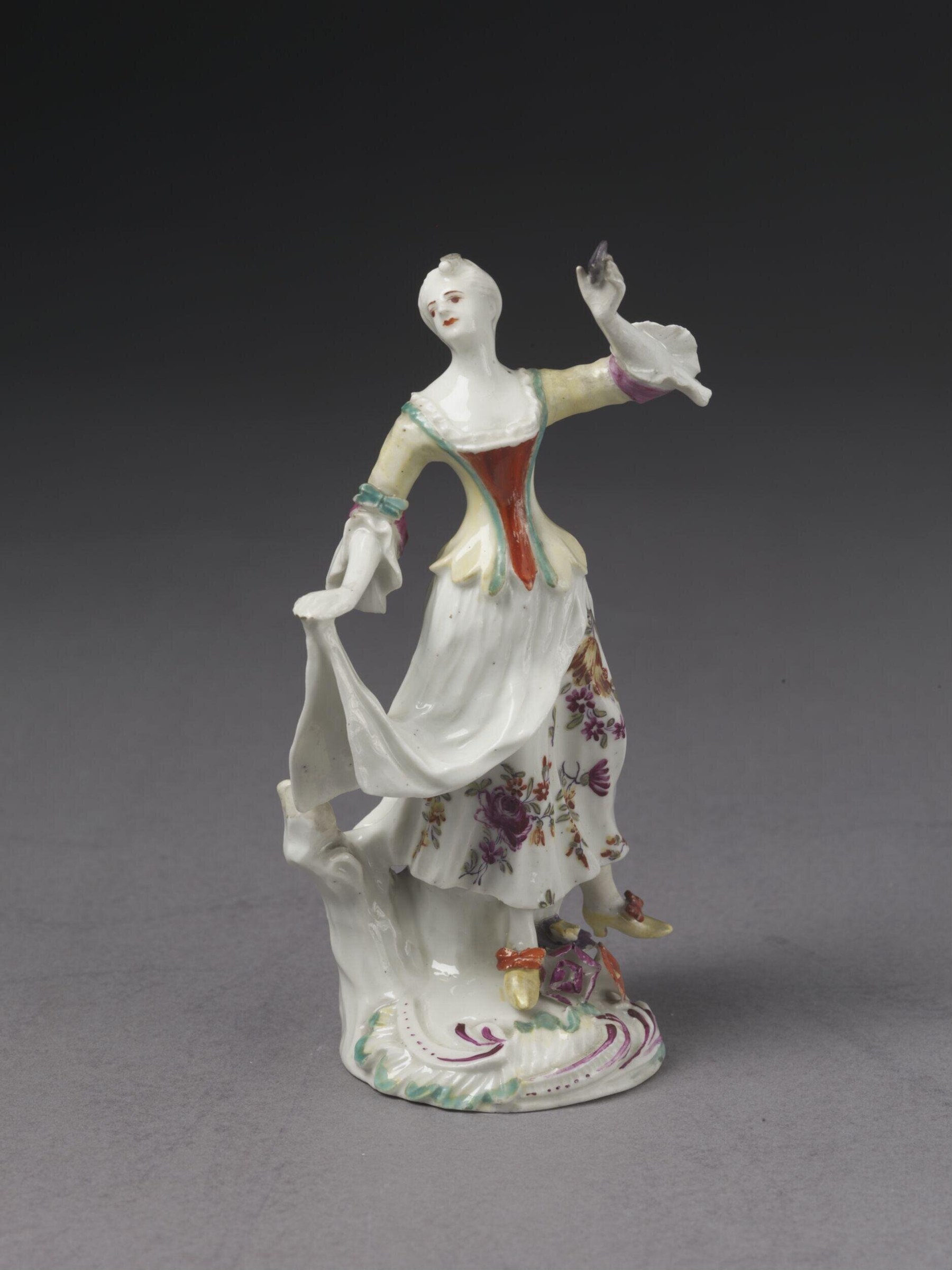
For historians of dance, this figurine is a three-dimensional record of how an educated woman of the 1760s was expected to move and present herself in social contexts. It shows what counted as graceful in its moment: the soft, controlled arm, the delicate lift of the skirt, the elongated posture—a visual argument about femininity, leisure, and courtly virtue made in porcelain and paint.
What you are looking at
A porcelain figurine of a young woman in 18th-century dress stands against a neutral ground. She wears a structured corset in deep red or burgundy over a cream-colored chemise with white lace cuffs and collar, paired with a full skirt of white fabric decorated with purple and reddish floral sprays. Pale yellow or gilt slippers with heeled feet ground her stance. Her left arm is raised and extended outward in a graceful arc, with the white fabric of her skirt caught and lifted by her right hand, creating a sense of movement and display. Her posture is upright and elegant, her pale face—painted with delicate features in the Rococo manner—turned slightly upward. The figure sits on a scrolling base ornamented with painted floral motifs in purple and green, characteristic of mid-18th-century Derby porcelain decoration.
The dancing
A single female figure in a standing position with asymmetrical arm placement: the left arm extended outward at approximately shoulder height with a gentle curve, while the right hand gathers and displays the skirt fabric. Her weight appears evenly distributed, with no visible shift to either leg—a posed rather than truly dynamic stance. The raised skirt reveals the structured undergarments and slippered feet beneath. The elongated proportions and refined posture reflect the aesthetic ideals of Rococo courtly display rather than the articulated joints and turned-out positions of formal ballet technique.
The dance depicted
This figure most likely represents a dancer or society woman performing a court dance of the 1760s, probably a minuet or an allemande. The pose—particularly the lifted arm and gathered skirt—is consistent with the conventions of Rococo dance imagery, where women display grace, delicacy, and courtly refinement rather than technical virtuosity. The sculpture captures a moment of elegant presentation rather than active footwork or partnered interaction, typical of how 18th-century porcelain manufacturers depicted fashionable social dancing. The pose recalls the aesthetic of the minuet, where restrained upper-body movement and careful skirt management were central to the performance.
How it was made
This is a painted porcelain figurine of the type produced at the Derby Porcelain Factory in the English Midlands. Porcelain sculpture of this kind was hand-modeled, assembled from separately cast parts, and then underglaize-painted with enamel colors and gilding in careful detail. The technique allowed for fine detail in facial features and textile decoration while requiring the artist to understand the mechanics of pose and balance in three dimensions—the figure must stand stably while suggesting motion. Such figurines were luxury goods, displayed in cabinet collections or on mantelpieces, and circulated through trade rather than exhibition; they document how the professional and merchant classes understood and valued fashionable dance.
About this work
This Derby porcelain figurine captures an elegant moment in 18th-century social dancing—a young woman in fashionable dress posed with one arm raised and her skirt gathered, as if in the midst of a minuet or court dance. The work is typical of the Rococo aesthetic that dominated English and Continental porcelain manufacture in the 1760s, when small sculpture became a vehicle for recording contemporary fashion, manners, and taste. It belongs in a gallery of dance imagery because it documents not the training or technique of professional dance, but the integration of dancing into the daily life and social performance of the gentry—how movement, dress, and deportment combined to signal refinement and status.
How to look at it
Notice the artist's attention to the mechanics of the skirt—how it is gathered and lifted to show the petticoat and slippers beneath, a crucial detail in displaying the care and expense of a woman's dress. The raised arm is not high or turned-out in the manner of later theatrical ballet, but softly curved and held at a conversational height, suited to the contained, restrained aesthetic of the minuet. The slight upward tilt of the head completes a pose of modest grace and elegant composure—the figure is performing for an imagined social audience, not a theatrical one. The sculptor has frozen a moment of display, capturing the essence of Rococo courtly movement in its stillness.
The artist
The Derby Porcelain Factory (founded 1750, initially as the Cockpit Hill works; chartered as Derby Porcelain from 1756 onwards) was one of the major English manufacturers of the Rococo period. Derby figures, which included dancers, shepherdesses, and other fashionable subjects, were modeled by artists including André Planché and later William Duesbury's workshops. These works circulated in the luxury domestic market and were often copied from Continental prototypes or from prints and fashion sources. The factory specialized in meticulously painted figures with gilded accents, reflecting the tastes of the English professional and merchant classes who aspired to Continental sophistication.
The period
The 1760s were the height of the English Rococo, a period when porcelain figurines had become a standard luxury good in fashionable households. At the same time, minuet dancing remained the dominant social accomplishment for both men and women of genteel birth—it was taught in academies, featured in balls and assemblies, and featured prominently in conduct literature and fashion prints. Porcelain manufactures like Derby responded to this market by producing figurines of dancers, courtiers, and fashionable society, many of which survive in British museum collections. These objects sit at the intersection of dance practice, fashion, and material culture: they document what society valued in feminine movement at a specific historical moment.
Where it lives
This is a Derby Porcelain Factory production, identified by the museum as a figure from their collection with the notation "va" (likely indicating a specific accession or catalogue system). Derby figurines of dancers and courtiers were produced in numbers during the 1760s–1780s and are now held in major British and American collections.
Dance in this work
Questions about this work
Is this a professional dancer or an amateur?
This is a figure representing a fashionable amateur—a member of the gentry or merchant class for whom dancing was a social accomplishment and marker of gentility. The refined pose, the expensive dress, and the domestic context of a parlor figurine all indicate social dancing, not theatrical or professional performance.
What dance is she doing?
Most likely a minuet or allemande, the dominant couple dances of the 1760s among the educated classes. The pose—with one arm gracefully raised and the skirt gathered—is consistent with the restrained, elegant aesthetic of minuet dancing as it was depicted in fashion prints and dance instruction books of the period.
Why is her skirt lifted?
In fashionable social dancing of this period, women managed their skirts as part of the performance—gathering and lifting them to show the quality of the undergarments and slippers, and to allow freedom of movement. This detail was important to how dancing women were depicted in all visual media of the era.
What is this figurine made of?
Porcelain, hand-modeled and assembled at the Derby Porcelain Factory, then painted with enamel colors and gilded. This technique allowed for fine detail and made the object a precious, collectible luxury item for display in a home.
More dance artwork





