Historic Baroque Court
Baroque court dances from the 17th and 18th centuries, characterized by ornamented step vocabulary, turned-out lower body, sustained carriage of the arms (port de bras), and choreographic notation in the Beauchamp–Feuillet system.
11 dance styles in this genre
Historical Origins
Baroque court dances flourished in 17th and 18th century European courts, particularly in France under kings like Louis XIV who established dance as a central courtly practice. Louis XIV established the Académie Royale de Danse in 1661, the first dance institution in the Western world; thirteen dancing masters were granted its charter and tasked with standardizing instruction and licensing teachers. Pierre Beauchamp was appointed director and codified the five basic ballet positions, which remain foundational to classical ballet technique. In 1672 the dance academy was absorbed into the Académie Royale de Musique under composer Jean-Baptiste Lully — the institution that is today the Paris Opéra. Baroque dances evolved from Renaissance forms but incorporated greater virtuosity, ornamentation, and technical complexity. These dances appeared in court spectacles, ballet de cour performances, and social gatherings. Italian and German courts developed their own baroque dance traditions alongside French models. The era established dance as a sophisticated art form worthy of serious study and patronage.
Cultural Significance
Baroque court dances were a primary instrument of royal self-representation, particularly under Louis XIV, who appeared as principal dancer in court ballets through 1670. Public dancing reinforced hierarchical seating, processional order, and the visible distinction of rank. Louis XIV's personal participation in ballets reinforced the cultural centrality of dance in aristocratic life. These dances affirmed hierarchical social order, with dancers' positions and movements reflecting their social rank. The formalization of dance technique during the Baroque era elevated dance from courtly entertainment to serious art form. The establishment of official academies and notation systems demonstrated the era's scientific and rational approach to knowledge, including physical movement. Baroque court dances maintained significance as precursors to classical ballet and as documents of courtly aesthetics. Today, these dances represent a crucial transition between social dance and theatrical performance.
Musical Characteristics
Baroque court dances were performed to instrumental ensemble music featuring strings, harpsichord, oboes, and other Baroque instruments. The music featured clear metrical structures, typically in duple or triple meters, with regular phrase structures allowing dancers to execute consistent patterns. By the early 18th century the standard Baroque dance suite comprised allemande, courante, sarabande, and gigue in fixed order. Additional movements known as galanteries — including the minuet (couple dance in triple meter, dominant in aristocratic ballrooms c.1650–1750), the bourrée, the gavotte, and others — were commonly inserted. The sarabande arrived in 16th-century Spain as a fast, disreputable dance and was reworked in France into a slow, stately triple-meter form; the gigue originated in the British Isles. Composers like Lully created distinctive styles for different dances, with music serving the dance's character and technical requirements. The music often featured ornamentation reflecting Baroque aesthetic principles. Harpsichord provided steady harmonic foundation while upper instrumental parts carried the melody, allowing dancers to hear clear rhythmic patterns.
Core Movement Principles
Baroque court dances emphasized turned-out positions and arms, graceful port de bras (carriage of the arms), and ornamented movement. The five basic ballet positions established by Beauchamp remain central to classical ballet today. Movement featured greater verticality and lift than Renaissance dances, with dancers executing higher steps and more complex footwork patterns. Arm movements became more elaborate and decorative, with graceful curves and gestural quality. Movement was sustained, with regular phrase length and smooth transitions between steps. Positions en dehors (the legs rotated outward from the hips) became standard, distinguishing the academic style from contemporary popular dance. Choreography incorporated rhythmic ornamentation — anticipations, syncopations, and added beats — notated in the Beauchamp–Feuillet system published by Raoul-Auger Feuillet in Chorégraphie, ou l'art de décrire la dance (Paris, 1700).
Modern Usage
Baroque court dances are studied, reconstructed, and performed today primarily in academic and specialized historical dance contexts. University dance programs teach Baroque dance as part of historical dance curricula. Early music ensembles often collaborate with historical dancers to reconstruct and perform Baroque dances in concert settings. Historical dance scholars research period sources to recreate authentic styles and choreographies. Theater and opera productions sometimes incorporate reconstructed Baroque dances in historical settings. Baroque dance festivals and workshops provide opportunities for dancers to learn and practice these dances. While not widely practiced socially, Baroque court dances remain significant for understanding ballet history, courtly culture, and the development of formalized dance technique. The principles established during the Baroque era remain foundational to classical ballet instruction worldwide.
Dance Styles
Minuet
Also known as: Menuet, Minuto
The Minuet was a stately Baroque couple dance with small, delicate steps and refined posture. It became the quintessential court dance of the 17th-18th centuries, symbolizing aristocratic elegance.
Gavotte
Also known as: Gavot
The Gavotte was a moderate-tempo Baroque couple dance featuring hopping steps and beginning on the third beat of the measure. It was second in popularity only to the minuet in 18th-century courts.
Bourrée
Also known as: Bourée
The Bourrée was a brisk Baroque couple dance featuring quick steps and a bouncy character. It was typically performed as part of dance suites and appeared in instrumental compositions by major composers.
Sarabande
Also known as: Sarabanda
The Sarabande was a slow, dignified Baroque couple dance of Spanish and Spanish-colonial origin, featuring stately movement. In the standard Baroque instrumental suite it formed the slow third movement, after the allemande and courante. It was one of the most widely used Baroque dance forms.
Courante
Also known as: Courant, Corrente
The Courante was a running Renaissance/Baroque couple dance featuring rapid, flowing steps and turning figures. It was one of the most popular dances of the 16th-17th centuries.
Canarie
Also known as: Canario, Canary, Canaries, Canarios
A fast dance in dotted triple or compound time, current at Italian and French courts from the late sixteenth century and named for the Atlantic islands from which Europeans believed it came. Its signature is percussive footwork — heels and toes struck audibly against the floor — over a driving dotted rhythm. It survived into the Baroque mainly as a theatrical dance and as one of the quickest members of the gigue family.
Chaconne
Also known as: Chacona, Ciaccona, Chacone, Chaconna
A continuous set of variations in triple time over a short repeating bass, which entered Europe around 1600 as a fast, disreputable song-dance and left it a century later as the grandest form in the French court and theatre. At the Paris Opéra it commonly closed the work, gathering soloists and corps through a long chain of couplets. Its scale and cumulative build made it the most ambitious dance a Baroque performer could be given.
Furlana
Also known as: Forlana, Forlane, Friulana, Furlane
A quick couple dance in compound time from Friuli that became strongly identified with Venice, where it was danced at Carnival and in the streets as well as in polite rooms. Around the turn of the eighteenth century it was briefly taken up in Paris, where its Venetian associations were part of the point. Unlike most court dances of the period it never stopped being a folk dance in its home region.
Passacaille
Also known as: Passacaglia, Passacaglio, Pasacalle, Passecaille
A slow to moderate set of variations in triple time over a repeating bass, closely bound up with the chaconne and often indistinguishable from it. In the French theatre it supplied the long, weighty dance number — frequently a vehicle for a single star performer — and tends toward the minor mode and a grave sustained manner. Its name comes from Spanish instrumental practice rather than from any Spanish choreography.
Passepied
Also known as: Passe-pied, Paspy, Paspie, Passepie
A quick dance in 3/8 beginning on an upbeat, taken from Breton popular tradition into the Paris ballroom and theatre in the seventeenth century. At court it used essentially the same footwork as the minuet, carried at markedly higher speed, which gave it a light, skimming quality rather than a stately one. It was a staple of the danced suite and of French opera-ballet through the first half of the eighteenth century.
Rigaudon
Also known as: Rigadoon, Rigodon, Rigaudoun
A brisk duple-time dance of Provençal popular origin that entered the French court repertory in the later seventeenth century and became equally popular in England. It begins on an upbeat, runs in clear four-bar phrases, and is characterised by springing steps that keep it lighter and more direct than the courtlier dances around it. It remained in ballroom and theatre use through the first half of the eighteenth century.
Legends of Historic Baroque Court
Dancers, choreographers and teachers whose work shaped the styles in this genre.
Historic Baroque Court on screen
Films and television where historic baroque court appears, with the sequences worth watching for.
 The King Is Dancing (2000)1 sequence indexedPassacaille d’Armide rehearsal for twelve men · chor. Béatrice MassinThe Lilliputian Minuet (1905)1 sequence indexedPlaying-card figures come alive and dance a minuet
Poster artwork from TMDB.
 This site uses TMDB and the TMDB APIs but is not endorsed, certified, or otherwise approved by TMDB.
Interactive Learning
Feuillet Notation Flashcards
Master the 1700s dance notation system used to record Baroque choreography.
Complete Reference
La Chorégraphie
Every labeled step in Feuillet's tables — over 470 variants drawn from the original 1700 edition of La Chorégraphie.
Baroque Choreography
Feuillet Recueil de Dances Plates
22 choreographic plates from Feuillet's 1700 Recueil de Dances— recording Pécour's finest ballroom choreographies in Feuillet notation, companion to the existing symbol corpus on LODance.
Baroque Pedagogy
Tomlinson Dance & Notation Plates
31 engraved plates from Kellom Tomlinson's 1735 treatise The Art of Dancing Explain'd— pairing elegant portraiture with Feuillet-style floor notation, the definitive English guide to the minuet.
Historic Baroque Court FAQs
Historic Baroque Court in art
Browse the gallery →Works our catalogue identifies as depicting historic baroque court.
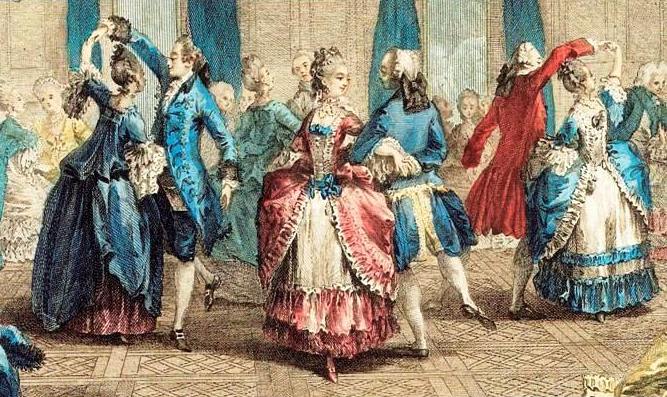
Le Bal paré
Augustin de Saint-Aubin
public_domain
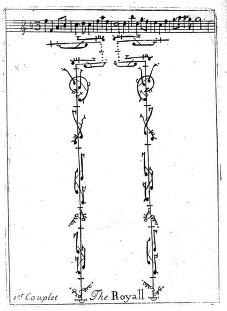
The royall : Mr. Isaac's new dance made for Her Majesty's birth day 1711
Unknown artist · 1711
public_domain
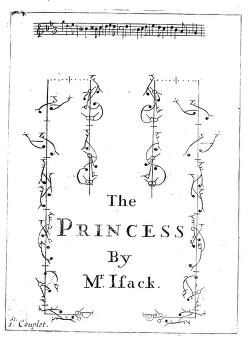
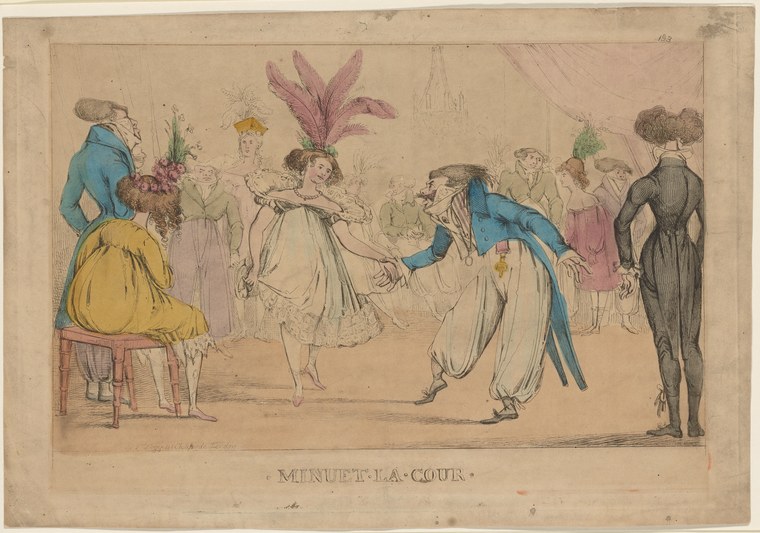
Minuet la cour
Unknown artist
public_domain

A long minuet as danced at Bath
Unknown artist · 2021
public_domain
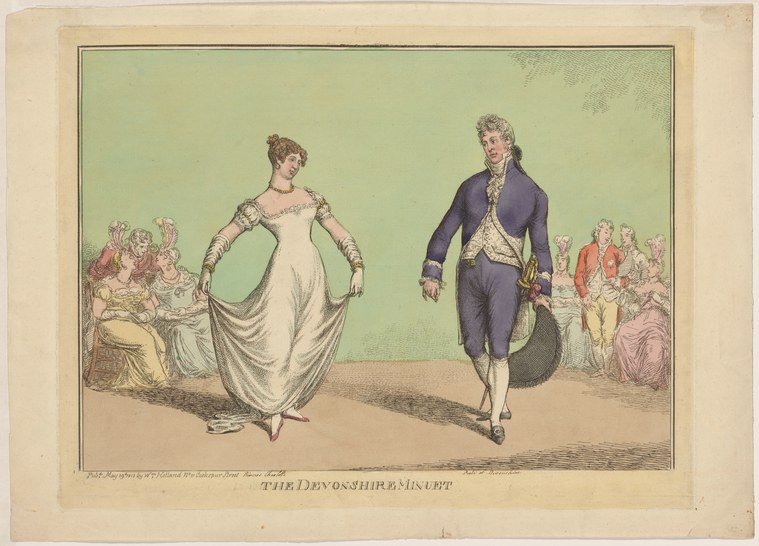
The Devonshire minuet
Unknown artist
public_domain
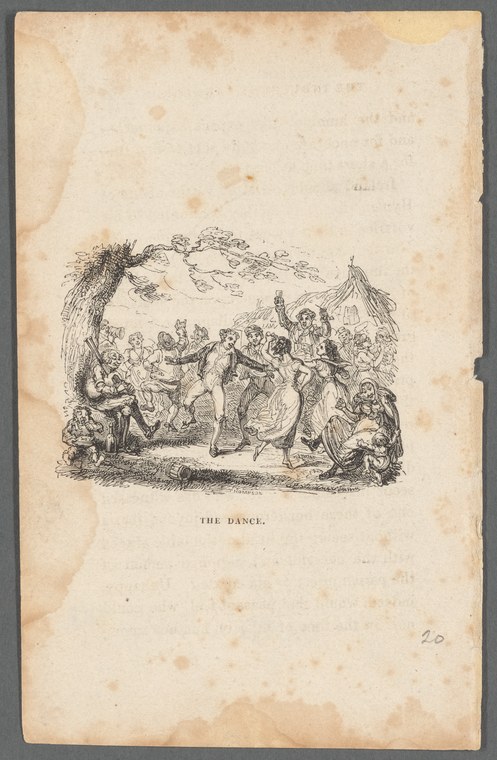
The dance
Unknown artist
public_domain
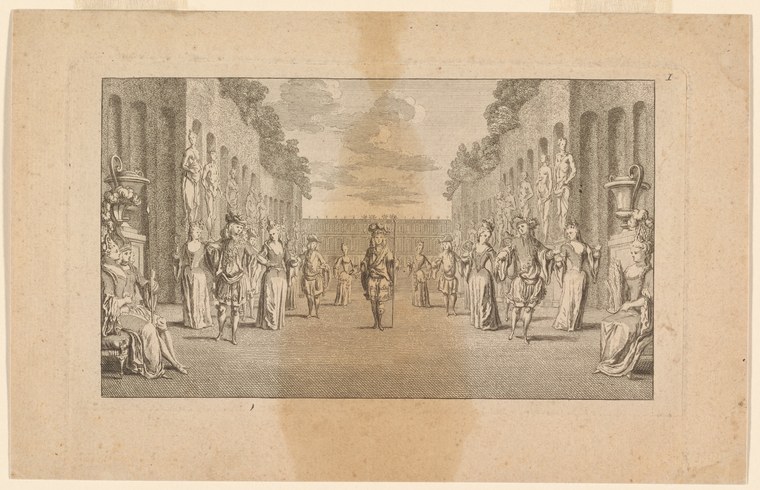
Scene de ballet
Unknown artist
public_domain
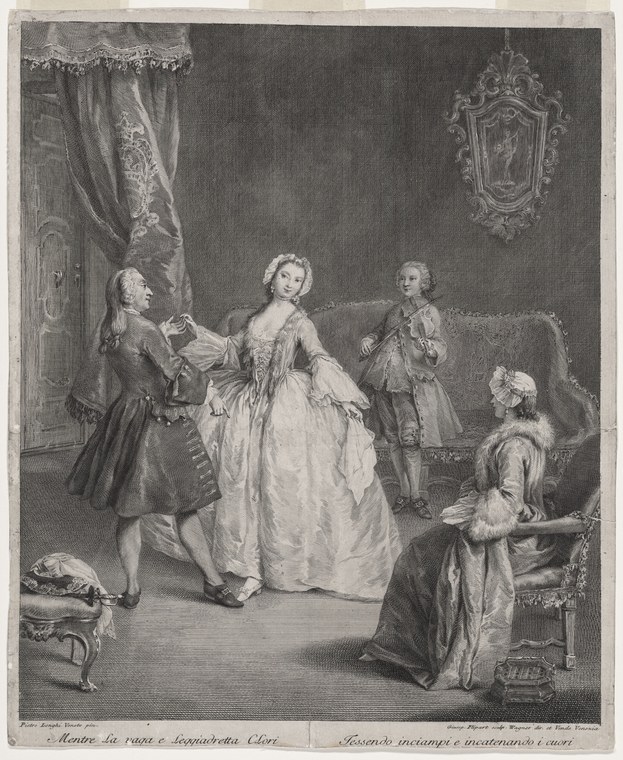
The dancing lesson
Unknown artist · 2019
public_domain
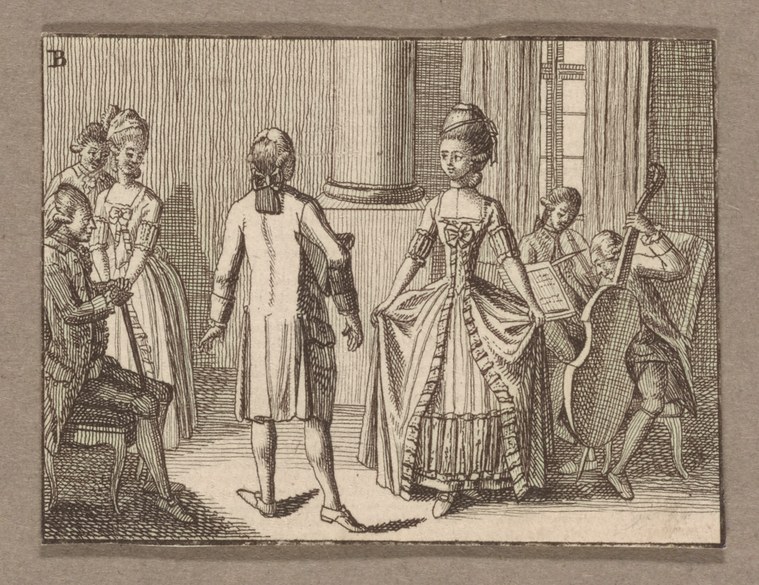
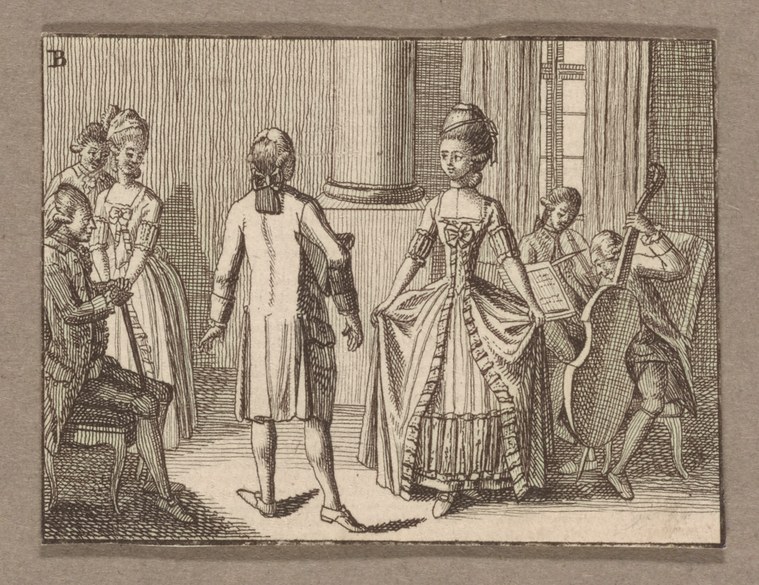
Dancers bowing before the minuet?
Unknown artist
public_domain
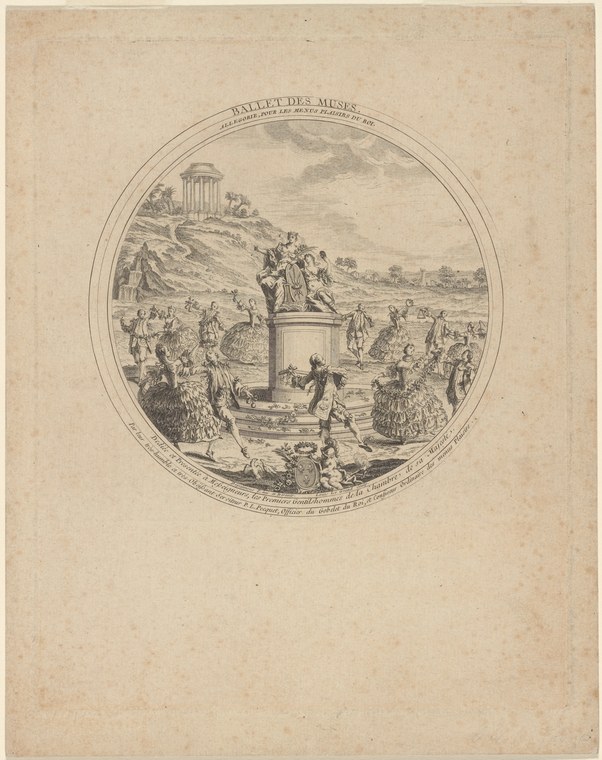
Ballet des muses
Unknown artist
public_domain