49 works in this view — arrow keys or swipe to move between them.
Dance in Art
Cupids Dancing
Unknown
- Collection:
- Plaquette
- Source:
- Victoria and Albert Museum
- Rights:
- Rights vary by item — check the source record before reusing this image. Source record ↗
- Recorded as:
- V&A — check rights per item
This plaque exemplifies how Renaissance and early modern art used dance-like movement as a symbolic language for joy, love, and divine celebration—a tradition that shaped how movement was represented in high art. For dance historians, it documents the cultural elevation of dance and rhythmic movement as allegories of celestial happiness, and shows how cherubic figures became standardized vehicles for expressing the beauty and freedom of unbound motion. The work reveals the aesthetic and philosophical values attached to playful, exuberant movement in a period when dance was increasingly celebrated as an art form worthy of noble patronage and artistic investment.
What you are looking at
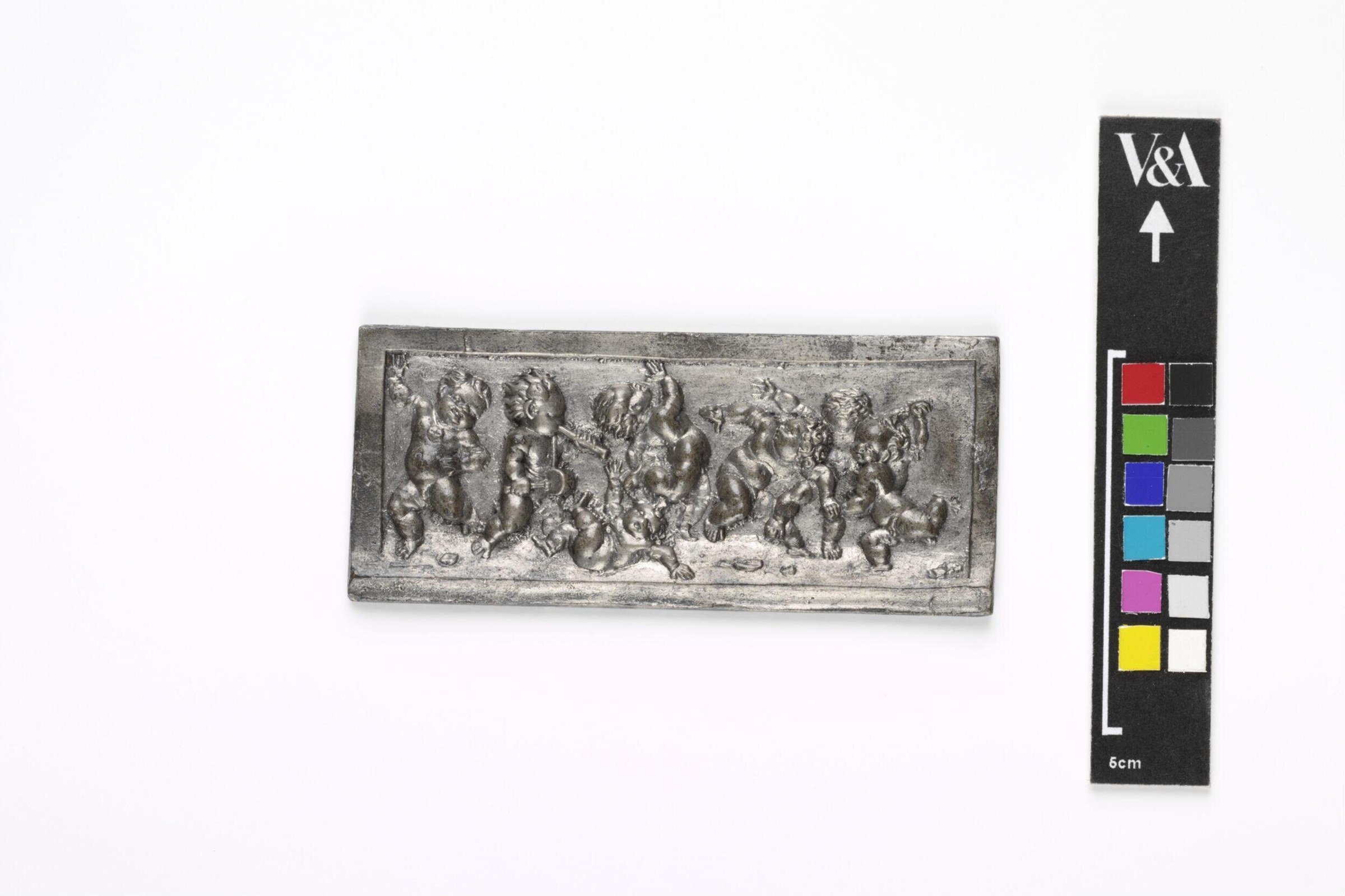
A rectangular relief plaque presents a densely populated scene of multiple putti (winged cherub figures) engaged in lively movement across a shallow stage. The figures are carved in high relief against a recessed background, creating strong shadows that animate the composition. The cherubs vary in scale and position—some stand upright, others bend or leap, several appear to interact with one another in pairs or small groups. The plaque has a plain rectangular border and shows the silvery-grey patina of cast metal, possibly bronze or pewter. The composition reads as a frieze or processional scene, with figures distributed across the full width and depth of the field, creating an impression of spontaneous, joyful activity rather than formal arrangement.
The dancing
The putti display a remarkable range of postures and gestures. Several stand with raised arms or gesturing hands; others appear to be in mid-stride or leaping positions, with legs extended or bent as if in flight or rapid movement. Some figures lean toward companions, suggesting interaction or communication. The scale varies noticeably—larger figures occupy the foreground while smaller ones recede, creating atmospheric perspective. No formal dance hold is visible; instead the bodies convey playfulness, spontaneity, and weightless movement characteristic of celestial or allegorical beings rather than human dancers.
The dance depicted
This represents a tradition of depicting putti in animated, dance-like celebration rather than a specific named dance form. The subject falls within Renaissance and early modern artistic convention: cherubs shown in joyful, often acrobatic movement as symbols of divine joy, love, or festivity. Such scenes were popular in Northern European decorative arts and metalwork from the 15th–17th centuries. The dancing putti motif draws on classical and medieval precedent but flourished especially in Italian Renaissance art and its northern dissemination. While the figures move expressively, the image documents an allegorical and decorative tradition rather than the performance of a historical dance style.
How it was made
This is a relief plaque, almost certainly cast metal—the grey-silver surface and crisp detail suggest bronze or pewter rather than carved stone. Relief casting allowed the artist to achieve fine detail and strong contrasts of light and shadow across a compact, portable object. The plaque's size and finish indicate it was made for display or decoration, possibly as a furnishing element, architectural ornament, or precious object for a collector's cabinet. The technique was well-suited to circulation: relief plaques could be cast in multiples from a master model, making them accessible beyond the workshop and allowing wide distribution of the design.
About this work
This plaque documents the European convention of depicting putti in animated, celebratory movement—a motif rooted in Renaissance art and widespread in metalwork, architectural ornament, and decorative furnishings. The image is conventionally titled 'Cupids Dancing,' yet the putti do not execute a recognizable dance form; instead they embody a allegorical language of divine joy and festivity expressed through lively, weightless gesture. The work belongs to the tradition of festive and allegorical imagery that dominated Renaissance and early modern European visual culture, where celestial or divine figures were shown in perpetual celebration. It records not how people danced but how artists represented celestial delight and the cultural association between cherubic beings and joyful, unrestrained movement.
How to look at it
Attend to the variety of poses and the way the artist has distributed the figures across the entire field, avoiding any single focal point. The relief technique creates pronounced shadows that emphasize the three-dimensionality of the forms and the sense of movement. Notice how the scale variation and overlapping create depth, drawing the eye through the composition. The lack of a ground line or architectural setting emphasizes the weightlessness of the figures; they seem to float and leap freely, which is exactly the point—this is not a record of human dancers or a specific choreography, but an evocation of joyful, divine play expressed through the language of movement.
The period
The plaque dates to around 1500, a moment of intense artistic renewal in Europe. The fifteenth and sixteenth centuries saw the recovery and reinterpretation of classical motifs, including the depiction of putti (derived from Roman amor and Hellenistic erotes). Italian Renaissance masters—including Donatello, Michelangelo, and their followers—popularized the image of animated cherubs in relief, carved ornament, and small bronzes. This convention spread rapidly northward through engravings, cast copies, and the migration of Italian artistic practice. By 1500, dancing or playfully gesturing putti had become a standard motif in European decorative arts, appearing on metalwork, architectural elements, and furnishings. The period also saw the codification and celebration of courtly dance in Italy and beyond, creating a cultural climate in which graceful, expressive movement—even of celestial beings—carried aesthetic and moral weight.
Where it lives
The object is catalogued as a plaquette in the V&A collection (Victoria and Albert Museum, London). Plaquettes were small cast-metal reliefs, typically bronze or pewter, produced in workshops and collected as precious objects or used as decorative elements in interiors and on furnishings. They were popular in the Renaissance and early modern period and often exist in multiple casts from the same master model.
Dance in this work
Questions about this work
Is this a record of an actual dance that people performed?
No. This is an allegorical image of putti (cherubs) in joyful, lively movement—a convention of Renaissance and early modern art. The figures represent divine joy and festivity rather than a specific dance form or choreography. The title 'Cupids Dancing' reflects the artistic tradition of depicting these celestial beings in animated, dance-like poses, but the image is not documentary of human dance practice.
Why are there so many putti, and why are they different sizes?
The abundance and variety create a sense of exuberant, spontaneous celebration and allow the artist to fill the entire composition dynamically. The variation in scale serves both aesthetic (creating visual rhythm and depth) and practical purposes (ensuring all figures are visible and distinct in the shallow relief field). The overlapping and varied poses suggest a crowd in motion rather than a formal arrangement.
What does this object do or where would it have been displayed?
As a plaquette, this was likely cast in bronze or pewter and used as a decorative element—mounted on furniture, architectural surfaces, or displayed in a collector's cabinet as a precious object. The small size and portable nature suggest it could serve both aesthetic and devotional purposes, and its design could be reproduced in multiple casts, allowing it to circulate widely.
What is the connection between this image and actual Renaissance dance?
The image reflects the high cultural status dance had achieved by 1500, especially at court. The choice to depict putti in animated, expressive movement signals that dance and rhythmic gesture were understood as beautiful, noble activities worthy of artistic representation. However, the actual steps, formations, and techniques of Renaissance courtly dances—such as pavanes and galliards—are not documented in this allegorical scene.
More dance artwork





