49 works in this view — arrow keys or swipe to move between them.
Dance in Art
Theatre costume
Unknown
- Collection:
- Theatre costume
- Source:
- Victoria and Albert Museum
- Rights:
- Rights vary by item — check the source record before reusing this image. Source record ↗
- Recorded as:
- V&A — check rights per item
This object provides rare surviving evidence of how formal theatrical costume was actually constructed, dyed, and assembled in a historical theatrical tradition. For historians of East Asian theater and dance—particularly classical forms like Beijing opera, Cantonese opera, or Noh—the object itself (not a representation of it) offers direct material evidence of performance practice, status signaling, and textile technology in a tradition where such garments were expensive, handmade, and often repaired or reused across many performances.
What you are looking at
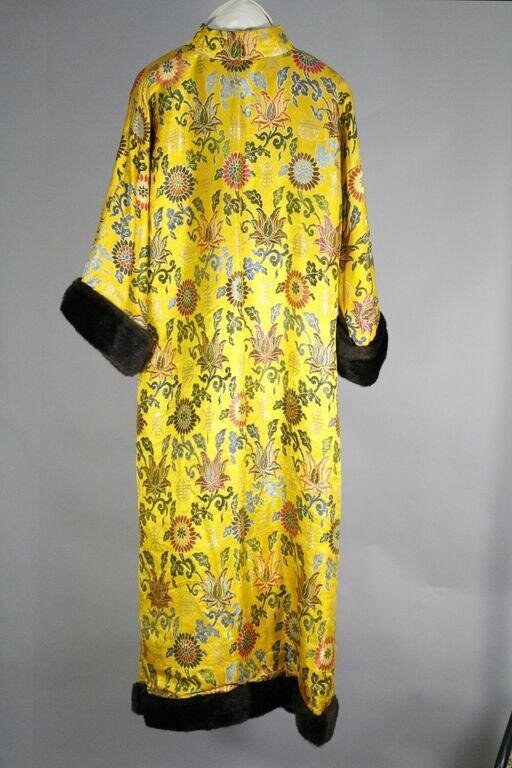
A theatrical robe or overgarment is displayed against a neutral gray background, shown from the back. The costume is constructed from a vibrant yellow silk or silk-like fabric densely patterned with flowering plants—sunflowers, chrysanthemums, and other blooms in shades of red, pink, blue, and green—arranged in a repeating design across the entire surface. The garment is a full-length coat or robe with a high collar visible at the top. The cuffs at both wrists are trimmed with deep black fur or fur-like material, creating a sharp chromatic contrast. The hem of the coat is also finished with black fur trim. The construction suggests a formal or ceremonial costume from a non-Western theatrical tradition, given the richness of the pattern and the combination of silk with fur detailing. The garment hangs in relaxed folds, suggesting considerable weight and formal drape.
The dancing
No figures are depicted; this is a costume object displayed flat on a form or mannequin. The robe is shown full-length and straight, allowing clear visibility of the pattern, construction, and trimming details. The positioning emphasizes the decorative surface of the garment and the formal geometry of its cut.
The dance depicted
Without identifying marks or context visible in the image, the costume cannot be securely placed within a specific dance tradition. However, the garment's formal construction, the elaborate patterning, and the use of expensive materials (silk and fur) suggest a theatrical or ceremonial costume from an East Asian tradition, most likely Chinese opera or classical theater (such as Jingxi/Beijing opera or Cantonese opera), or possibly Japanese Noh or Kabuki. The yellow silk ground, floral patterns, and black fur cuffs are characteristic of high-status roles in these traditions. The style of trimming and garment construction is consistent with historic Chinese theatrical costumes worn during formal or dignified scenes.
How it was made
This is a three-dimensional textile object—a theatrical costume or robe constructed from silk with fur trim. The image is a color photograph of the object displayed from the back on a neutral background, likely part of a museum or archival documentation. The photographic medium allows clear capture of the textile's color, pattern, and surface qualities. The way the costume is positioned (full-length, straight hanging) suggests museum display or conservation photography rather than theatrical or performance documentation.
About this work
This is a formal theatrical costume robe, likely from a nineteenth- or early twentieth-century East Asian theatrical tradition. The garment combines expensive materials—hand-painted or printed silk in a vibrant floral pattern with black fur trim at the cuffs and hem—consistent with the formal dress of noble, dignified, or high-status characters in classical Chinese or Japanese theater. The costume embodies both the aesthetic values and the material resources of its theatrical tradition: the elaborate surface decoration signals wealth and status, while the formal cut and black-fur trimming follow the conventions of a specific performance genre. As a surviving costume object rather than a representation of dance or theater, it documents the material culture of historical theatrical performance and the craft techniques of costume construction.
How to look at it
Attend to the care and expense invested in the garment: the density and quality of the floral pattern across the entire surface, the precision of the fur trimming at cuffs and hem, and the formal geometry of the robe's cut. The black fur trim functions not only as decoration but as a status marker, appearing only at the edges in a careful compositional balance. The floral pattern—rendered in multiple colors and showing careful placement of individual blooms—suggests either hand-painting or high-quality woodblock printing on silk. The overall effect is of a costume designed to convey authority and formality through material richness and visual complexity.
The period
This costume likely dates from the late nineteenth or early twentieth century, a period of both continuity and change in East Asian theatrical traditions. Formal dramatic genres including Beijing opera (Jingxi), Cantonese opera, and Japanese Noh and Kabuki had established centuries-long conventions for costume by this time. The floral-patterned silk and the style of fur trimming are consistent with the aesthetic and material practices of these traditions during this period. The robe's construction and patterning follow conventions for dignified, high-status roles in these genres.
Where it lives
The record indicates this is held as a theatre costume within a collection labeled 'va' (possibly a museum or archive abbreviation not fully resolved in the catalogue). The object was documented through color photography in what appears to be a conservation or archival context. No acquisition date, artist attribution, or specific theatrical tradition is recorded.
Dance in this work
Questions about this work
What kind of theater was this costume worn in?
Based on the garment's construction, materials, and style of trimming, it most likely belonged to a classical East Asian theatrical tradition—most probably Chinese opera (Beijing opera, Cantonese opera, or similar) or Japanese classical theater (Noh or Kabuki). The formal robe, silk patterning, and fur trim are characteristic of high-status or dignified roles in these traditions. Without archival documentation or identifying inscriptions, the specific tradition cannot be determined from the image alone.
Why is the costume trimmed with black fur?
In East Asian classical theater, fur trim functions as both decoration and status marker. Black fur at the cuffs and hem of a formal robe signals dignity, authority, and high social rank of the character wearing it. The trim also provides visual definition to the edges of the garment and creates formal compositional balance against the busy floral pattern of the silk.
How was the floral pattern made?
The pattern appears to be either hand-painted or produced through woodblock printing on silk. The evenness of the color and the consistent placement of the flowering plants across the entire surface suggest a printing technique, though hand-finishing or retouching may have been applied. Both methods were standard in East Asian textile production during the period when this costume was likely made.
Is this a unique costume or was it mass-produced?
Theatrical costumes of this caliber were handmade and individually constructed, though they followed established patterns and conventions within their tradition. A costume of this quality—with expensive silk, hand-finished patterns, and fur trim—would have been made for a specific theater company or performer and likely reused across many performances over years or decades.
More dance artwork





