49 works in this view — arrow keys or swipe to move between them.
Dance in Art
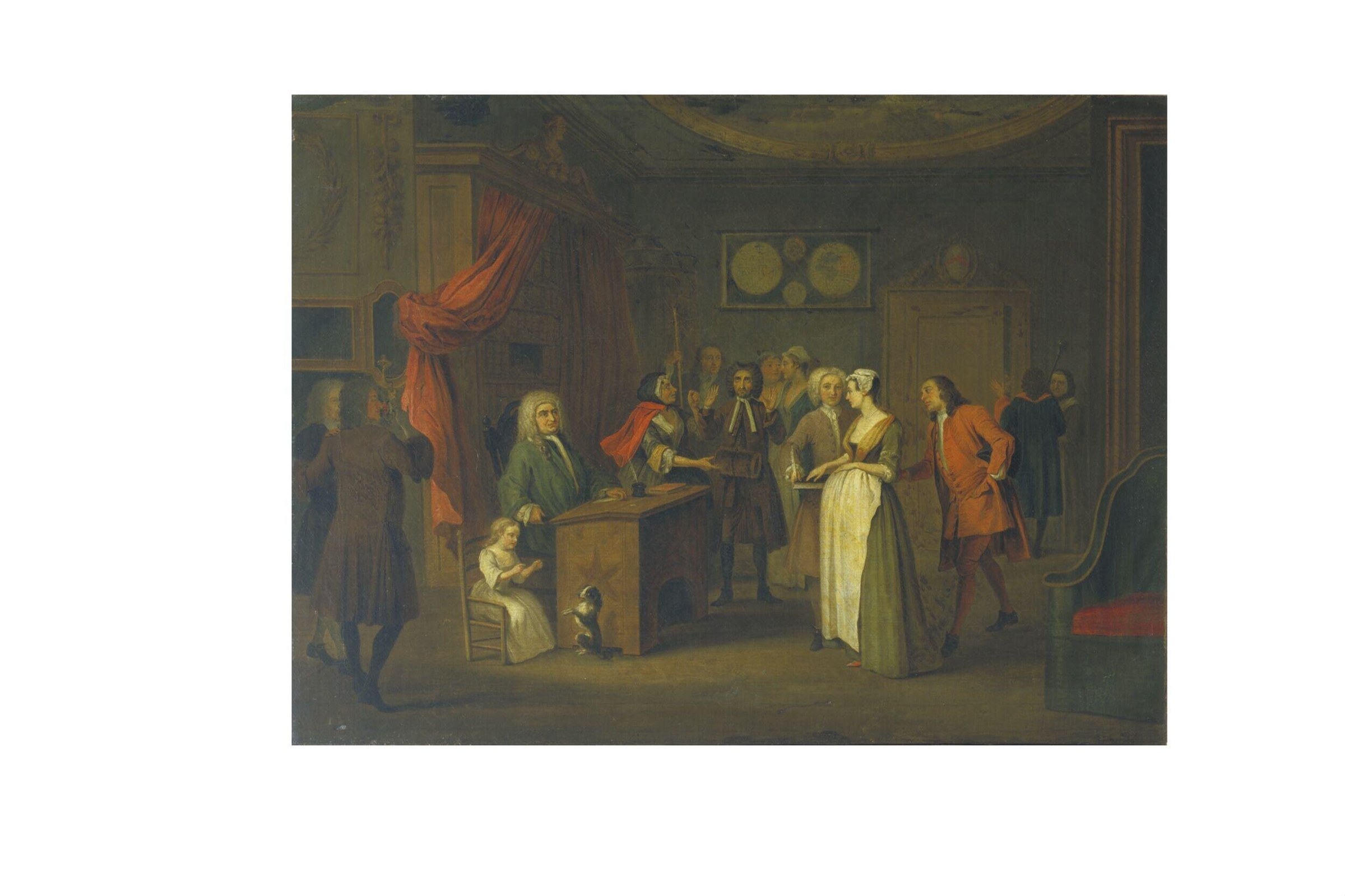
The Affiliation (after William Hogarth)
Collett, John
- Collection:
- Oil painting
- Source:
- Victoria and Albert Museum
- Rights:
- Rights vary by item — check the source record before reusing this image. Source record ↗
- Recorded as:
- V&A — check rights per item
It reveals what dance historians often overlook: that the 'dance' of the period extended far beyond the choreographed figures and encompassed the entire social occasion, the standing and walking, the dress, the spatial negotiation, and the unspoken rules of courtship and rank. For artists studying how 18th-century painters represented the social body and formal etiquette, it demonstrates a sophisticated use of composition and light to encode social meaning. For dancers, it documents the posture, carriage, and dress code that shaped the dancing body of the period—the vertical spine, the formal presentation, the gendered use of the fan and the skirt.
What you are looking at
An elegant interior, likely a townhouse or ballroom, during an evening assembly. The scene depicts a formal social gathering where numerous figures in 18th-century dress circulate and converse. The space is defined by classical architectural elements—panelled walls, a coved ceiling with decorative details, and wall-mounted candelabra providing warm light. A red velvet curtain swags dramatically across the upper left. The composition is crowded but ordered, with figures distributed across the depth of the room in small clusters. At center, a woman in a pale yellow dress with dark décolletage stands prominently; nearby, a young girl sits on a low chair attended by what appears to be a small Black page or servant. Men in dark coats with colored linings—vivid orange-red, deep blue—stand in conversation; their stance and gesture suggest the rituals of polite society. The whole scene has the air of a moral or satirical print: it records not an event but a type, and does so with the eye of an observer noting the comedy and artifice of the scene.
The dancing
The figures are posed in the stiff, upright posture characteristic of formal 18th-century assembly etiquette. Bodies are vertical; no couple is in a closed embrace or waltz hold. The notable exception is the small child seated, breaking the vertical rhythm. Most figures stand at conversational distance, with arms at their sides or gesturing mildly in discussion. There is no evidence of active dancing or coordinated movement; instead, the scene captures the standing, promenading, and socializing that surrounded or preceded dance. The dress and bearing suggest a hierarchical social space—the woman in pale dress commands visual attention through her position and the fall of her gown.
The dance depicted
This is not a depiction of active dancing, but of the social occasion—the assembly or ball—in which dancing occurred. The title suggests it is 'after' Hogarth, and the composition and moral viewpoint align with Hogarth's satirical genre scenes of English social life. The work records the rituals of courtship, display, and social negotiation that attended the formal dances of the period (likely minuet, cotillion, or quadrille). To a viewer of the 1720s–40s, this would have communicated the social type and implicit critique of fashionable society rather than a specific dance form. The dance, if any occurs, is not the subject; the social machinery around dance is.
How it was made
Oil painting, as recorded. The medium allows the artist to render the subtle fall of fabrics, the gleam of light on silk and satin, and the complexity of interior architecture with atmospheric perspective. The handling is highly finished and legible; no sketch marks or pentimenti are visible. The palette is warm and muted overall—ochres, soft greens, warm grays—with deliberate bright accents in the red curtain and the women's silk gowns. The technique supports the work's function as a narrative or satirical record: clarity of representation matters more than painterly bravura. This is a work made for a patron or collector who valued legible social commentary and careful representation of manners and dress.
About this work
This is an oil painting of an 18th-century ball or assembly—a formal social gathering of the kind that structured polite society and courtship among the English gentry. Though titled as after Hogarth, it follows his manner of satirical observation: the work records not the dance itself but the social theater surrounding it, with particular attention to dress, posture, hierarchy, and the management of courtship and display. The figures stand, converse, and promenade in the formal spaces of an interior designed to stage such encounters. The painting belongs in a gallery of dance in art because these assemblies were inseparable from dance practice: they were the occasion for dancing, and the rituals of dress, posture, and social positioning visible here were identical with those demanded by the minuet and cotillion. To understand how 18th-century dance functioned as a social technology—not merely as steps but as a system of courtship, status negotiation, and public performance—images like this are essential.
How to look at it
Attend to the posture and stillness of the figures. This is not a scene of movement; it is a scene of standing, and the artist has used the formality of posture to communicate social meaning. Notice how the woman in pale yellow is spatially isolated and visually prominent—she is 'on display.' Look at the small seated child: her presence and the attention paid to her suggest a narrative of negotiation, perhaps around marriage or betrothal. The architectural setting—the classical order, the rich materials, the light from candles—is not merely backdrop; it is part of the social machinery. The red curtain, the gleaming silk, the careful arrangement of bodies in space: all of these encode the artifice and theatricality of the scene. If you compare this to a print after Hogarth, you will see how Collett has learned Hogarth's visual language of social satire.
The artist
John Collett (c. 1725–1780) was an English painter, printmaker, and caricaturist known for satirical and humorous scenes of contemporary life. He worked in the tradition of Hogarth, producing narrative moral scenes, satires of fashionable society, and caricatures. His work was often engraved and circulated as prints, making it widely available to a broad audience. He worked in both oil and print media and was prolific in the mid-18th century, documenting the manners and follies of his age with a sharp eye and moralizing intent.
The period
The early-to-mid 18th century was the golden age of the minuet and cotillion in English and European high society. Assemblies and balls were regularized social occasions governed by strict rules of etiquette and dress. The minuet, in particular, was not primarily a leisure dance but a ritual performance that displayed rank, refinement, and marriageability; few people actually danced in any given evening—most attended to watch, converse, and engage in courtship. Hogarth and his followers (including Collett) depicted these occasions as sites of social comedy, affectation, and vice hidden beneath a veneer of civility. The aesthetic of the painting—its legible narrative, its moral tone, its attention to costume and manners—reflects the didactic purpose of such works: they were meant to amuse and instruct, often with a streak of satire aimed at the pretensions of the fashionable world.
Where it lives
The work is held at the Victoria & Albert Museum, London (recorded as source 'va' in the catalogue). It is an oil painting, the primary medium of serious history painting and ambitious portraits, suggesting that despite its satirical subject matter, it was intended as a substantial artwork for a patron or collector rather than as a print for mass circulation.
Dance in this work
Questions about this work
Is anyone actually dancing in this picture?
No. The scene depicts an assembly or formal gathering—the occasion on which dancing occurred—but the figures are posed in conversation and standing, not moving. In 18th-century balls, dancing was often a minority activity; most attendees spent the evening in social and courtship rituals of this kind. The work documents the social frame around dance rather than the dance itself.
What does the title mean by 'after William Hogarth'?
It indicates that Collett has worked in the manner and tradition of Hogarth, adopting his compositional strategies, moral viewpoint, and satirical approach to depicting fashionable society. It may also mean that a specific Hogarth composition inspired this work, though the relationship is one of artistic lineage rather than direct copying.
What can this painting tell me about 18th-century dance?
It shows the formal posture, dress codes, and spatial behavior that surrounded and framed dancing. The vertical carriage of the body, the formal silhouettes created by hooped skirts and fitted coats, the gender-segregated or semi-segregated standing patterns, and the architectural setting all shaped how the minuet and cotillion were performed. The painting documents the visual culture of which dancing was a part.
Why is this in a gallery of dance if no one is dancing?
Dance history includes not just the steps and figures, but the social occasions, dress, manners, and rituals of performance that made up the lived experience of dance. This painting is a primary source for how dancing bodies were prepared, presented, and understood in their social context. It also represents a tradition of artistic documentation—satirical or otherwise—of dance and society.
More dance artwork





