49 works in this view — arrow keys or swipe to move between them.
Dance in Art
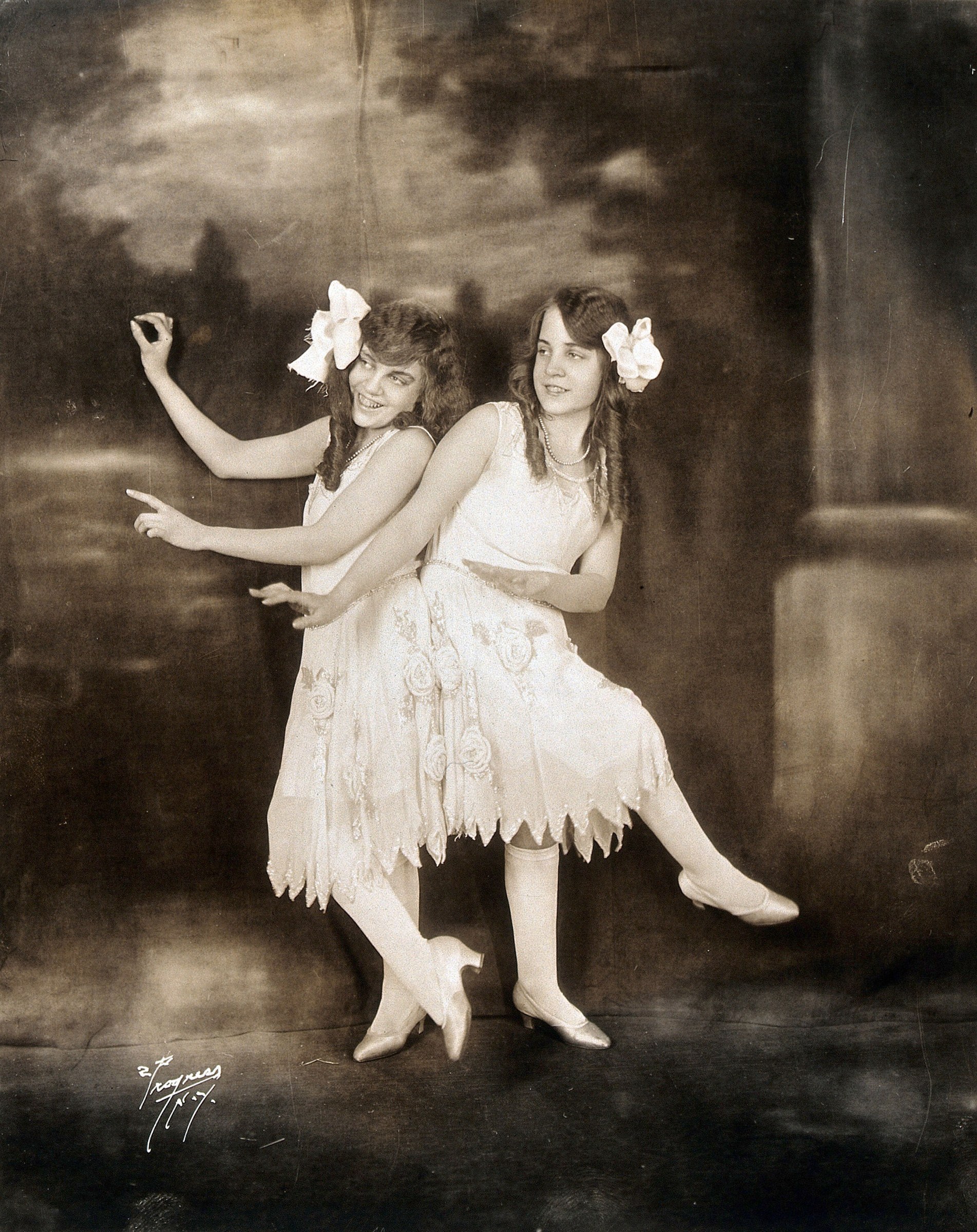
Daisy and Violet Hilton, conjoined twins, dancing. Photograph, c. 1927.
Unknown artist
- Source:
- Wellcome Collection
- Rights:
- Rights reserved by the holding institution — do not reuse without permission. Source record ↗
- Recorded as:
- In copyright
This photograph documents the Hilton twins as active performance artists, not merely as medical specimens—a crucial historical correction, since they have been more frequently documented in medical literature than in entertainment history. The image shows the specific theatrical convention and costume aesthetic through which conjoined bodies were presented to paying audiences as dancers and performers in the vaudeville era. It is also a rare photographic record of women with significant physical differences performing on stage during a period when disability was typically hidden from public view.
What you are looking at
Two young women stand together against a darkened interior backdrop, posed in a moment of expressive, gestural movement. Both wear sleeveless white shift dresses with decorative embroidered floral patterns (particularly visible on the skirt of the figure on the right) and jagged, handkerchief-hemmed skirts that end at mid-calf. Each wears a large white bow in her dark hair. The woman on the left raises her right arm in an open, reaching gesture with palm upward, her body angled slightly forward and her face turned toward the camera with a bright smile. The woman on the right stands more upright, her arms extended outward in a softer, more contained frame, her expression more neutral. The lighting is soft and diffused, characteristic of studio photography of the period, creating gentle shadows that model their forms against the mottled, textured background. The composition suggests a posed studio moment rather than captured movement, with both figures arranged for the camera's view.
The dancing
The two dancers are positioned side by side and slightly overlapped, with the left figure leaning forward into her gesture while the right figure maintains an upright stance. Both have relaxed, naturalistic arm positions rather than the rigid alignment of classical technique—the left figure's raised arm is informal and open, while the right figure's arms extend sideways at approximately shoulder height in a gentle, horizontal frame. The weight distribution appears light and mobile rather than grounded. Their bare legs and simple, unstructured costumes suggest freedom of movement in the torso and hips, with no evidence of turned-out positions or the codified carriage of ballet.
The dance depicted
This is almost certainly a staged photograph of the Hilton twins dancing, as identified in the catalogue record. The performance style evident here—expressive gesture, informal arm carriage, decorative costume with embroidered detail, and joyful facial expression—suggests vernacular or popular entertainment dance of the 1920s rather than classical theatrical training. The handkerchief hemming and floral embroidery place this within the aesthetic of jazz-age social dance or revue performance. Without visible footwork or a dynamic moment of action frozen, the specific dance form cannot be definitively identified, but the costume and styling are consistent with theatrical jazz or vaudeville entertainment of the period. The photograph documents how the Hilton twins were presented to audiences: as young, approachable performers whose novelty was their conjoined state rather than technical virtuosity.
How it was made
This is a black-and-white studio photograph, likely gelatin silver print based on the tonal range and surface characteristic visible. The soft, diffused lighting and controlled interior setting indicate professional studio practice of the 1920s. The photographer's signature (appearing to read 'Egan' or similar in the lower right) suggests this was a commissioned publicity photograph, likely intended for press distribution and theatrical promotion. The photograph's surviving in a medical archive (Wellcome Collection) rather than an entertainment archive reflects how the Hilton twins were documented primarily as medical curiosities rather than as performers, despite their active stage careers.
About this work
This photograph documents the Hilton twins, Daisy and Violet, in a moment of posed performance, circa 1927. The two conjoined women were major attractions in American vaudeville and revue shows during the 1920s and 1930s, and this image captures them in the theatrical costume and styling of the period. The photograph belongs in a gallery of dance in art because it documents a specific historical moment when conjoined twins were presented to mass audiences as performers, and because it shows the aesthetic conventions of theatrical entertainment dance—costume, gesture, presentation—that framed their public identity. The image is also a window into how disability and bodily difference were incorporated into entertainment spectacle in the early twentieth century.
The work matters primarily as historical documentation: it preserves visual evidence of how the Hilton twins performed, how they were costumed and presented, and what their stage presence conveyed. It is also valuable as a record of 1920s theatrical dance aesthetics and studio photography practice.
How to look at it
Attend to the informality of the gesture and arm carriage, which shows no trace of classical ballet training but instead emphasizes expression and audience address. Notice the decorative, handmade quality of the costume—the embroidered skirt and hand-hemmed edges—which signals revue or popular theatrical dress rather than the constructed precision of classical stage costume. The twins' direct, smiling engagement with the camera is crucial: they are performing for the photographer (and through the photograph, for the public), and their facial expression and body language convey ease and pleasure in performance rather than the focused intensity of classical dance. The posed, stationary quality of the image—no frozen moment of dynamic action—is characteristic of studio publicity photography and differs from documentary photography of actual performance.
The artist
The photographer is identified by signature in the lower right of the print but remains incompletely catalogued. The work is professional studio portraiture of the period, produced for publicity and press circulation. The Hilton twins' performance careers were actively managed and publicized, and photographs like this were distributed to newspapers, theatrical programs, and promotional materials.
The period
The 1920s were the height of American vaudeville and revue performance, a period when theatrical entertainment was driven by novelty, spectacle, and the presentation of unusual or remarkable bodies. The Hilton twins emerged as performers during this era when their conjoined state—rather than any particular dance technique—was their primary asset. The costume style here—simple, decorative, dance-focused rather than narrative costume—is consistent with the revue aesthetic of the period, which emphasized visual impact and direct audience address. Simultaneously, the early twentieth century saw increasing medicalization and public curiosity about disability and bodily difference, and the Hilton twins' performance careers existed in the tension between entertainment and medical spectacle.
Where it lives
This photograph is held in the Wellcome Collection, a medical archive that has preserved it as a document of the Hilton twins as medical curiosities and subjects of public fascination. The photograph's presence in a medical rather than theatrical archive reflects the historical tendency to pathologize the twins rather than to recognize their careers as performers.
Dance in this work
Questions about this work
Were the Hilton twins actually dancers?
Yes, the Hilton twins had active performance careers in American vaudeville and revue during the 1920s and 1930s. They performed song, dance, and comedy acts, and toured internationally. However, they are rarely documented in dance history because their status as a medical novelty often overshadowed their work as entertainers. This photograph is one of the few visual records of them performing.
What kind of dance is shown here?
The specific dance form is not identifiable from this posed studio photograph. The gesture, arm carriage, and costume suggest theatrical jazz or vaudeville entertainment dance of the 1920s rather than classical ballet or a named social dance. The informal, expressive quality of the movement—evident even in this static pose—is characteristic of revue performance and entertainment dance of the period.
Why is this photograph in a medical archive?
The Hilton twins were extensively documented in medical and scientific literature because their conjoined state was considered a medical marvel. The Wellcome Collection, a history-of-medicine archive, has preserved photographs and other materials related to their case. This reflects a historical bias: the twins are far better documented as medical subjects than as performers, even though they spent their lives working as entertainers.
More dance artwork





