49 works in this view — arrow keys or swipe to move between them.
Dance in Art
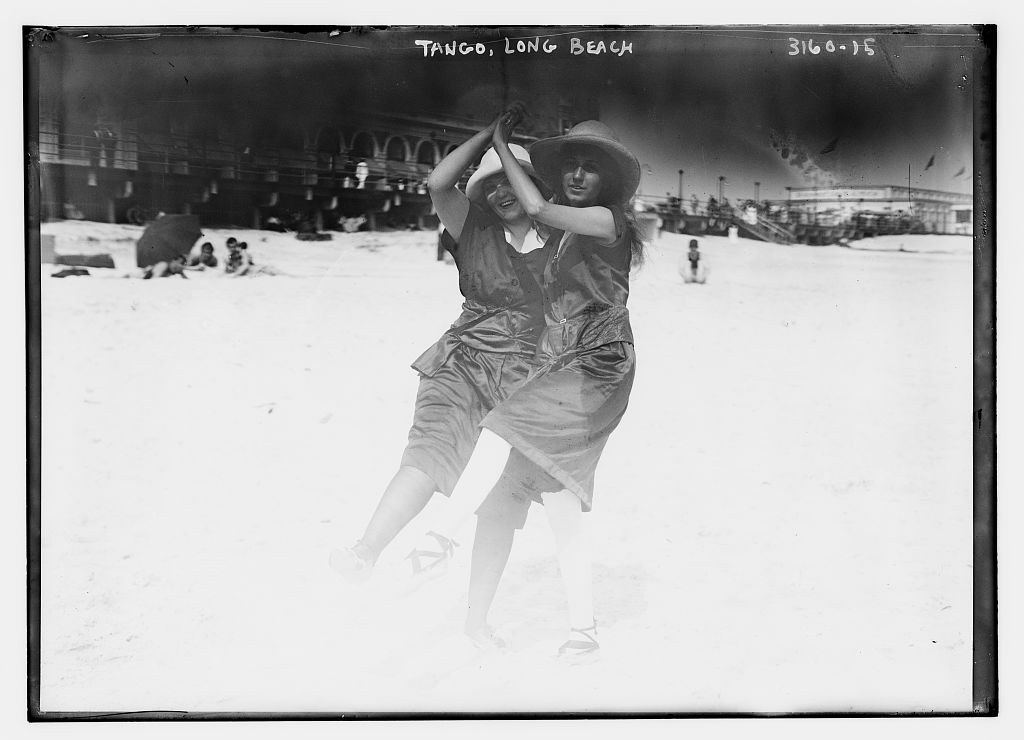
Tango, Long Beach
Unknown artist
- Collection:
- Prints & Photographs
- Source:
- Library of Congress
- Rights:
- Rights vary by item — check the source record before reusing this image. Source record ↗
- Recorded as:
- Library of Congress — no known restrictions (verify per item)
Tango is one of the most significant cultural imports to American dance in the twentieth century, and this image captures the moment of its public emergence in a leisure setting, before it became codified into competitive ballroom dance. The photograph shows how tango was performed and displayed to the American public in 1910, and how it was integrated into seaside recreation and tourism. For historians of dance and social history, this image is direct evidence of tango's early American presence and its role in modern courtship and leisure practices.
What you are looking at
A couple dances tango on a wide, sandy beach in bright daylight, their forms silhouetted against the glare. The woman wears a dark, knee-length dress with short sleeves, her body leaning back dramatically in the classic contra-body movement of tango, her right leg extended. The man, in darker clothing, supports her weight with his torso angled forward into hers. The beach is dotted with other beachgoers in the background—some seated, some standing—and a pier or boardwalk structure is visible in the middle distance, identifying the location as a public seaside resort. The photograph is sharp and well-exposed, suggesting professional documentation of a leisure or promotional activity rather than a candid moment.
The dancing
Two dancers in a closed ballroom hold, but with the pronounced backward lean and extended leg characteristic of tango. The woman's body describes an arc away from her partner's frame; her right leg is straight and extended, her torso supported by the man's embrace. The man's weight is forward, his frame controlled. Their positioning shows understanding of tango's distinctive aesthetic: the woman is not held upright but yields into a dramatic lean, and the leg extension suggests a deliberate tango figure rather than a waltz or foxtrot.
The dance depicted
This is tango, almost certainly Argentine tango or a closely related ballroom variant. The image documents a recreational or promotional dancing moment at a public beach in Long Beach, California, circa 1910. Tango was relatively new to American audiences at this time, having arrived from Argentina in the 1900s and achieving fashionable status in urban centers by 1910–1915. The choice to photograph tango outdoors on a beach, rather than in a ballroom, suggests either a promotional activity or a demonstration of how the dance was entering American leisure culture beyond formal dance halls. The woman's dramatic backward lean and the man's forward incline are signature tango postures, unmistakable even in a single frozen frame.
How it was made
This is a black-and-white photograph, likely gelatin silver print, made as a documentary record. The image is sharp and well-exposed, indicating professional equipment and deliberate composition rather than amateur snapshot. The bright daylight and sand reflectance create high contrast; the photographer has positioned the dancers to read clearly against the beach background. The photograph's archival presence in the Library of Congress Prints & Photographs collection suggests it was made for publication, promotional purposes, or as part of a systematic record of social dance practices in early twentieth-century America.
About this work
This photograph documents tango being danced on a public beach in Long Beach around 1910, a moment when the Argentine dance was becoming fashionable in American urban leisure culture. The image captures the dance's distinctive aesthetic—the woman's backward lean, the forward incline of the man's frame, the close embrace—in an unexpected setting, suggesting that tango had moved beyond the ballroom into popular recreation. It is valuable evidence of how this exotic import was being performed, promoted, and integrated into American coastal resort culture in the early twentieth century. The photograph also shows the gendering of tango, particularly the woman's yielding, extended posture and the visual emphasis on her body's line.
How to look at it
Watch the line made by the woman's body: her backward lean and extended leg are the defining gesture of tango, visually distinct from the upright frames of waltz or foxtrot. Notice how the man's frame creates that lean—this is not a woman losing balance, but a deliberate partnered posture, one that tango audiences expected and desired. The beach setting is crucial; it signals that this is not a formal ballroom performance but a demonstration or promotional image, showing tango as part of modern leisure. The presence of beachgoers in the background anchors this moment in public, recreational space, not theatrical performance.
The period
Tango arrived in the United States from Argentina in the early 1900s and became a major cultural phenomenon by 1910–1915. It shocked American society: the close hold, the woman's backward lean, and the dance's origins in Argentine working-class and red-light districts made it controversial in conservative circles, while urban elites and youth embraced it as thrillingly modern and exotic. Simultaneously, photography was becoming a popular medium for documenting social leisure and fashion, particularly at newly developed seaside resorts like Long Beach. Photographers recorded tango dancers in ballrooms, on stages, and—as here—in public resort settings, making the dance visible and consumable to a broad American audience. This photograph belongs to that moment of tango's assimilation into American popular culture and the commercialization of dance as entertainment and spectacle.
Where it lives
The photograph is held in the Library of Congress Prints & Photographs collection and carries the identifier 3i60375, part of a series documenting early twentieth-century American life. It is one of a number of tango photographs from this period in the Library's holdings, suggesting a systematic effort to record the dance's presence in American culture.
Dance in this work
Questions about this work
Why would people dance tango on a beach?
Long Beach was a popular seaside resort destination in early twentieth-century California, and seaside resorts actively promoted modern leisure activities, including dancing. Photographing tango on the beach was likely part of promoting the resort and the fashionable new dance. It was also possible that this was a promotional or demonstration photograph made for press coverage or advertising.
Was tango controversial in America in 1910?
Yes. Tango's close embrace, the woman's backward lean and extended leg, and its association with Argentine working-class and red-light culture shocked American conservative society. Many religious leaders and society arbiters condemned it as immoral. At the same time, urban youth and elites found it thrillingly modern and exotic, and it became a major fad in ballrooms and dance halls by 1912–1915. This photograph documents tango at the moment it was becoming fashionable, before those debates had fully erupted.
Is this Argentine tango or American ballroom tango?
Based on the posture—particularly the woman's dramatic backward lean and extended leg—this appears to be Argentine tango or a closely related style. American ballroom tango developed somewhat later and codified the dance into a more upright, standardized frame. This photograph may document an earlier, less formalized version of the dance as it was being performed and promoted in American leisure venues.
More dance artwork





