49 works in this view — arrow keys or swipe to move between them.
Dance in Art
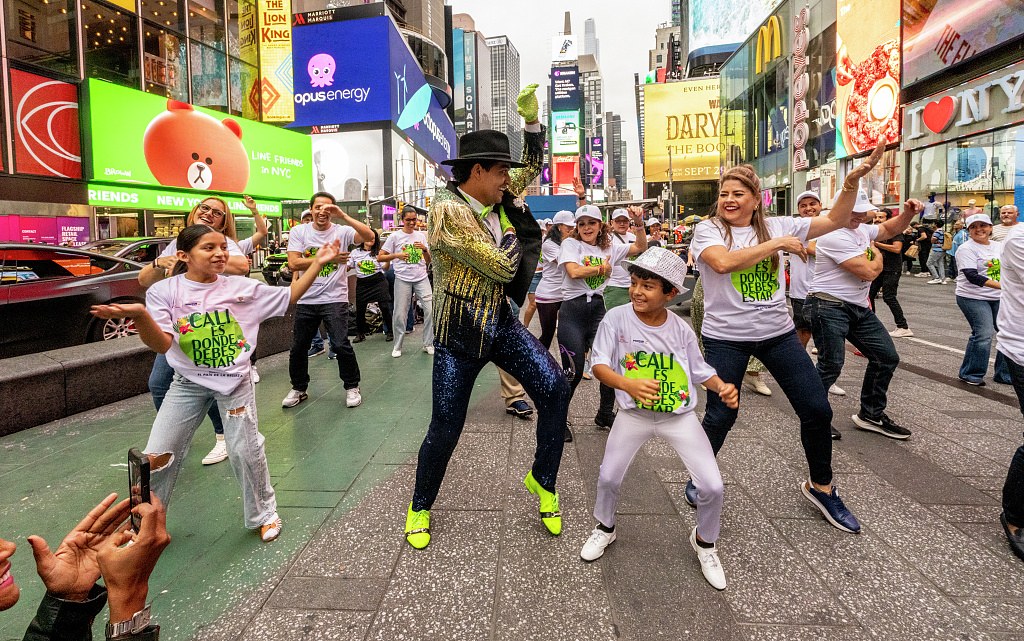
Salsa aficionados being photographed in Times Square dancing with star salsero Brando Perez Loaiza from Cali, Colombia. 1530 Broadway, Manhattan
Unknown artist
- Collection:
- Prints & Photographs
- Source:
- Library of Congress
- Rights:
- Rights vary by item — check the source record before reusing this image. Source record ↗
- Recorded as:
- Library of Congress — no known restrictions (verify per item)
This photograph captures salsa culture's presence in North American public space and its role as a marker of diaspora identity and community pride. The choice to dance salsa in Times Square—one of the world's most surveilled and commercialized urban spaces—represents the claim of public space for Latin American cultural expression. For dancers and cultural historians, the image documents how salsa functions not just as partner dance or competitive sport, but as a vehicle for collective celebration, cultural preservation, and the assertion of presence.
What you are looking at
A large group of dancers fills Times Square in Manhattan, their bodies arranged in loose formation across the street with illuminated advertising screens and urban architecture towering behind them. The crowd of roughly forty to fifty people wears coordinated white t-shirts printed with green text reading "CALI ONDA STARS," identifying them as salsa enthusiasts from or affiliated with Cali, Colombia. In the center stands a figure in performance dress: a black wide-brimmed hat, a gold lamé jacket with black detailing, and bright neon yellow-green shoes and accents, creating a striking focal point against the casual dress of the surrounding dancers. The photograph captures a moment of celebration and movement, with multiple dancers caught mid-step or in dynamic poses—some with arms raised, others in profile showing the characteristic Cuban motion of salsa. The daylight and the density of pedestrian activity in the background suggest this is a public flash mob or organized street performance, with the scale and informality of the gathering implying community participation rather than staged theatrical performance.
The dancing
The dancers display the characteristic weight shifts and hip action of salsa in motion. Several are photographed in profile with bent knees and lower body action visible despite the casual dress, suggesting active dancing rather than posed stillness. The central figure in performance costume stands elevated in posture and presence, acting as a focal point and likely a lead dancer or instructor. The surrounding dancers maintain varying degrees of engagement with the movement—some fully committed to steps, others partially participating, consistent with a community dance event where skill levels vary. No formal closed holds or partnered positioning are evident; instead, dancers occupy individual space within a loose group formation, typical of street-based or flash-mob salsa celebrations.
The dance depicted
This is a salsa celebration, specifically documented as featuring "star salsero Brando Perez Loaiza from Cali, Colombia." Cali is one of the world's primary centers of salsa culture and tradition, and the t-shirt branding "CALI ONDA STARS" confirms the geographic and cultural reference. The performance-dressed central figure is identifiable as the named salsero instructor or featured dancer leading or facilitating this public gathering. The informal setting and mass participation suggest this is a grassroots community dance event—a flash mob or organized street performance—rather than a formal competition or theatrical presentation. The clothing and bright daylight indicate this is a spontaneous or semi-planned public activation of urban space for salsa celebration, a practice deeply rooted in Cali's street culture and its diaspora communities in the United States.
How it was made
This is a color photograph, digital in origin based on the color saturation and clarity, capturing a moment of actual street performance rather than a staged or posed studio scene. The photograph's framing and composition suggest it was taken by an observer or documenter of the event rather than as official performance photography. The technical quality and lighting indicate it was shot in natural daylight without studio flash or professional lighting setup, making it a candid documentary capture. The immediacy and unprofessional framing—the way the crowd extends beyond the frame, the casual positioning of bystanders—situates this as social documentation or news photography rather than fine art or formal performance record.
About this work
This photograph documents a street salsa celebration in Times Square led by Brando Perez Loaiza from Cali, Colombia, capturing a moment of public dance activation and community participation. The image preserves evidence of how salsa circulates in diaspora urban spaces—not confined to clubs or concert halls, but claimed and performed in the heart of Manhattan's most visible public plaza. The coordinated white t-shirts and visible presence of the Cali-identified salsero suggest this was an organized event, possibly a festival, tribute, or community gathering that brought salsa culture into the mainstream street landscape. For dance historians and practitioners, the image documents the living, evolving practice of salsa as social and public performance, particularly within Colombian diaspora communities.
How to look at it
Observe the contrast between the central figure's formal performance costume (gold lamé, hat, neon accents) and the surrounding participants' casual white t-shirts—this visual hierarchy immediately communicates who the featured dancer and guide is. Watch the bodies for evidence of salsa's characteristic movement: the Cuban motion in the hips and lower body despite the upright upper body, the bent knees, the forward-and-back weight shifts visible even in a still photograph. Notice how the photograph captures the moment of active dancing—many dancers are mid-step or mid-gesture rather than posed—which gives the image the quality of documentary evidence rather than staged performance. The composition with the dense crowd, the urban architecture, and the daylight creates a sense of salsa as public, collective practice rather than as theater or entertainment.
The period
Cali, Colombia, has been recognized since the mid-20th century as the global capital of salsa music and dance, with a particular emphasis on the fast, hip-driven style distinct from Cuban or Puerto Rican variants. The visibility of Cali-based dancers and 'salseros' in North American cities intensified from the 1990s onward as Colombian migration increased and as Cali's musical influence (via artists like Grupo Niche and Willie Colón) reached broader audiences. By the 2020s, when this photograph was taken, Cali salsa had achieved iconic status in global dance culture, with major cities hosting dedicated events, competitions, and cultural celebrations. The public street performance in Times Square reflects salsa's evolution from club-based social dance to a recognized cultural heritage form worthy of public festival space and documentation.
Where it lives
This photograph is held in the Library of Congress Prints & Photographs collection. It is catalogued as a contemporary street performance photograph from 2024, documenting a public dance event in Manhattan.
Dance in this work
Questions about this work
Who is Brando Perez Loaiza?
According to the photograph's title, he is identified as a 'star salsero' from Cali, Colombia. The image shows him at the center of this Times Square celebration in formal performance dress, leading or facilitating the gathered dancers. Further biographical information is not provided in the photograph itself.
What is 'Cali Onda Stars'?
This phrase, printed on the dancers' coordinated white t-shirts, identifies the group as connected to Cali, Colombia (onda means 'wave' or 'vibe' in Spanish) and suggests they are either dancers from Cali, part of a Cali-affiliated dance community in New York, or participants in an event celebrating Cali's salsa culture. 'Stars' may refer to the featured salsero or the aspirational status of dancers.
Why dance salsa in Times Square?
Times Square is one of the world's most visible public spaces, making it a powerful location for cultural assertion and community visibility. Dancing salsa there stakes a claim for Latin American culture in mainstream public space and creates a documented event that reaches a wide audience. This reflects how diaspora communities use public performance to celebrate heritage and assert presence in the cities they inhabit.
Is this a professional performance or a flash mob?
The scale, informality, and coordinated t-shirts suggest this is an organized community event rather than either a professional concert or an unplanned flash mob. It appears to be a semi-structured public celebration or festival event that brought together salsa enthusiasts for collective dancing in a highly visible urban location.
More dance artwork





