49 works in this view — arrow keys or swipe to move between them.
Dance in Art
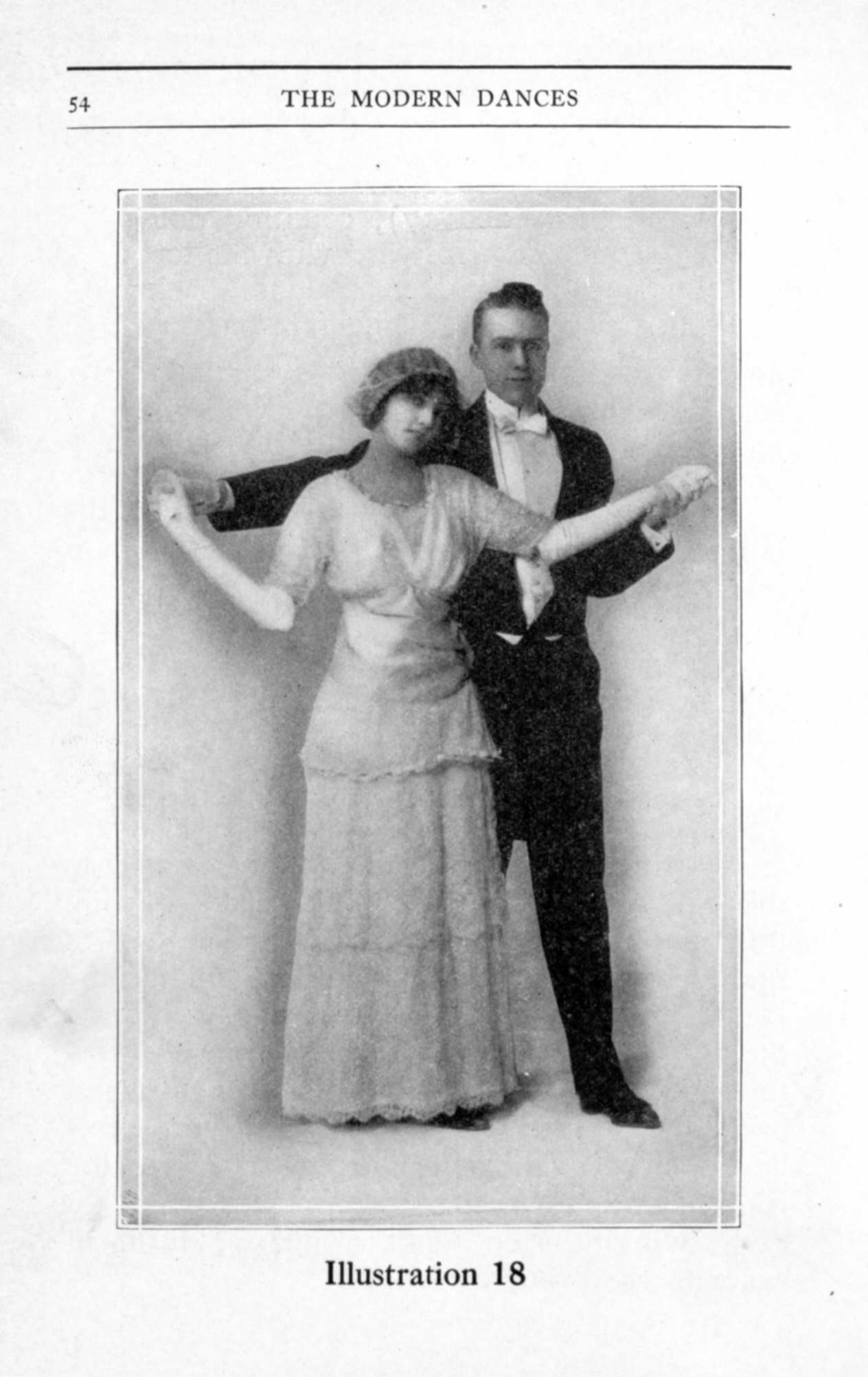
The Modern Dances - How to Dance Them (1914) - Illustration 18 HQ - Hesitation Waltz
Archibald Studio, Chicago, published by Saul Brothers, Chicago
- Source:
- Wikimedia Commons
- Rights:
- Public domain — free to use, share and adapt.
- Recorded as:
- public_domain
This image documents a specific historical moment when ballroom dancing became a subject of systematic instruction and commercial publishing in America, and when the Hesitation Waltz was a marker of modern, fashionable practice. It also preserves precise visual information about the posture, frame, and arm positions considered correct for ballroom dancing in the 1910s—information valuable to dance historians and performers interested in period authenticity. As part of a published instructional manual, it shows how dance knowledge was disseminated and standardized in the early 20th century.
What you are looking at
A dancing couple is shown in a studio setting against a plain backdrop, posed mid-movement. The woman wears a pale, high-waisted gown with a loose, flowing bodice in the Edwardian style, her dark hair dressed close to her head with a decorative band or feather ornament. The man wears formal evening dress: black tailcoat, white dress shirt with piqué front, and bow tie. He stands slightly behind and to the side of the woman, his right arm extended around her shoulders in a supporting frame, his left arm positioned to hold her right hand. The woman's left arm is extended outward at shoulder height, her right arm held up in the man's grasp, her body angled away from him in a characteristic Hesitation Waltz pose. The composition is formal and instructional, shot full-length against a white ground, designed to demonstrate the basic position and frame of the dance rather than capture a moment of dynamic action.
The dancing
The couple adopts a closed ballroom hold with the man slightly offset to the woman's right-back, his right arm supportively across her back, their joined hands held at approximately mid-chest height. The woman's posture is elegant and upright, with her weight forward, her extended left arm creating an open, graceful line. Her body shows the characteristic slight lean away from the man that ballroom dancing requires. The man's frame is firm and vertical, his head held erect with a forward gaze. Both dancers present a unified sense of control and formality, suggesting partners well-versed in ballroom etiquette rather than spontaneous movement.
The dance depicted
The caption identifies this as instruction in the Hesitation Waltz, a ballroom dance that was fashionable in the early 1910s. The Hesitation Waltz is a variation of the standard Waltz, characterized by intermittent pauses or hesitations in the triple-time rhythm, creating a syncopated effect. This image shows the fundamental closed ballroom hold and frame from which the dance would be performed. The formal, upright posture, the precise positioning of the arms, and the woman's extended left arm are all consistent with the ballroom Waltz technique of the era. The image functions as an instructional diagram rather than a snapshot of active performance.
How it was made
This is a photographic illustration, most likely a studio photograph printed as a halftone reproduction in a published instructional book. The sharp focus, controlled lighting, and formal pose are typical of early 20th-century studio photography used for educational purposes. The technique allowed publishers to provide readers with clear visual reference for ballroom positions and holds. Such photographs were less expensive to produce than hand-drawn illustrations or engravings, and their photorealism gave them credibility as accurate records of dance technique. The crisp black-and-white image and even lighting suggest professional studio work, likely taken by the Archibald Studio in Chicago as credited.
About this work
This is an instructional photograph from a 1914 dance instruction manual, showing the basic closed ballroom hold and frame for the Hesitation Waltz. The image belongs to a large body of early 20th-century American dance pedagogy that made ballroom dancing accessible to middle-class learners through published guides. The Hesitation Waltz was a fashionable social dance of the 1910s, and instructional imagery like this served an eager market of people seeking to master modern ballroom technique. The photograph's formal clarity and the couple's evident expertise make it a reliable visual record of how this dance was taught and performed in its moment of popularity.
How to look at it
Notice the man's frame: how his right arm supports the woman's back while his body remains upright and slightly offset. Observe the woman's left arm—extended but not rigid, held at shoulder height in a graceful line that balances the man's supporting right arm. The positioning of the joined hands and the slight forward tilt of the woman's weight are key features of ballroom technique. The formal frontality of the pose, with both dancers gazing ahead rather than at each other, was conventional for instruction photographs, designed to show the frame clearly rather than capture emotional content. The couple's elegant posture and the precision of their positioning demonstrate that the Hesitation Waltz, despite its name, was performed with controlled formality rather than loose spontaneity.
The artist
The Archibald Studio was a Chicago-based photography studio active in the early 20th century. The studio produced commercial and instructional photography, including work for publishing projects. The image was published by Saul Brothers, also based in Chicago, who were active in the dance instruction market during this period. The combination of local photographer and publisher suggests a regional American market for dance instruction materials.
The period
The Hesitation Waltz emerged in the early 1910s as part of a wave of new ballroom dances that modernized social dancing. The years 1910–1914 saw rapid innovation and codification of ballroom technique, with competing instruction manuals and teachers promoting their own versions of correct form. This was also the era when ballroom dancing became commercialized and democratized—no longer primarily the domain of aristocratic or court training, but available to aspiring middle-class Americans through books, classes, and competitions. The photograph's formal studio setting and pedagogical clarity reflect this professionalization of dance instruction. Simultaneously, photography was becoming the dominant medium for instructional imagery, replacing hand-drawn illustrations.
Where it lives
This photograph is from 'The Modern Dances: How to Dance Them,' published by Saul Brothers of Chicago in 1914. The book was an instructional manual for social dancers, and this image serves as one of a series of photographs demonstrating the basic positions and frames of fashionable ballroom dances. The source is Wikimedia Commons.
Dance in this work
Questions about this work
What is the Hesitation Waltz?
The Hesitation Waltz is a ballroom dance variation of the standard Waltz, popular in the 1910s. It differs from the traditional Waltz by introducing hesitations or pauses in the rhythm, creating a syncopated effect within the triple-time measure. The dance retained the elegant closed ballroom hold shown in this photograph but added stops and starts that gave it a more modern, jazz-influenced character.
How do I know this is a photograph and not a drawing?
The fine detail in the fabric textures—visible in the woman's gown and the man's tailcoat—the naturalistic modeling of light and shadow on their faces and bodies, and the photographic grain visible in the background are all consistent with halftone photographic reproduction. A hand-drawn illustration would show line work or stippling; this shows the continuous tones of a photograph.
Why does the woman's arm extend outward like that?
In ballroom Waltz technique, the woman's left arm extends to create a long, elegant line and to balance the frame created by the man's right arm supporting her back. This extension also allows her to maintain her own space and posture while the man leads. The pose shown here is the fundamental closed ballroom frame from which the Hesitation Waltz would be danced.
Is this couple performing, or posing for instruction?
They are posing for instruction. The frontality of the composition, the studio backdrop, the precise stillness of the pose, and the formal clarity of the frame all indicate that this is a pedagogical image designed to show learners the correct position and hold. The couple is not captured mid-movement but rather demonstrating the foundational posture from which the dance would be performed.
More dance artwork





