49 works in this view — arrow keys or swipe to move between them.
Dance in Art
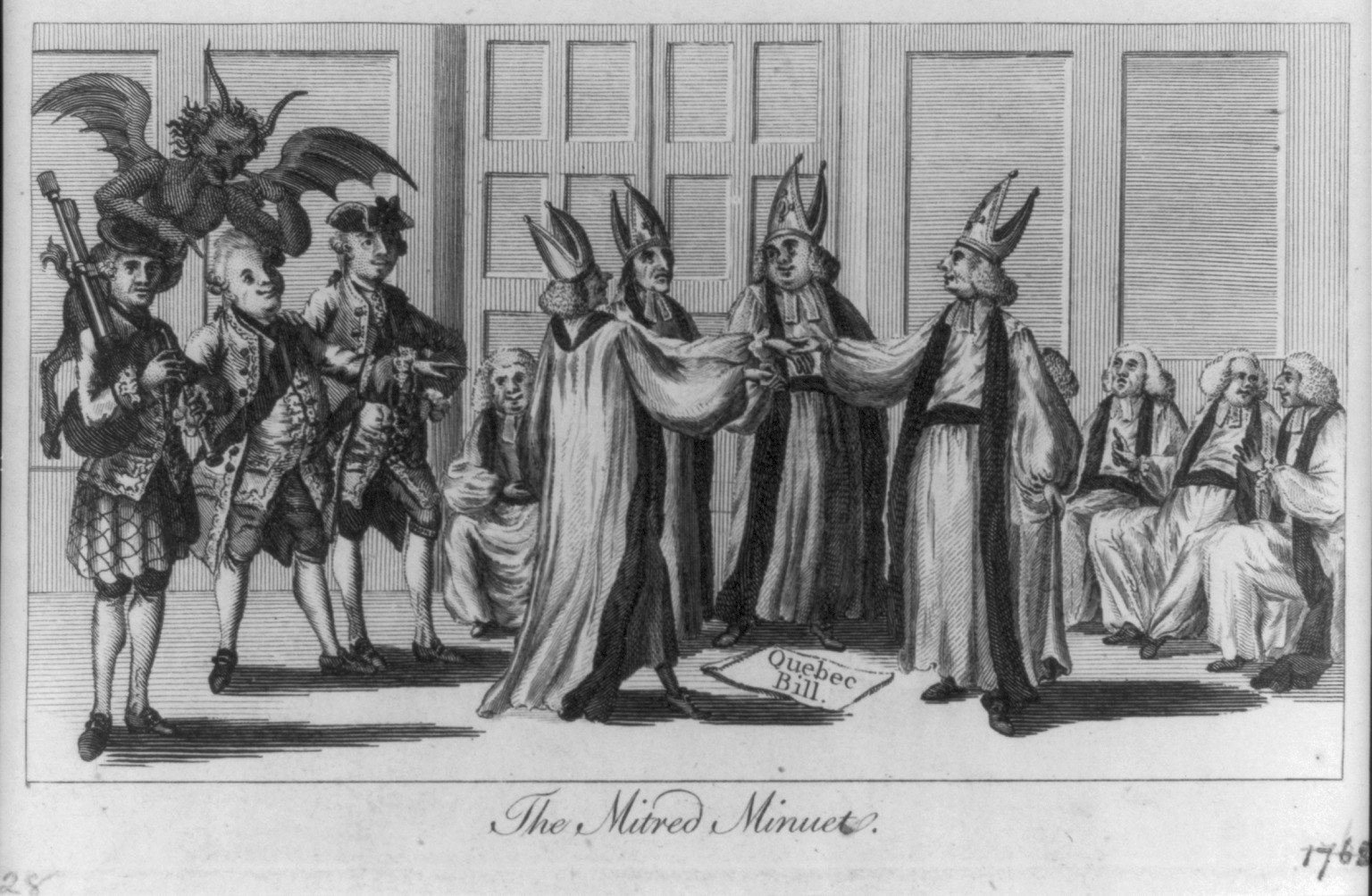
The mitred minuet LCCN2004672698
British Cartoon Prints Collection
- Source:
- Wikimedia Commons
- Rights:
- Public domain — free to use, share and adapt.
- Recorded as:
- public_domain
This print documents the minuet's cultural meaning as the ultimate expression of formal, hierarchical authority—and by extension, its power as satire when applied to figures the artist despised. It shows that dance was understood not merely as entertainment or social practice but as a language of political meaning, and that the visual conventions of dance could be deliberately inverted to mock power. The work is essential for understanding how 18th-century prints used the body and its gestures to communicate ideology.
What you are looking at
This 1774 satirical engraving depicts four Anglican bishops in full ecclesiastical regalia—mitres, copes, and vestments—joining hands in a circle around a document labeled "Quebec Bill" lying on the floor. They dance or process in a formal arrangement, their bodies upright and dignified despite the mockery of their posture. To the left, three figures in fashionable 18th-century dress observe: Lord Bute plays bagpipes while Lord North stands nearby with another minister, all watching the clerical spectacle. The Devil hovers above the bishops' heads, a winged demonic figure rendered in shadow. The setting is an interior with a tall window and paneled walls, giving the scene a formal, institutional character. The composition uses classical engraving technique with fine parallel hatching to create depth and shade, lending the satirical subject the weight of serious political commentary.
The dancing
The four bishops stand upright with arms extended and joined, forming a closed circle or chain around the Quebec Bill. Their posture is stiff and formal rather than fluid—this is a processional or ceremonial gesture rather than ballroom dancing. The bodies maintain vertical alignment and dignity; there is no suggestion of waltz or minuet posture, though the joined-hands formation echoes social dance conventions. The three observers on the left stand separately, with Bute holding bagpipes to his lips in a playing position. The Devil's posture is aggressive and exultant, wings spread.
The dance depicted
The work does not depict a genuine dance but rather a satirical choreography of political protest, using the visual language of social dance—particularly the formal minuet and court dances—to mock the bishops' actions. The title "The Mitred Minuet" explicitly invokes the minuet, the most formal and stately dance of the 18th-century aristocracy, to ridicule the clergy's participation in what the artist saw as a scandalous political compact. The bagpipes (played by Bute) are a populist, Scottish instrument, emphasizing the satirical reversal: high church figures performing to low music. This is political allegory expressed through dance gesture rather than a record of actual dancing practice.
How it was made
This is an engraving, identified by the dense parallel hatching lines (cross-hatching and directional lines) that create tonal gradation and shadow throughout the composition. The engraving technique allowed for fine detail and sharp lines, and this work displays these qualities in the intricate rendering of textile folds, facial features, and architectural elements. Engravings were the primary medium for distributing satirical political prints in 18th-century Britain, allowing for multiple impressions to be printed and circulated widely among the educated classes. The technique's association with fine art also lent authority and weight to what was fundamentally a partisan attack on government policy.
About this work
This is a political satire rendered as dance allegory, combining the visual conventions of 18th-century ballroom etiquette with demonic symbolism to denounce Anglican bishops' support for the Quebec Bill of 1774. The work uses the formal minuet—the highest and most ceremonial of social dances—as its compositional framework, but inverts its dignity by having the bishops circle a legal document while a devil presides and a Scottish piper plays. The engraving format and 1774 date place it in the thick of British political controversy over colonial policy and the status of Catholicism in Quebec; it belongs in a dance gallery because the artist chose dance as the primary language of political condemnation, and because it documents how the minuet functioned as a symbol of aristocratic and ecclesiastical authority in the Georgian era. The work reveals that dance imagery was weaponized in political discourse: to show authority figures dancing was to make them ridiculous.
How to look at it
Observe the frozen moment of the dance: the bishops are caught mid-circle, bodies upright and formal, hands linked in a closed chain. The artist has chosen not a moment of dynamic movement but of static, processional solemnity—which makes the ridicule all the more pointed. The bagpipes and the Devil are not incidental; they are the true choreographers of this scene, suggesting that the bishops' formal 'dance' is actually being conducted by demonic and populist forces beyond their control. The fine, sharp engraved line and the careful rendering of each bishop's individual face encourage close looking—this is meant to be recognized as portraiture as well as satire.
The artist
The print is attributed to the British Cartoon Prints Collection and was published in 1774, but the individual artist's name is not recorded in the catalogue. The British Cartoon Prints Collection includes works by multiple anonymous and named artists working in the tradition of 18th-century political satire. This style of allegorical political engraving was a dominant form of visual argument in Britain during the American Revolution and its precursor conflicts, with artists using recognizable figures from court and government as characters in elaborate symbolic scenarios.
The period
The Quebec Bill of 1774 was deeply controversial in Britain and America: it granted religious toleration and political power to French Catholics in the newly conquered Canadian territory, seen by many Protestants as a betrayal of national interest and a dangerous appeasement of Catholicism. The print appeared at the height of anti-Catholic sentiment and was directed at the bishops and ministers (including Lord North, the Prime Minister) who supported or failed to oppose the bill. Visually, 1774 falls late in the reign of the minuet as the dominant ballroom dance; by the 1780s, the cotillion and country dances were displacing it. The choice to invoke the minuet in satire suggests that the artist was appealing to an audience for whom the minuet still carried the strongest associations with formal, hierarchical, old-regime authority.
Where it lives
The work is held in the Library of Congress as part of the British Cartoon Prints Collection and is documented in Donald H. Cresswell's catalogue of American Revolution graphics (1975, no. 666). It was sourced from Wikimedia Commons. The British Cartoon Prints Collection is a systematic archive of British political and social satire engravings and etchings, primarily from the 18th and 19th centuries.
Dance in this work
Questions about this work
Did people actually dance like this?
No. This is political satire using dance as metaphor, not a record of actual dance practice. The rigid, formal posture of the bishops in a circle is an invented composition designed to mock them. However, the closed-chain formation and the invocation of the minuet would have been immediately recognizable to 18th-century viewers as formal, high-status social dance gestures.
Why is the Devil in the picture?
The Devil represents the artist's view that the Quebec Bill and those who supported it were morally corrupt and working against Protestant Britain. In 18th-century political satire, demonic figures were standard visual language for depicting evil or corruption; their presence here suggests the bishops are not just wrong but actively wickedly aligned.
What is the Quebec Bill and why did it matter?
The Quebec Bill (1774) granted religious freedom and political representation to French Catholics in newly conquered Canada, which horrified many British Protestants and American colonists who saw it as dangerous appeasement. The print is arguing against the bishops who supported it, treating them as dupes or traitors.
Why bagpipes?
Bagpipes were associated with Scotland and were considered a populist, non-aristocratic instrument in 18th-century England. By having Lord Bute play them as accompaniment to the bishops' formal dance, the artist creates a visual joke: high church authority being conducted by low-status music, suggesting the bishops have lost control of the proceedings.
More dance artwork





