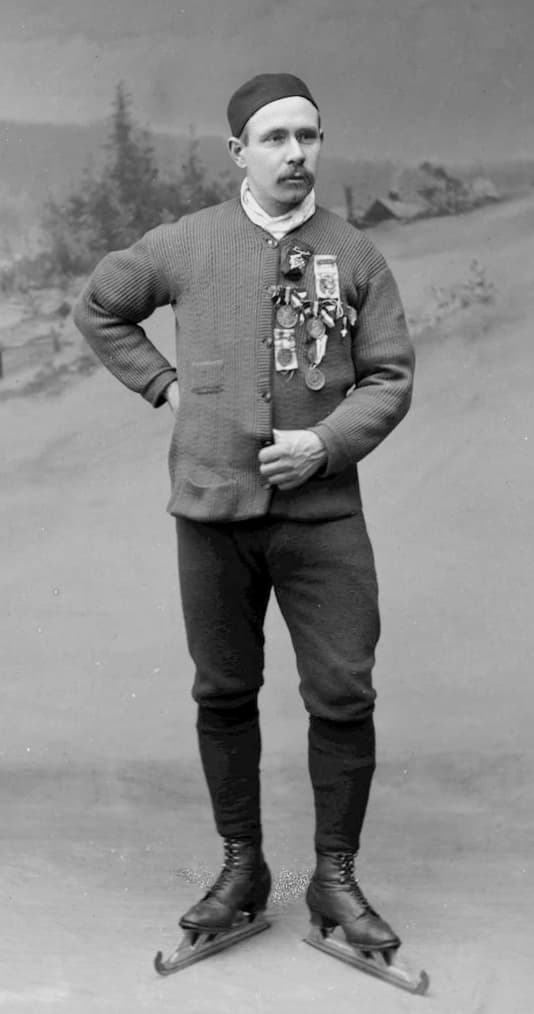
Axel Paulsen
Legend of Dance
Why They Matter
Paulsen matters to dance because the Axel turned a racing skater's speed and edge into an airborne phrase with a distinctive forward initiation, extra half-rotation and backward landing. The movement is now a technical benchmark, but it also embodies a choreographic idea: momentum can be redirected
Watch
125 Years of: Figure Skating
International Skating Union Archives
Places Paulsen and the 1882 tournament within institutional skating history
Axel Jump — Elements Explained
International Skating Union
Shows the modern element that preserves Paulsen's name
Training to Land the Triple Axel — Mirai Nagasu
U.S. Figure Skating
Demonstrates the later technical lineage of Paulsen's jump
The New Brunswick Skater Who Beat Axel Paulsen
New Brunswick historical producer
Adds context for Paulsen's 1890 defeat and North American career
The physics behind a figure skating jump
Michigan State University
Useful modern physics context without pretending to reconstruct Paulsen's technique
Meet the Quadgod: Team USA's Ilia Malinin
Team USA
Documents the furthest competitive rotation development of the named jump
Biography
Axel Rudolf Paulsen was born on July 18, 1855, in Aker, now part of Oslo, Norway. His father, merchant Johan Peter Paulsen, was an enthusiastic skater who introduced his children to the ice at Østensjøvannet. According to official reports, the young Paulsen won both speed and figure-skating divisions for his age class at a meeting below Akershus Fortress in 1870.
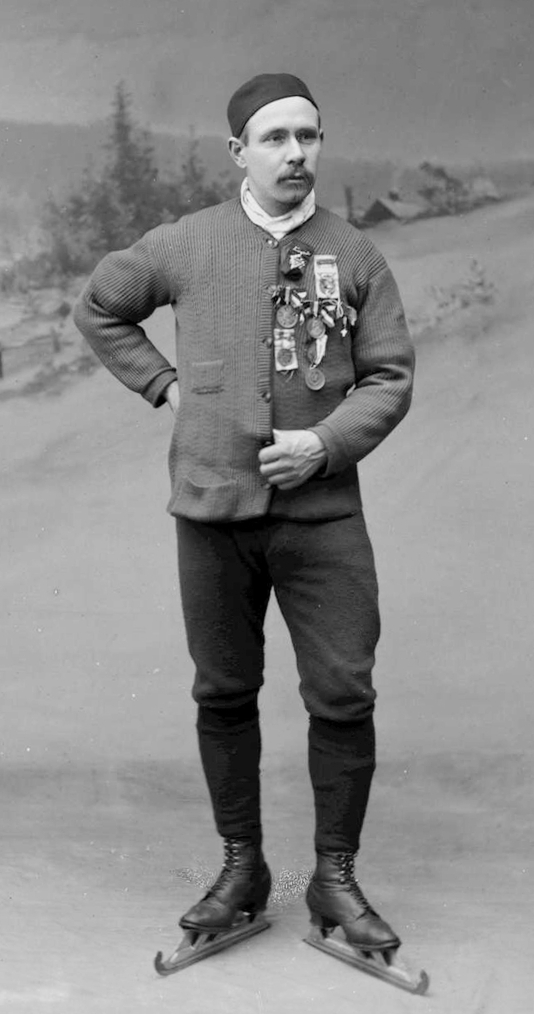
Paulsen's significance lies in his excellence across both speed and figure skating—a rare combination at a time when the two disciplines were not yet sharply divided. The momentum, power and long blade of racing did not isolate him from theatrical movement; instead, they became the physical foundation from which he developed a new kind of jump. This dual training made him a model of athletic artistry rather than a specialist in only traced figures.
His international breakthrough came at the Great International Skating Tournament in Vienna in January 1882. He won the speed event and received an extra prize for a special jump that rotated one and a half times and later took his name. A contemporary account describes the audience reacting strongly to Paulsen's backward-traveling leap and turning finish. He placed third in the tournament's figure-skating competition.
From 1883 to 1884, Paulsen toured and competed successfully in North America, acquiring the period title "Amateur Champion Skater of the World." In 1885 he won both speed and figure-skating events in Hamburg, then defeated Dutch champion Renke van der Zee in a celebrated three-mile match at Frognerkilen before an estimated 20,000 to 30,000 spectators. During these years he set five cited world records across distances from one to twenty English miles and developed a modern speed-skate construction with the blade fixed to the boot.
After his competitive career, Paulsen remained engaged with Norwegian skating, becoming an honorary member of Oslo Skøiteklub in 1910. He later managed the family coffee business and lived to see his son Harry win multiple Norwegian figure-skating titles. Paulsen died on February 9, 1938, at Nesodden. His name remains spoken every time skaters train or perform the Axel. He was inducted into the inaugural World Figure Skating Hall of Fame class in 1976.
Career Highlights
Born July 18 in Aker, now Oslo. Store norske leksikon Store norske leksikon
Won both the speed and figure-skating divisions for his age class at a meeting below Akershus Fortress. Store norske leksikon Store norske leksikon
Won the speed event at Vienna's Great International Skating Tournament and received an extra prize for the jump later called the Axel. Store norske leksikon Store norske leksikon
Placed third in the tournament's figure-skating competition behind Leopold Frey and Eduard Engelmann in the historian's reconstruction. 1882 tournament research 1882 tournament research
Toured and competed successfully in North America, receiving the period title “Amateur Champion Skater of the World.” Store norske leksikon Store norske leksikon
Won speed and figure-skating events in Hamburg. Store norske leksikon Store norske leksikon
Defeated Renke van der Zee over three English miles at Frognerkilen before an estimated 20,000–30,000 spectators. Store norske leksikon Store norske leksikon
Set five cited world records across one-, three-, ten- and twenty-mile distances. Store norske leksikon Store norske leksikon
Named an honorary member of Oslo Skøiteklub. Store norske leksikon Store norske leksikon
Died February 9 at Nesodden. Store norske leksikon Store norske leksikon
Entered the inaugural World Figure Skating Hall of Fame class. World Hall of Fame archive World Hall of Fame archive
Legacy & Impact
Paulsen matters to dancers and skaters because the Axel transformed a racer's speed and edge into an airborne phrase with a distinctive forward initiation, half-rotation and backward landing. The movement is now a technical benchmark, but it embodies a choreographic idea: momentum can be redirected through suspension and rotation to transform the body's orientation in space. His career resists the modern division between "artistic" and "athletic" skating. A celebrated racer created one of figure skating's most enduring expressive actions, and the jump's survival across singles, pairs and performance skating keeps his name active rather than merely commemorative.


Explore More Legends
Discover the dancers, teachers, choreographers, and cultural icons who shaped how the world moves.
Keep the thread going
Dance history, technique, and the occasional rabbit hole — in your inbox. Thoughtful, infrequent, unsubscribe anytime.
Free. No spam. One click to leave.