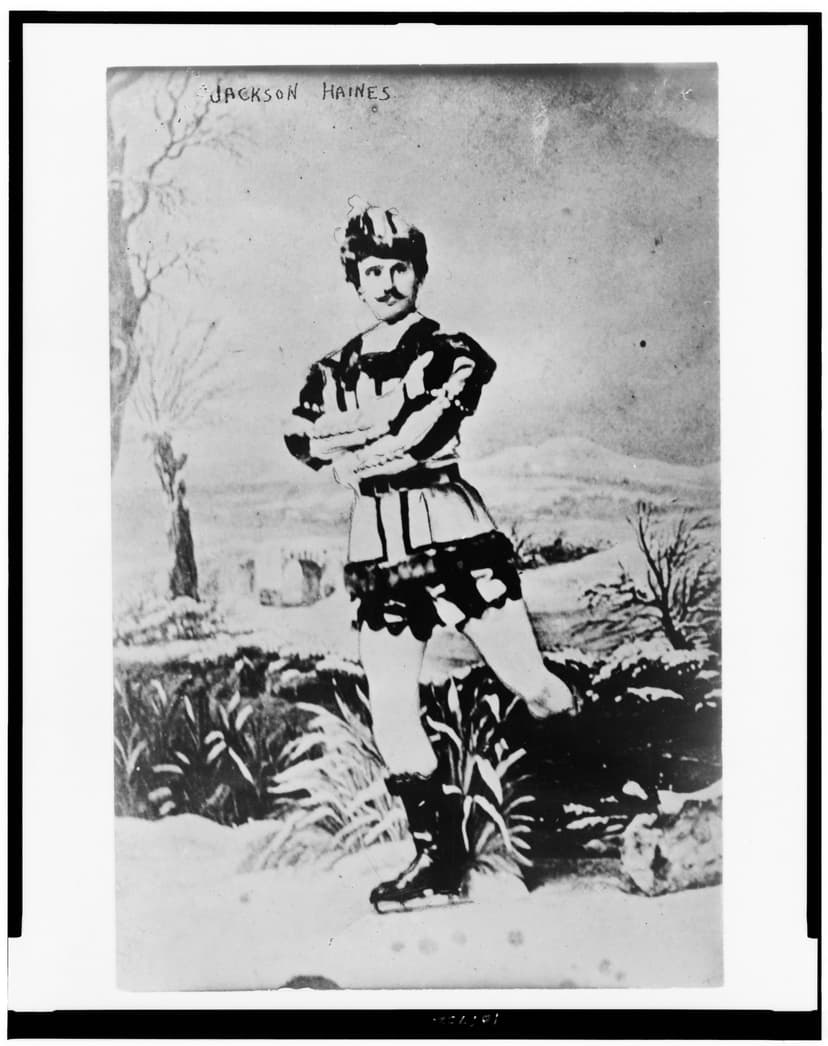
Jackson Haines
Legend of Dance
Why They Matter
Haines matters to dance because he made danced phrasing, musical relationship and theatrical expressivity constitutive elements of skating rather than decoration added after technical figures. Modern figure skating is not solely his invention, and its international rules, training systems, jumps and
Watch
125 Years of: Figure Skating
International Skating Union Archives
Provides institutional historical context for Haines's pioneering role
In Another Time — reading from Jackson Haines: The Skating King
Ryan Stevens / Skate Guard
Connects modern archival research to Haines's European touring career
Teaser — Jackson Haines: The Skating King
Ryan Stevens / Skate Guard
Introduces the first modern full-length research biography
Book Reviews — Jackson Haines: The Skating King
Ryan Stevens / Skate Guard
Useful only as a research lead for reception of the biography
Episode 18: Ryan Stevens
figure-skating history interview
Long-form context from the author of a Haines biography
1875 Jackson Haines — Pioneer
historical skating channel
A compact visualization of the received Haines story that requires fact checking
Biography
Jackson Haines was an American skater and dancer who fundamentally changed the practice and meaning of figure skating in the nineteenth century. Born in New York around 1840, Haines emerged during a period of widespread enthusiasm for both skating and dance in the United States. Where the dominant Anglo-American method of his time emphasized controlled edges and formal figures traced onto the ice, Haines developed performances built on freer full-body phrasing, theatrical presentation, and an explicit relationship to dance and music. That shift was revolutionary: he treated skating as a kinetic performance across space rather than only as a demonstration of prescribed tracings.
Haines won what are recorded as Championships of America in 1863 and 1864, yet his expressive style encountered resistance in his home country. Moving his career to Europe in the mid-1860s, he found much wider receptivity. His work achieved particular influence in Vienna, where his dance-centered approach became associated with a Viennese school and what later writers called the international style of figure skating. He did not single-handedly codify every later rule or technique; rather, his performances provided a persuasive model that European skaters and teachers subsequently organized and developed.
Haines died in Finland in 1875 while still a young man. His influence returned to the United States through later advocates of the international style, and by 1914 a formal International Figure Skating Championship of America demonstrated institutional acceptance of the approach he had championed. In 1976, Haines was inducted into the inaugural class of the U.S. Figure Skating Hall of Fame, recognition that reflects his status as a foundational figure in modern artistic skating.
Career Highlights
Born in New York; the exact year and locality remain disputed. U.S. Figure Skating U.S. Figure Skating
Rose to prominence during an American skating and dancing craze with a free, expressive alternative to the rigid figure-tracing style. U.S. Figure Skating U.S. Figure Skating
Won an event U.S. Figure Skating calls a Championship of America; its pre-governing-body status requires careful labeling. U.S. Figure Skating U.S. Figure Skating
Won a second cited American championship and continued encountering resistance to his performance style. U.S. Figure Skating U.S. Figure Skating
Shifted his performing career to Europe, where his dance-and-music-centered skating found wider audiences. U.S. Figure Skating U.S. Figure Skating
Achieved particular influence in Vienna, where his approach became associated with the international style. U.S. Figure Skating U.S. Figure Skating
Died in Finland; exact date and medical cause remain disputed. U.S. Figure Skating U.S. Figure Skating
A formal International Figure Skating Championship of America demonstrated the later institutional acceptance of the style he had championed. U.S. Figure Skating U.S. Figure Skating
Inducted into the inaugural class of the U.S. Figure Skating Hall of Fame. U.S. Figure Skating Hall of Fame U.S. Figure Skating Hall of Fame
Listed among the first World Figure Skating Hall of Fame honorees in the skating archive. Skating magazine archive Skating magazine archive
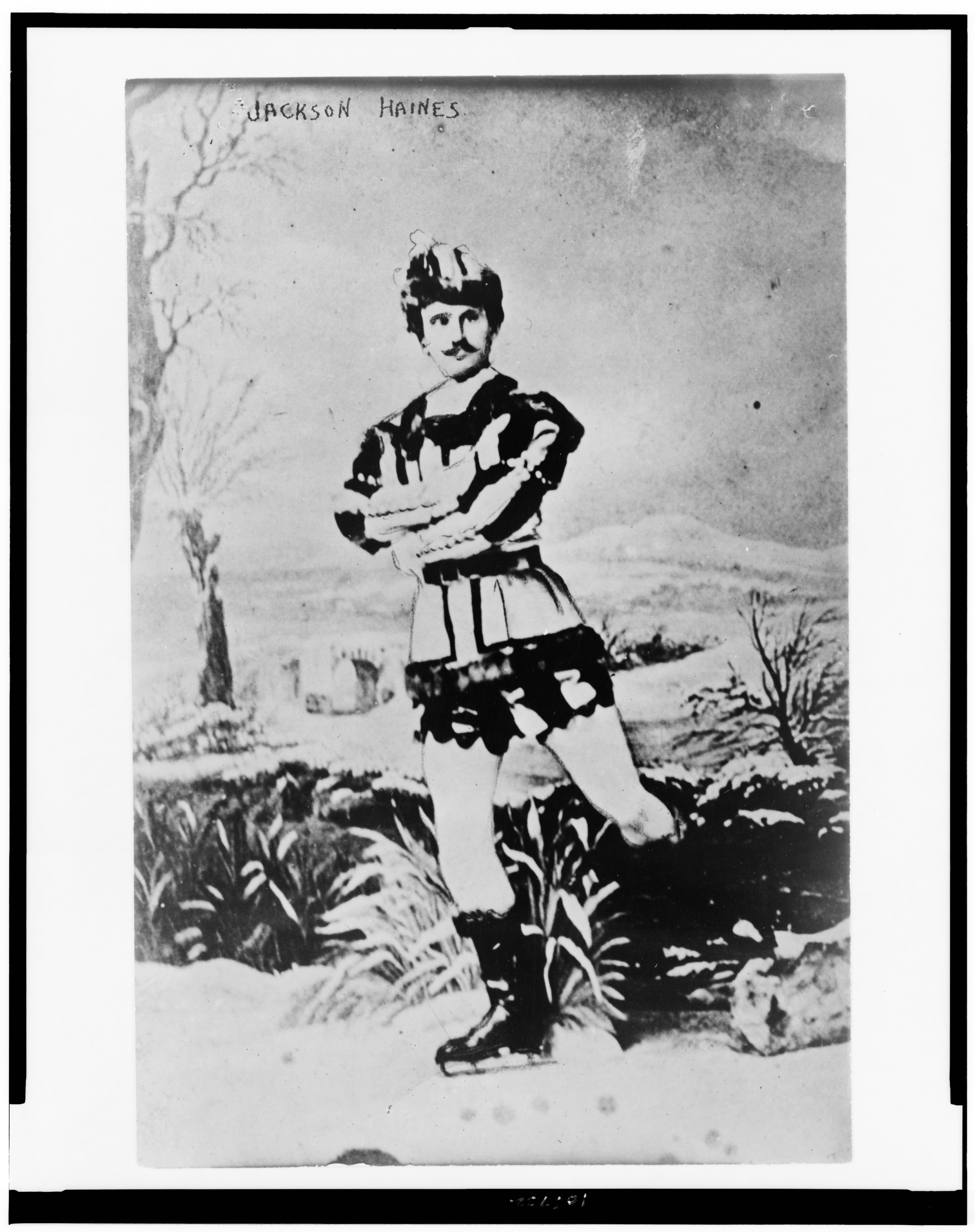
Gallery
Legacy & Impact
Haines matters to dancers and skaters because he made danced phrasing, musical relationship, and theatrical expressivity constitutive elements of skating rather than decoration applied after technical figures. Modern figure skating developed through many later athletes, teachers, and international federations, yet his durable contribution was a change in artistic premise: the skater could move as a performing body through music and across space. That principle remains central to contemporary skating performance and connects nineteenth-century theatrical dance directly to the international style that governs competitive and artistic skating today.


Explore More Legends
Discover the dancers, teachers, choreographers, and cultural icons who shaped how the world moves.
Keep the thread going
Dance history, technique, and the occasional rabbit hole — in your inbox. Thoughtful, infrequent, unsubscribe anytime.
Free. No spam. One click to leave.