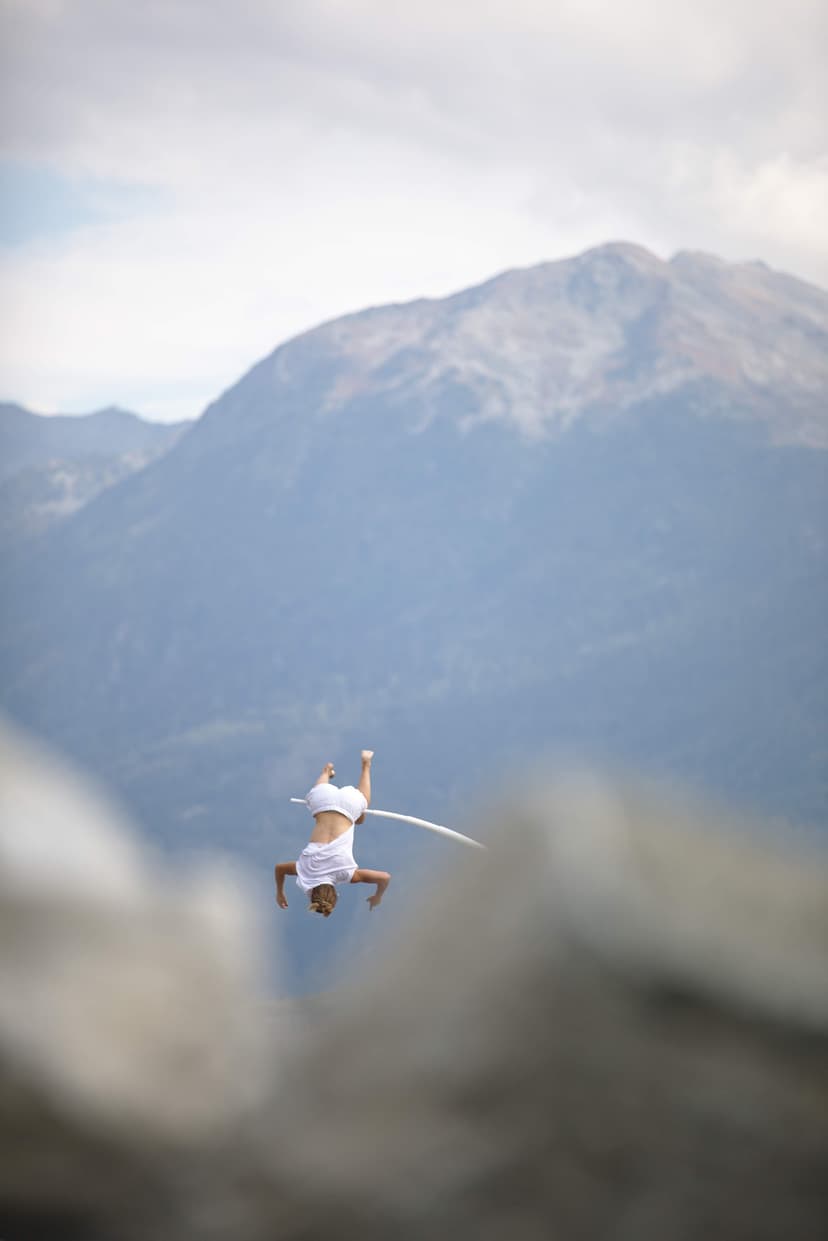
Chloe Moglia
Legend of Dance
Why They Matter
Moglia matters because she made hanging itself—not merely the preparation for a trick—an expressive and conceptual form. Her work gives circus and dance a shared vocabulary of weight, breath, risk, grip, duration and attention while refusing to blur the real technical stakes of aerial practice. Rhiz
Watch
Chloé Moglia - Rhizome : Aléas
104paris
Official venue-channel documentation of Aléas and Moglia's ensemble suspension vocabulary.
Biography
Chloé Moglia, born in 1978 in Perpignan, France, is a French artist who trained at the École nationale des arts du cirque de Rosny-sous-Bois and the Centre national des arts du cirque in Châlons-en-Champagne, specializing in aerial disciplines. She grew up around ceramic practice, an environment that shaped her attention to matter, weight, transformation and elemental forces—qualities that would define her later work.
In 2000, Moglia co-founded Compagnie Moglice-Von Verx with Mélissa Von Vépy. Their early works—*Un certain endroit du ventre* (2001), *Temps troubles* (2003), and *I look up, I look down…* (2005)—placed aerial technique in conversation with scenography, theatre and dance. The company received the SACD circus-arts prize in 2007. Her encounter with martial arts, particularly the Russian discipline systema, transformed her approach to trapeze. Rather than accumulating spectacular figures, she began treating sustained hanging as a complete field of action: a physical situation in which thought, perception, hesitation and transformation become visible.
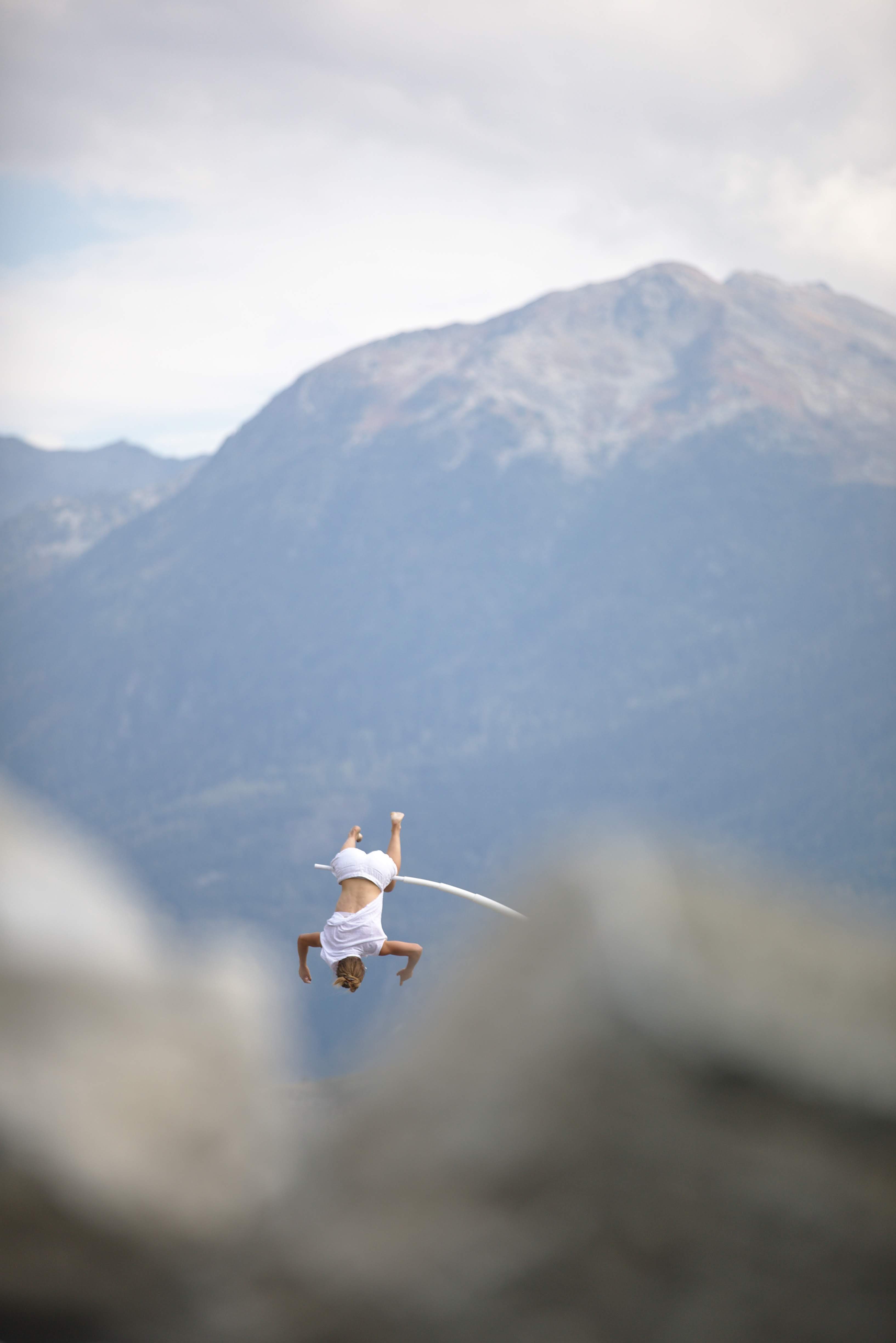
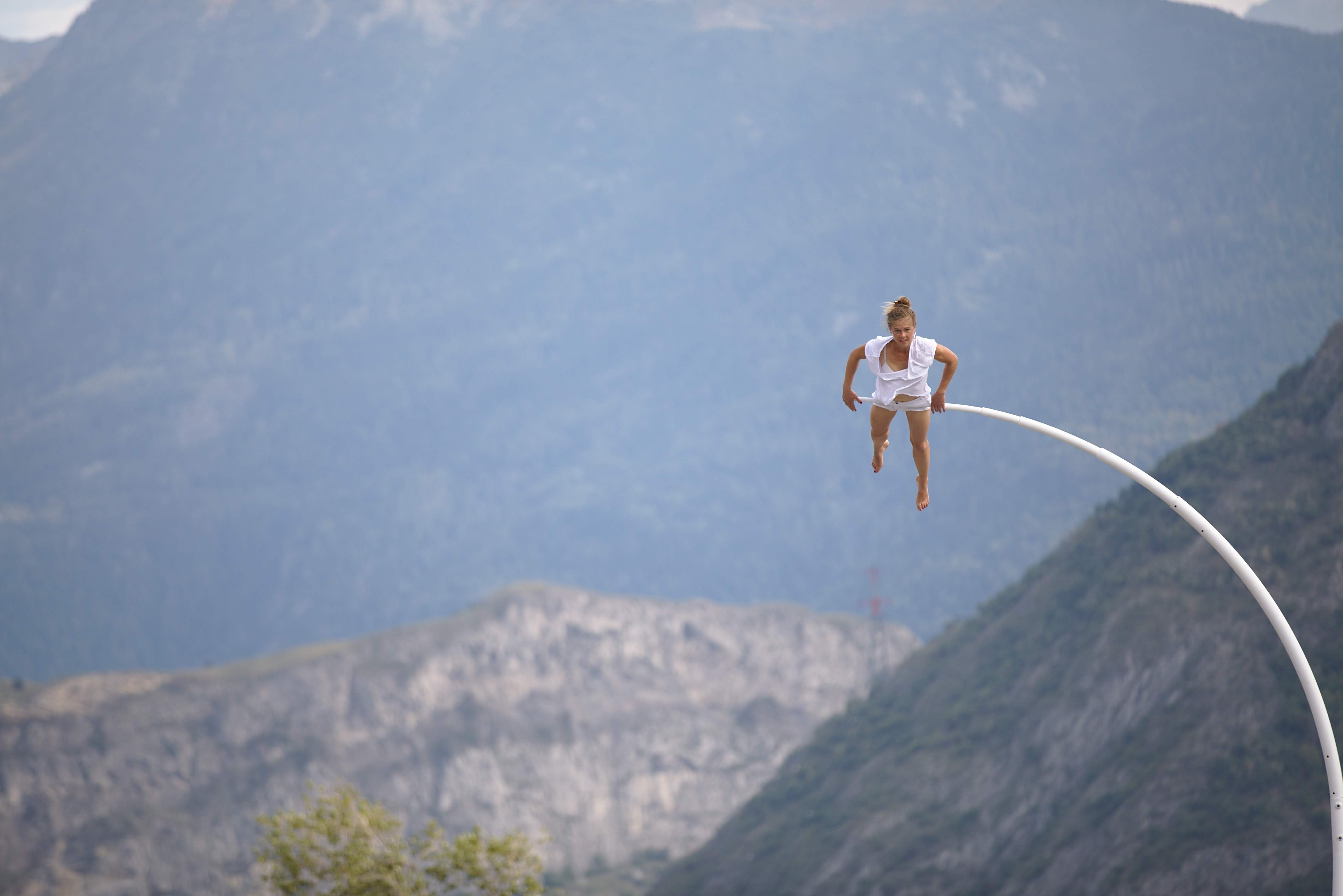
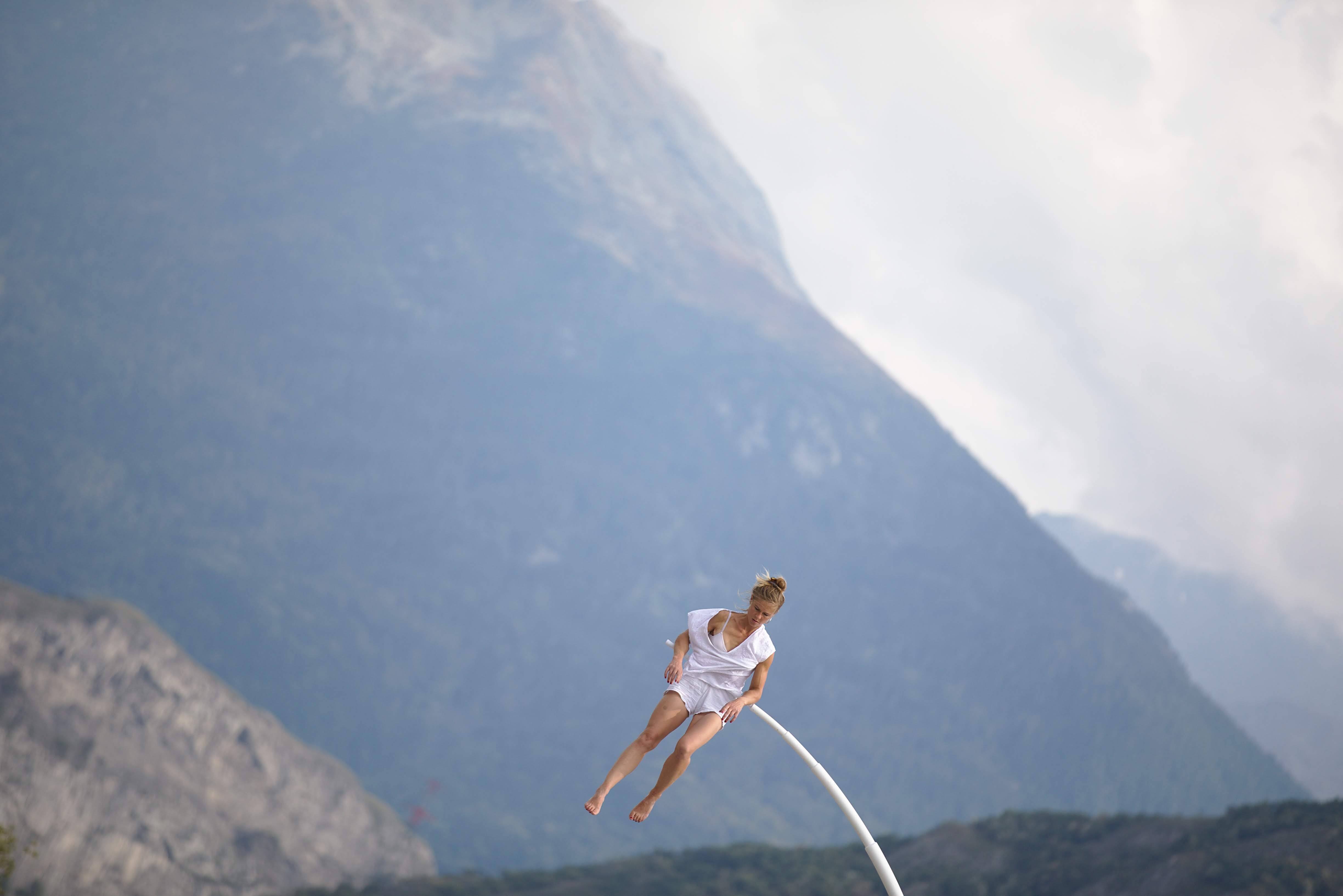
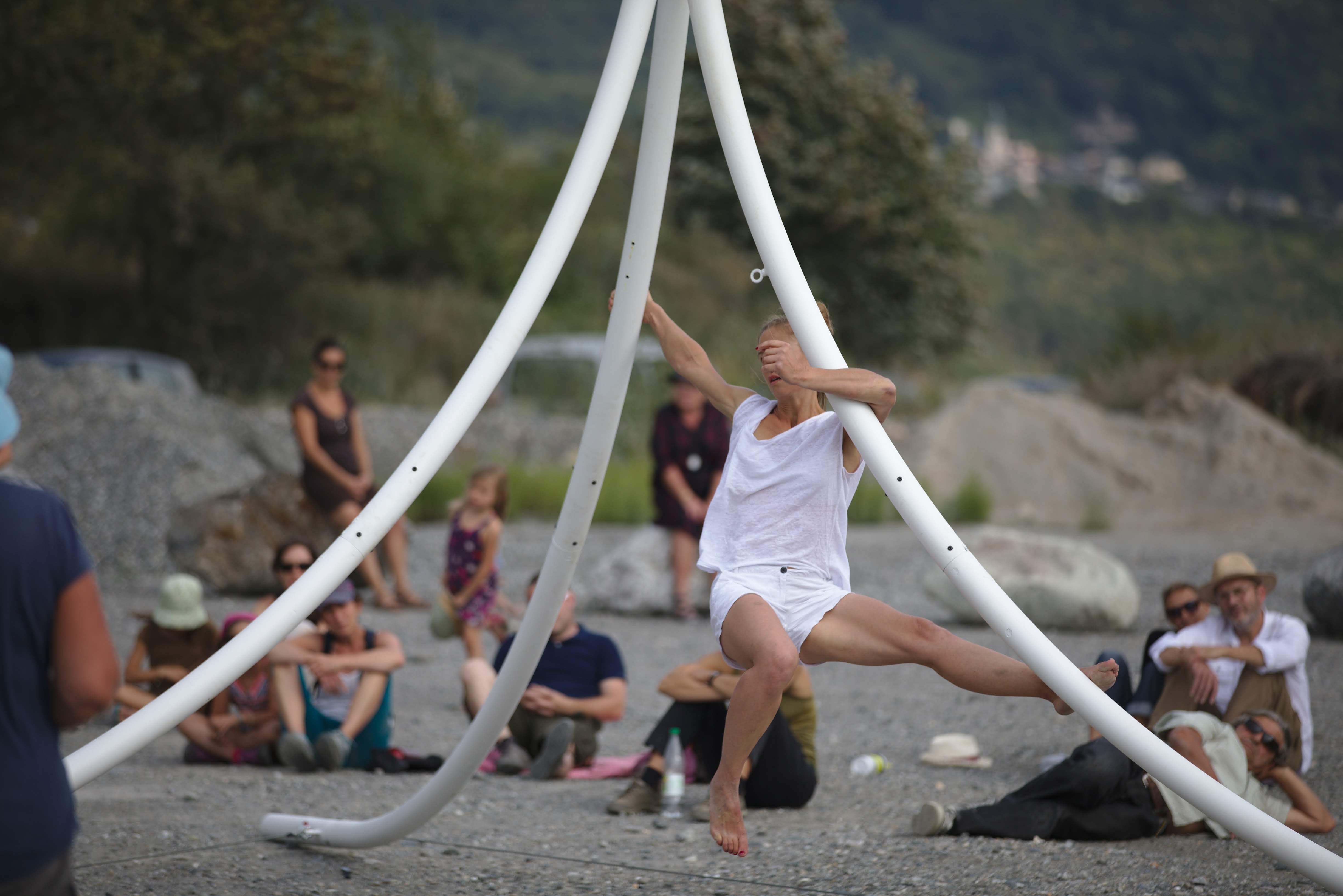
In 2009, Moglia founded Rhizome in Brittany and progressively developed what she calls "suspension"—a practice that replaces trick-to-trick acceleration with prolonged exposure to gravity. Works such as *Rhizikon*, *Le Vertige* (2012), *Horizon* (2013), *Aléas* (2015), and *La Spire* (2017) treat curved bars, lines, circles and spirals as both apparatuses and sculptures. Performers negotiate them slowly, often high above the ground, making small transfers of grip and weight theatrically consequential. In these works, slowness does not remove danger; it makes the body's calculations legible.
Moglia has broadened the practice through sustained collaboration and writing. *L'Oiseau-Lignes* (2019) joined her with musician Marielle Chatain; *Bleu tenace* (2021) was created for Rhizome performer Fanny Austry; *O* (2022) combined suspension, speech and drawing; and *Rouge merveille* (2024) was made with Mélusine Lavinet-Drouet and music by Chatain. Her journal project *Les Feuilles*, launched in 2024 and continued through 2025–2026, invites writers, researchers and illustrators to think alongside the perceptual and political questions generated above the void.
Career Highlights
Co-founded Compagnie Moglice-Von Verx with Mélissa Von Vépy after national circus-school training. Mélissa Von Vépy official biography
Created Un certain endroit du ventre with Von Vépy, documented in the CNAC circus catalog. Circodata/CNAC
Moglice-Von Verx received the SACD circus-arts prize; the award belongs to the partnership, not Moglia alone. Mélissa Von Vépy
Founded Rhizome in Brittany and began consolidating suspension as her central artistic practice. Numeridanse
Created Le Vertige with writer Olivia Rosenthal and developed the solo Opus Corpus. Les Tombées de la Nuit
Presented Horizon, a concentrated solo on the curved apparatus La Courbe; the work foregrounded duration, height and minute weight shifts. Metropolis
Created Aléas, extending the suspension research to an ensemble environment of steel lines. Les Tombées de la Nuit
Created La Spire, a large outdoor work for five suspended performers and a musician on an eighteen-metre steel spiral. Les Tombées de la Nuit
Created 384 467 km and L’Oiseau-Lignes, the latter a duo with musician Marielle Chatain. Les Tombées de la Nuit
Created Bleu tenace for Rhizome performer Fanny Austry, beginning a series of female solos for other “suspensives”. Les Tombées de la Nuit
Premiered O, combining a circular apparatus with speech, drawing and ecological/feminist inquiry. ZEF
Created Rouge merveille with performer Mélusine Lavinet-Drouet and music by Marielle Chatain, and launched the first issue of Les Feuilles. Les Tombées de la Nuit
Gallery
Legacy & Impact
Moglia matters because she made hanging itself—not merely the preparation for a trick—an expressive and conceptual form. Her work gives circus and dance a shared vocabulary of weight, breath, risk, grip, duration and attention while refusing to blur the real technical stakes of aerial practice. Rhizome has turned a singular inquiry into a collective lineage, commissioning and training other women performers and building apparatus-sculptures that let public space become a site for sustained looking, vulnerability and physical intelligence.

Explore More Legends
Discover the dancers, teachers, choreographers, and cultural icons who shaped how the world moves.
Keep the thread going
Dance history, technique, and the occasional rabbit hole — in your inbox. Thoughtful, infrequent, unsubscribe anytime.
Free. No spam. One click to leave.