Aerial Dance
A family of performance disciplines in which dancers move, pose, and create shapes while suspended on fabric or apparatus—aerial silks, the aerial hoop (lyra), and the aerial hammock/sling—blending circus apparatus skill with dance vocabulary and choreography.
5 dance styles in this genre
Historical Origins
Aerial apparatus performance grew out of the traditional circus, where rope, trapeze, and rings were strength-and-balance acts. Through the late 20th century, the 'contemporary circus' or nouveau cirque movement (often associated with Cirque du Soleil from 1984 and European contemporary-circus schools) reframed these apparatus as expressive, choreographic, dance-led forms. Aerial silks (tissu) in particular became prominent in the 1990s. What had been feats of strength were re-conceived as aerial dance: continuous, musical, choreographed movement in the air.
Cultural Significance
Aerial dance democratized circus apparatus into a widespread studio practice and performance art, paralleling pole's shift from spectacle to discipline. It is now taught in dedicated aerial studios worldwide, performed in contemporary circus, theater, music videos, and events, and pursued recreationally for strength and artistry.
Musical Characteristics
Choreographed to a wide range of music—contemporary, cinematic, electronic, or classical—with movement phrased to musical dynamics; climbs, drops, and poses are timed to musical accents much as floor choreography is.
Core Movement Principles
Suspension and counterweight, grip and wraps, controlled climbs, inversions, poses ('shapes'), and dynamic 'drops' that unwind the apparatus, all requiring substantial upper-body and core strength plus the line, point, and extension of trained dance technique.
Modern Usage
Taught and performed globally in aerial and circus studios, contemporary circus companies, cabaret, and events; pursued both professionally and recreationally. Distinct apparatus (silks, lyra, hammock) each have their own technique and repertoire.
Dance Styles
Aerial Silks
Also known as: Tissu, Aerial tissu, Aerial fabric, Aerial ribbons
Dance and acrobatics performed while climbing, wrapping, suspending from, and dropping on two lengths of fabric hung from a single point.
Aerial Lyra (Hoop)
Also known as: Aerial hoop, Cerceau, Lyra
Dance and poses performed on and around a suspended steel hoop, spinning or static, blending circus skill with choreographed movement.
Aerial Hammock (Sling)
Also known as: Aerial sling, Aerial hammock, Fabric sling
A loop of fabric (both ends rigged together) forming a hammock/sling that cradles the body for poses, rolls, and gentler aerial dance.
Corde Lisse (Aerial Rope)
Also known as: Aerial Rope, Vertical Rope, Smooth Rope, Corde Verticale
An aerial circus discipline performed on a single vertically hung soft rope, combining climbs, wraps, held shapes and controlled drops without a safety line.
Aerial Straps
Also known as: Sangles Aeriennes, Straps, Aerial Webbing, Duo Straps
An aerial discipline using two suspended fabric or webbing straps looped around the wrists, built on gymnastic strength holds, swings and high-speed rotational sequences.
Legends of Aerial Dance
Dancers, choreographers and teachers whose work shaped the styles in this genre.
Aerial Dance on screen
Films and television where aerial dance appears, with the sequences worth watching for.
 Cirque du Soleil: Worlds Away (2012)1 sequence indexedMia and the Aerialist’s final aerial-straps love duetI'm Better (2017)1 sequence indexedAerial-silks ensemble · chor. Sean Bankhead
Poster artwork from TMDB.
 This site uses TMDB and the TMDB APIs but is not endorsed, certified, or otherwise approved by TMDB.
Aerial Dance FAQs
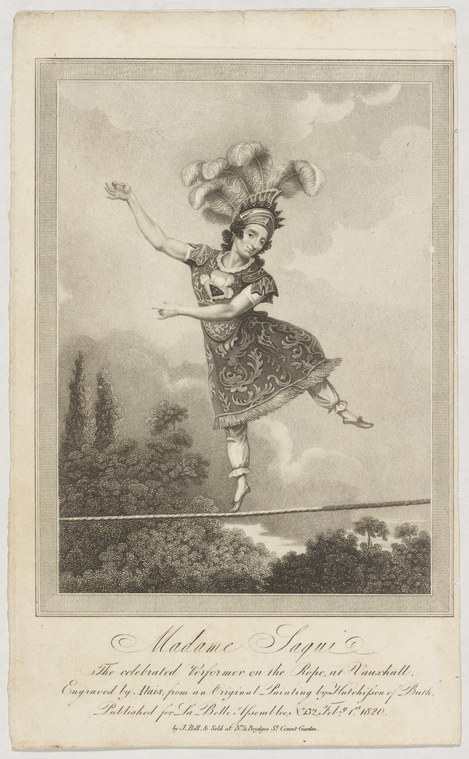
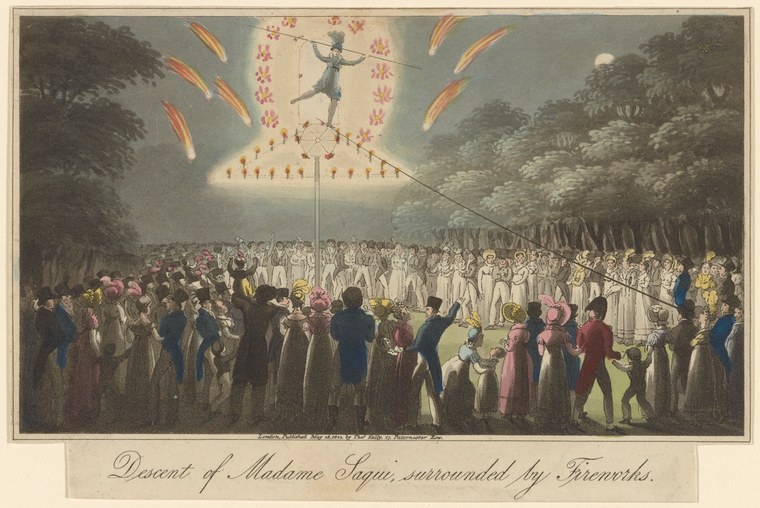
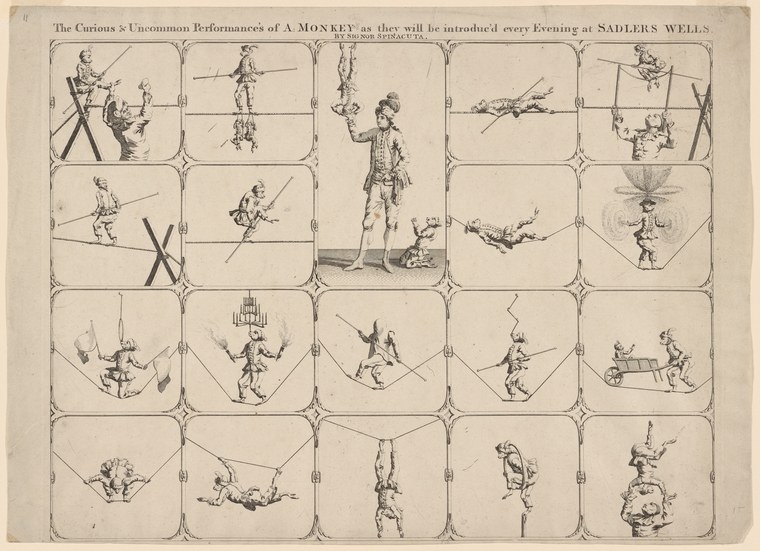
Aerial Dance in art
Browse the gallery →Works our catalogue identifies as depicting aerial dance.
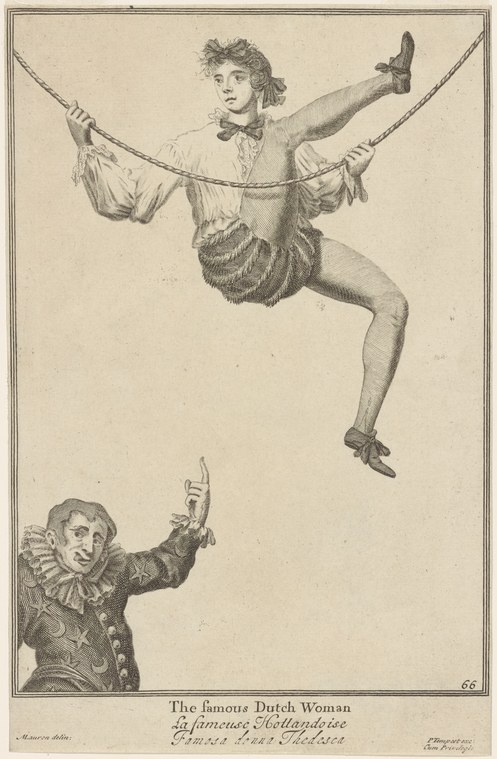
The famous Dutch woman
Unknown artist
Public Domain
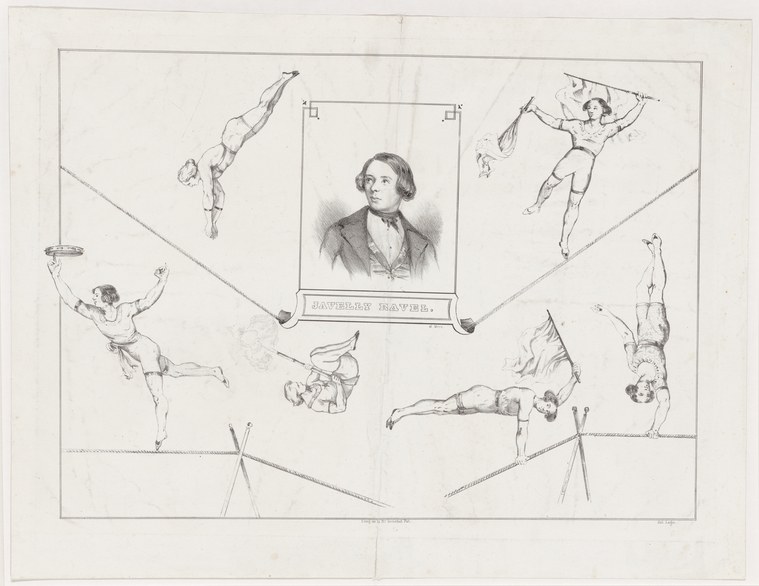
Rope dancing
Unknown artist
Public Domain
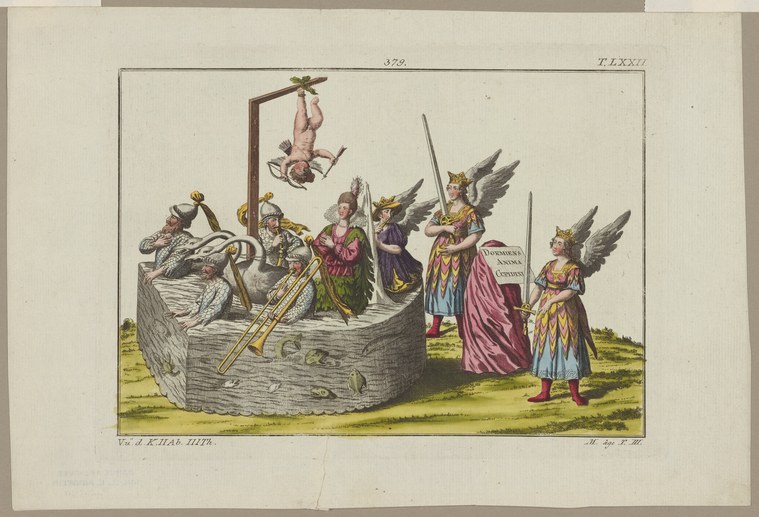
Festivities and spectacles
Unknown artist
Public Domain