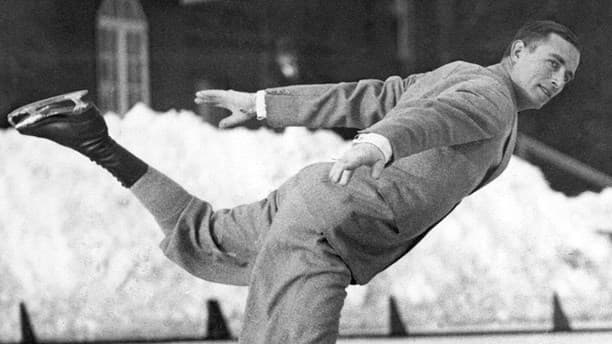
Gillis Emanuel Grafström
Men’s singles figure skating
Why They Matter
Grafström matters because he united the two historical foundations of figure skating: exact blade-drawn figures and expressive performance to music. His medals document extraordinary longevity, but his deeper influence lies in treating edge control, spatial design, spins, and musical timing as parts
Watch
III Olympic Winter Games - Men's Figure Skating - Lake Placid 1932 - ISU Archives
International Skating Union
Institutional footage context for Grafström's fourth Olympic medal and the transition to Karl Schäfer
Biography
Gillis Emanuel Grafström was born in Stockholm in 1893 and became the dominant men's figure skater of the 1920s, winning three consecutive Olympic gold medals and shaping the sport's artistic language. Before establishing himself as a champion, Grafström studied engineering and architecture while also pursuing drawing, etching, and collecting skating imagery—visual interests that would later characterize his approach to movement. He placed seventh at the 1914 World Championships, the last international event before the First World War interrupted competition. During the wartime period he won the men's event at the 1917 Nordic Games, marking his emergence as a serious contender.
Grafström's Olympic breakthrough came in Antwerp in 1920, when figure skating was held during the Summer Games. He won the men's title there, beginning a sequence that would define his career. At the first Olympic Winter Games in Chamonix in 1924, he defended his Olympic crown and that same year won his second World Championship, having taken his first world title in 1922. Contemporary accounts emphasize his smooth, orthodox edges and his ability to interpret music through free skating. His recovery from difficult circumstances—whether technical mistakes or physical challenges—became part of his competitive legend.
At St. Moritz in 1928, Grafström competed with a knee injury but secured a third consecutive Olympic gold medal, standing second after the compulsory figures and prevailing through the free skate. He added his third World Championship in 1929, the only three world titles he pursued after the war, winning each of them. Grafström returned to Olympic competition at Lake Placid in 1932, competing at age thirty-eight. He placed second behind Karl Schäfer, bringing his Olympic total to three gold medals and one silver and marking a transition between eras in men's skating.
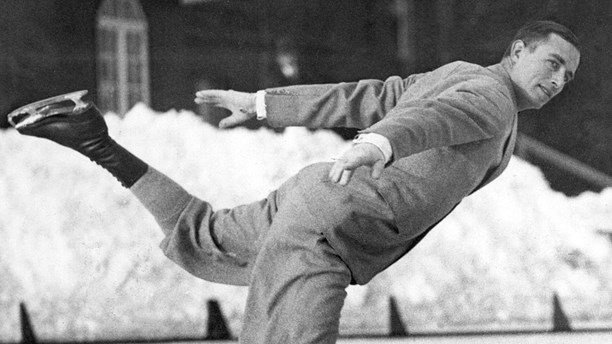
Beyond competition, Grafström left a substantial technical and artistic legacy. Sources associate him with the Grafström pirouette or spin and various special-figure designs. He was celebrated for his mastery of compulsory figures and for creating intricate patterns on the ice, but he also shaped free skating through interpretive phrasing and musical timing. His work made the term "figure skating" literal: traced geometry and theatrical movement formed a unified practice. He lived in Germany from the mid-1920s, where he worked as an architect while continuing to skate and coach. Sonja Henie was among the skaters linked to his instruction. After his death in Potsdam in 1938, his wife Cecilie continued his collection of skating art, which later became associated with the World Figure Skating Museum. Grafström entered the inaugural class of the World Figure Skating Hall of Fame in 1976.
Career Highlights
Placed seventh at the World Figure Skating Championships. Olympedia Olympedia
Won the men’s event at the Nordic Games. Olympedia Olympedia
Won Olympic gold in Antwerp, when figure skating appeared in the Summer Games. Olympics Olympics
Won his first World Championship. Olympedia Olympedia
Defended his Olympic title at the first Olympic Winter Games in Chamonix. Olympedia Olympedia
Won his second World Championship. Olympedia Olympedia
Won a third consecutive Olympic gold medal at St. Moritz despite a knee injury. Olympedia Olympedia
Won his third World Championship. Olympedia Olympedia
Shared the Svenska Dagbladet Gold Medal with skier Sven Utterström. Olympics profile: Sven Utterström Olympics profile: Sven Utterström
Won Olympic silver at Lake Placid behind Karl Schäfer. Official Olympic results Official Olympic results
Entered the inaugural class of the World Figure Skating Hall of Fame. World Figure Skating Hall of Fame World Figure Skating Hall of Fame
Gallery
Legacy & Impact
Grafström endures because he united figure skating's two foundational elements: precision blade-drawn figures and expressive performance to music. His three consecutive Olympic titles document rare longevity, but his deeper influence lies in treating edge control, spatial design, spins, and musical timing as parts of a coherent artistic language. For dancers and skaters studying movement history, he is an essential bridge between geometric special figures, early competitive skating, and modern approaches to choreography and technical analysis on ice.


Explore More Legends
Discover the dancers, teachers, choreographers, and cultural icons who shaped how the world moves.
Keep the thread going
Dance history, technique, and the occasional rabbit hole — in your inbox. Thoughtful, infrequent, unsubscribe anytime.
Free. No spam. One click to leave.