
Innovator · Popularizer
Juan Luis Guerra
Bachata's Grammy-Winning Ambassador
Why They Matter
He legitimized bachata as a sophisticated art form, proving it could be poetic and commercially successful — directly enabling the global bachata dance movement that followed.
Known For
Styles Juan Luis Guerra shaped
Each one links to the style’s own page — its origins, music, tempo and video.
Watch
Ojalá Que Llueva Café — Juan Luis Guerra 4.40
Clear merengue framework and durable social-dance use; dancers should respect the song's social meaning rather than treat it as neutral party music.
Bachata Rosa — Juan Luis Guerra 4.40
Foundational catalog choice for a Guerra dance page; use the original recording rather than assuming a later live arrangement behaves identically.
La Bilirrubina — Juan Luis Guerra 4.40
High-recognition merengue selection with strong ensemble punctuation; confirm the exact audio version before choreography.
Mambo 23 — Juan Luis Guerra 4.40
Best treated as a contemporary merengue-centered hybrid, not assigned to ballroom mambo solely because of its title.
DJ Bachata — Juan Luis Guerra 4.40
Provides a genre contrast within Radio Güira and a current bachata option; do not copy the video's choreography as syllabus authority.
Biography
Juan Luis Guerra Seijas, born 7 June 1957 in Santo Domingo, Dominican Republic, is a composer, bandleader, singer, songwriter, guitarist, arranger and producer whose merengue and bachata recordings helped bring Dominican dance music to a vast international audience. After studying philosophy and literature at the Universidad Autónoma de Santo Domingo and music at the Dominican Republic's National Conservatory, Guerra moved to Boston to study jazz composition at Berklee College of Music, graduating in 1982. That training supplied additional tools for voicing, form, counterpoint and ensemble writing without replacing his Dominican musical grounding.
Upon returning to the Dominican Republic, Guerra organized the group that became Juan Luis Guerra 4.40, named after the A above middle C tuned to 440 hertz—an emblem for a band whose public identity joined musicianship with accessible dance music. Early releases including *Soplando* (1984), *Mudanza y Acarreo* and *Mientras Más Lo Pienso… Tú* retained a conspicuous jazz influence, but the group increasingly centered merengue and other Dominican and Caribbean forms. The 1989 album *Ojalá Que Llueva Café* expanded their reach, placing danceable merengue frameworks beside images of rural scarcity and hoped-for abundance.
The 1990 album *Bachata Rosa* became the decisive international breakthrough. Its 1992 GRAMMY for Best Tropical Latin Album brought broad attention to Guerra and 4.40, while songs such as "Bachata Rosa," "Burbujas de Amor" and "La Bilirrubina" demonstrated that one album could move among bachata, merengue and pop-facing production without erasing their differences. Guerra continued to combine dance-floor address with literary, devotional and social themes across subsequent releases including *Areíto* (1992), *Ni Es lo Mismo ni Es Igual* (1998), and *Para Ti* (2004).
Recognition accumulated across songwriting, performance and production. BMI named Guerra an Icon in 2006. In 2007, the Latin Recording Academy named him Person of the Year, and *La Llave de Mi Corazón* won major Latin GRAMMY categories including Album, Record and Song of the Year. UNESCO appointed him an Artist for Peace in September 2008, citing work benefiting children with disabilities and children in need. Berklee awarded him an honorary doctorate of music in 2009.
Later releases sustained his interest in hybrid arrangement while remaining rooted in Dominican genres. *A Son de Guerra* and "Bachata en Fukuoka" won major Latin GRAMMY honors in 2010. *Literal* received the 2019 Latin GRAMMY for Best Contemporary Tropical/Fusion Album, the same year Billboard honored Guerra with its Lifetime Achievement Award. In 2023 Guerra and 4.40 released the six-song project *Radio Güira*, whose "Mambo 23" layers a merengue-centered band language with mambo, jazz-colored arranging and contemporary dembow references. At the 2024 Latin GRAMMY Awards, *Radio Güira* won Album of the Year and Best Merengue/Bachata Album, while "Mambo 23" won Record of the Year and Best Tropical Song, demonstrating a four-decade career still producing newly honored work.
Career Highlights
Graduated from Berklee College of Music after studying jazz composition.
Released Soplando with the ensemble that became Juan Luis Guerra 4.40.
Released Ojalá Que Llueva Café, a major step in the group’s international growth.
Released Bachata Rosa, the breakthrough album that broadened the global audience for Guerra’s merengue and bachata writing.
Won his first GRAMMY, for Bachata Rosa in Best Tropical Latin Album.
Released Ni Es lo Mismo ni Es Igual, including “El Niágara en Bicicleta.”
Was honored as a BMI Icon for his songwriting influence.
Was named Latin Recording Academy Person of the Year; La Llave de Mi Corazón swept major Latin GRAMMY categories.
Was appointed a UNESCO Artist for Peace.
Received an honorary doctorate of music from Berklee.
Received Billboard’s Lifetime Achievement Award; Literal won a Latin GRAMMY for contemporary tropical/fusion album.
Radio Güira won Latin GRAMMY Album of the Year and “Mambo 23” won Record of the Year and Best Tropical Song.
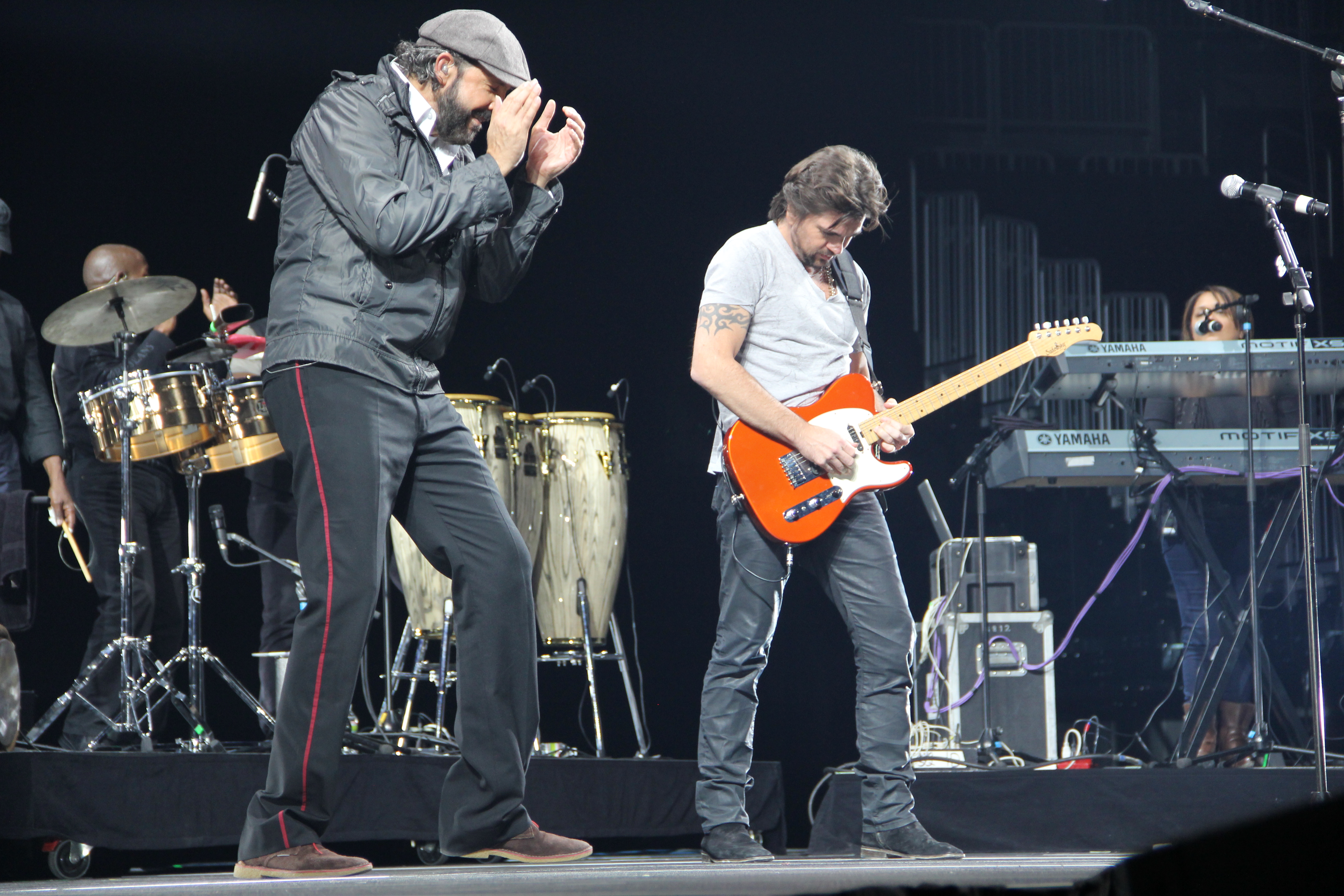
Gallery


Legacy & Impact
Guerra's importance to dance lies in the quality and reach of the musical architecture on which dancers rely. With 4.40, he presented merengue and bachata as flexible modern languages capable of carrying romance, humor, social critique, Christian devotion, jazz-influenced harmony and large-concert production. His defensible legacy is that he helped widen their international audience while demonstrating that popular dance music could be compositionally exacting, lyrically ambitious and unmistakably Dominican, without abandoning the identity of the ensemble or earlier Dominican artists and communities who shaped these genres.


Explore More Legends
Discover the dancers, teachers, choreographers, and cultural icons who shaped how the world moves.
Keep the thread going
Dance history, technique, and the occasional rabbit hole — in your inbox. Thoughtful, infrequent, unsubscribe anytime.
Free. No spam. One click to leave.