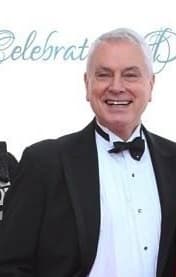
Teacher · Community Builder · Popularizer
Pierre Dulaine
Dancing Classrooms Visionary
Why They Matter
He proved that partner dance could transform young lives, building confidence and social skills in underserved communities.
Known For
Watch
May I have this dance, please? | Pierre Dulaine | TEDxHollywood
TEDx Talks
Dulaine explains respect as embodied partner practice in his own words.
Pierre Dulaine and Yvonne Marceau Dancing the Waltz
Dancing Classrooms NYC
Shows the founding partners' performance relationship and sustained ballroom line.
ARD Stanford: A Talk by Ballroom Dancing Legend Pierre Dulaine
Stanford Arab Studies
Connects biography, displacement, Dancing Classrooms, and the Jaffa project in an institutional setting.
Dancing in Jaffa - Official Trailer | HD | IFC Films
IFC Films
Provides authorized visual context for the 2013 documentary and Jaffa program.
Talk.dance Interview with dance legend Pierre Dulaine
Talk.Dance
A specialist dance interview useful for Dulaine's retrospective account of career and method.
Opening Night - Dancing in Jaffa Q&A
Other Israel Film Festival
Credits director Hilla Medalia and situates the documentary through a presenting festival.
Biography
Pierre Dulaine was born on 23 April 1944 in Jaffa, Palestine (then Mandatory Palestine), to an Irish Protestant father and a Palestinian Catholic mother. His family fled in 1948, lived in Amman, and moved again after the 1956 Suez crisis, eventually settling in Birmingham, England. Dulaine began dancing in Birmingham at fourteen and by twenty-one had passed major examinations in Ballroom, Latin, and Old Tyme dance, becoming a full member of the Imperial Society of Teachers of Dancing.
His defining performance partnership was with Yvonne Marceau. By most accounts, their collaboration began in the mid-1970s and quickly gained recognition; they won the British Exhibition Championships in 1977, 1978, 1979, and 1982. Surviving footage from their 1982 performance of "Blue Danube" at Jacob's Pillow shows their command of extended travel, sustained line, and coordinated lifts—work that united competitive control with concert-stage presentation.
In 1984, Dulaine and Marceau co-founded American Ballroom Theater with Otto Cappel, helping establish ballroom dancing in theatrical and concert settings. Their most visible Broadway credit came through *Grand Hotel*, which opened in November 1989 and ran for 1,017 performances through April 1992. Dulaine performed as "The Gigolo" while he and Marceau received credit for ballroom choreography under Tommy Tune's overall direction.
The decisive turn in Dulaine's career came in 1994, when he and Marceau launched Dancing Classrooms in a New York City public school. The program treats partner dance as a vehicle for social awareness, trust, confidence, cooperation, and respect. Dulaine's pedagogical approach uses etiquette, rotating partners, and shared responsibility as deliberate teaching material. The program expanded through a network of affiliated schools and licensed instructors.
Three films brought that educational work to wider audiences. Marilyn Agrelo's documentary *Mad Hot Ballroom* (2005) followed New York pupils preparing for a Dancing Classrooms competition. Liz Friedlander's *Take the Lead* (2006), starring Antonio Banderas, fictionalized Dulaine's teaching story. Hilla Medalia's documentary *Dancing in Jaffa* (2013) documented Dulaine's return to Jaffa and a ten-week partner-dance program involving Palestinian-Israeli and Jewish-Israeli children.
Throughout his career, Dulaine has worked within collaborative networks rather than alone. Marceau shaped the championship partnership, stage repertoire, American Ballroom Theater, Broadway work, and the founding of Dancing Classrooms. Teachers, school administrators, and filmmakers have been material partners in translating and carrying forward his methods.
Career Highlights
Began ballroom dancing in Birmingham at age fourteen, according to institutional biographies.
With Yvonne Marceau, won the first of four documented British Exhibition Championships.
Dulaine and Marceau retained the British Exhibition title.
The partnership won a third consecutive British Exhibition Championship.
Won its fourth British Exhibition Championship; the pair’s “Blue Danube” was filmed at Jacob’s Pillow that year.
Co-founded American Ballroom Theater with Yvonne Marceau; Otto Cappel is also credited in some histories.
Opened in Grand Hotel on Broadway as “The Gigolo” and shared ballroom-choreography credit with Marceau.
Grand Hotel closed after 1,017 Broadway performances.
Received a Dance Magazine Award, as documented by Jacob’s Pillow and Dancing Classrooms.
Launched Dancing Classrooms in a New York City public school with Marceau.
Mad Hot Ballroom brought the school program to cinema audiences; Americans for the Arts recognized Dulaine’s arts-education work.
Hilla Medalia’s Dancing in Jaffa documented his return to Jaffa and a ten-week intercommunity dance program.
Pierre Dulaine on screen
Films and television featuring Pierre Dulaine, with the sequences we have indexed.
 Take the Lead (2006)26 sequences indexedDetention's first foxtrot lesson · 00:30:18 · chor. JoAnn JansenPierre and Augustine's PTA demonstration · 01:17:35 · chor. JoAnn JansenRumba lesson and Caitlin–Monster pairing · 00:42:53 · chor. JoAnn Jansen
 Mad Hot Ballroom (2005)5 sequences indexedFoxtrot classroom rehearsalRainbow Team Match finalsRumba classroom rehearsal
Poster artwork from TMDB.
 This site uses TMDB and the TMDB APIs but is not endorsed, certified, or otherwise approved by TMDB.
Legacy & Impact
Dulaine matters because he connected three usually separated domains of partner dance: championship exhibition craft, theatrical presentation, and public-school education. His work with Marceau demonstrated that ballroom could sustain concert and Broadway attention without losing its partnering grammar. Dancing Classrooms then recast that grammar—invitation, eye contact, frame, rotation, listening, negotiated space—as a curriculum for social conduct. The method remains influential because it makes cooperation physically observable and repeatedly practiced, offering dancers and students a structured encounter with another person's timing and weight.


Explore More Legends
Discover the dancers, teachers, choreographers, and cultural icons who shaped how the world moves.
Keep the thread going
Dance history, technique, and the occasional rabbit hole — in your inbox. Thoughtful, infrequent, unsubscribe anytime.
Free. No spam. One click to leave.