Choreographer · Teacher · Innovator · Community Builder
Lester Horton
Dance's Inclusive Visionary
Why They Matter
His technique remains a major pillar of modern dance training, and his commitment to racial integration set a precedent for diversity in American dance.
Known For
Watch
Black History Month: Horton
AILEY
Official AILEY context for Horton history and the technique's place in Ailey training
Ailey Teacher Certification Program: Ailey Horton Technique
AILEY
Shows the contemporary institutional transmission of Horton technique rather than treating it as an archival relic
Ailey Up Close with Carmen de Lavallade with introduction by Judith Jamison
AILEY
First-person testimony from a major Horton dancer and collaborator, presented by the institution that carries the lineage
Modern - Horton Technique with Anthony Santos of Dance Theatre of Harlem
Dance Theatre of Harlem
A substantial institutional demonstration of how Horton vocabulary is taught in a professional-company context
Modern - Horton Technique with Devika Chandnani of Dance Theatre of Harlem
Dance Theatre of Harlem
Provides a second teacher's approach and helps avoid presenting one class as the sole canonical execution
Show us your Lateral T! competition | Ailey Tour 2016
Dance Consortium
A concise visual reference for one of the vocabulary's most recognizable shapes
Biography
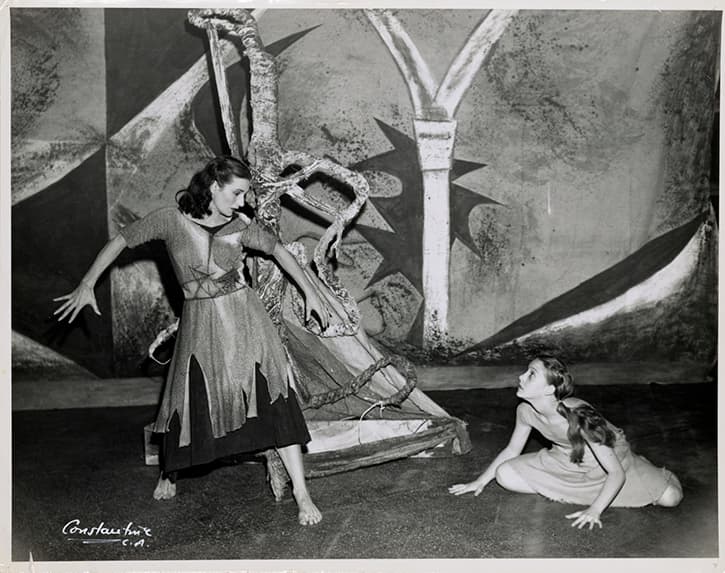
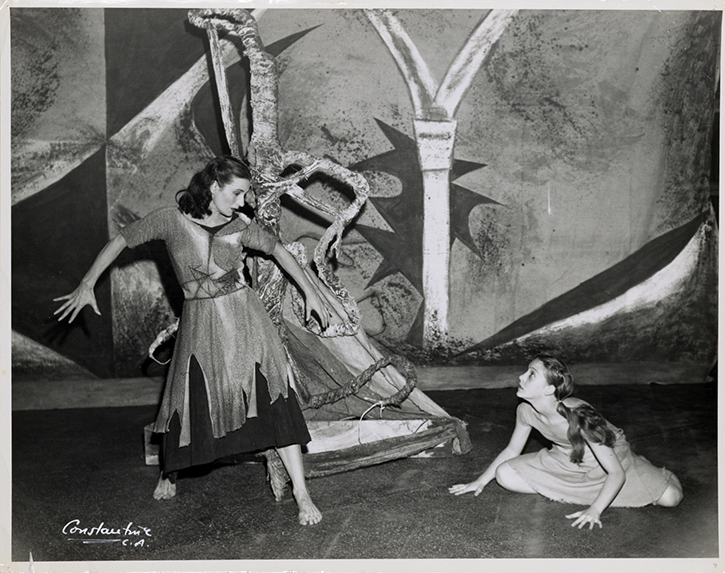
Lester Iradell Horton was born in Indianapolis on January 23, 1906, to a family whose interests in theater, visual design and cultural exhibitions shaped his early encounter with dance. Rather than joining the New York-centered modern-dance world, Horton established his career in California. He made his professional debut in 1929 with the company of Japanese theater artist and choreographer Michio Itō, then founded the Los Angeles-based Lester Horton Dancers in 1934, the year he created the first of several versions of *Salome*. By the later 1930s, he was building dances as complete theatrical environments that coordinated movement with music, costume, properties and spatial design. Works such as *The Mine* (1935), inspired by reports of a California mining disaster, and *Chronicle* (1937), which confronted racist mob violence, show that social subject matter was central to his artistic vision.
Horton's training method grew from anatomy, corrective exercise and a deliberately wide range of movement influences. Rather than imposing a single expressive look, the technique developed versatile dancers through whole-body strength, flexibility, coordination and spatial control. Its recognizable elements include flat backs, lateral stretches, tilt lines, lunges and circular, oppositional stretches. Bella Lewitzky, who joined Horton's organization in the 1930s, became a leading performer, teacher and collaborator; James Truitte, Joyce Trisler and other dancers later helped transmit the repertory and technique. The surviving system carries Horton's authorship through the embodied work of multiple teachers.
Hollywood work supported Horton's school and companies and brought his dancers into motion pictures. The Library of Congress identifies *White Savage* (1943) as his first credited film choreography and *Siren of Atlantis* (1949) as a later film assignment. These projects expanded his experience of framing, spectacle and ensemble pattern. In 1946, Horton formed Dance Theater with William Bowne, Bella Lewitzky and Newell Reynolds, an organization that joined company, school and theater-making in Los Angeles and insisted on an interracial working environment during segregation. In 1948, it opened a permanent performance space and studio classrooms at 7566 Melrose Avenue; the inaugural program included Horton's *The Beloved*, *Totem Incantation* and a revised *Salome*. When the Bowne–Lewitzky–Reynolds partnership dissolved in 1950, Horton continued with Frank Eng as business manager.
Horton treated choreography as a vehicle for historical and civic inquiry as well as theatrical experiment. *Tierra y Libertad!* (also known as *Conquest*) used music by Lou Harrison in 1939. In 1949, *The Park*, later titled *El Rebozo*, responded to reports of police brutality toward Mexican Americans in Los Angeles and incorporated street sounds and dialogue by Sonia Browne. The same year's *Warsaw Ghetto* depicts dancers Bella Lewitzky and Sondra Orans. *Liberian Suite*, performed during Choreo '52 to music by Duke Ellington, belongs to the final phase of Horton's repertory. These collaborations with composers, writers, designers and performers were essential to the work itself.
In 1953, Dance Theater appeared in New York and at Jacob's Pillow, extending the visibility of a company long rooted on the West Coast. Horton died unexpectedly at his Hollywood home on November 2, 1953. Alvin Ailey and Carmen de Lavallade assumed some creative responsibilities in 1954 while Frank Eng ran the organization; the school and company continued until 1960. Ailey, who had trained and performed with Horton, established Alvin Ailey American Dance Theater in New York in 1958 and carried the Horton foundation into its training culture. Horton's legacy is thus not a simple institutional handoff but a network of dancers, teachers and repertory stewards who transformed his West Coast experiment into an enduring part of modern-dance education.
Career Highlights
Born in Indianapolis, Indiana, on January 23. Library of Congress Library of Congress
Made his professional dance debut with Michio Itō’s company. Library of Congress Library of Congress
Founded the Los Angeles-based Lester Horton Dancers and created the first of several versions of Salome. Library of Congress Library of Congress
Created The Mine from reports of a California mining disaster. Library of Congress Library of Congress
Created Chronicle, whose ending confronted racist mob and Ku Klux Klan violence. Library of Congress Library of Congress
Choreographed Tierra y Libertad! (also known as Conquest) to music by Lou Harrison. Library of Congress Library of Congress
Received his first motion-picture choreography credit for White Savage. Library of Congress Library of Congress
Formed Dance Theater with William Bowne, Bella Lewitzky and Newell Reynolds. Library of Congress Library of Congress
Opened Dance Theater’s permanent performance and teaching space at 7566 Melrose Avenue with The Beloved, Totem Incantation and a revised Salome. Library of Congress Library of Congress
Created The Park in response to reported police brutality against Mexican Americans; Sonia Browne supplied dialogue. Library of Congress Library of Congress
Presented Liberian Suite to music by Duke Ellington as part of Choreo ’52. Library of Congress Library of Congress
Dance Theater performed in New York City and at Jacob’s Pillow; Horton died at his Hollywood home on November 2. Library of Congress Library of Congress
Gallery
Legacy & Impact
Horton matters because he demonstrated that a modern-dance ecosystem could be built on the West Coast around a resident company, a school, a theater and integrated casting. His technique gave dancers a rigorous, adaptable physical base, while his productions joined movement to design, film, music and social subject matter. The artists who passed through Dance Theater—including Bella Lewitzky, Alvin Ailey, Carmen de Lavallade, James Mitchell, Joyce Trisler and James Truitte—did not merely repeat his work: they carried, codified, restaged and redirected it. That living lineage makes Horton foundational to both California dance history and contemporary modern-dance training.


Explore More Legends
Discover the dancers, teachers, choreographers, and cultural icons who shaped how the world moves.
Keep the thread going
Dance history, technique, and the occasional rabbit hole — in your inbox. Thoughtful, infrequent, unsubscribe anytime.
Free. No spam. One click to leave.