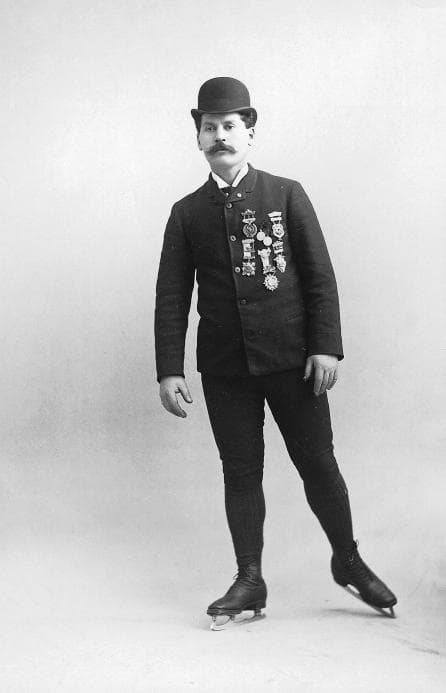
Louis Rubenstein
Legend of Dance
Why They Matter
Rubenstein matters because he links figure skating’s nineteenth-century performance culture to its emerging institutional life. His record documents both the embodied authority of a champion fancy skater and the administrative work needed to make comparisons across clubs and borders credible. His ex
Biography
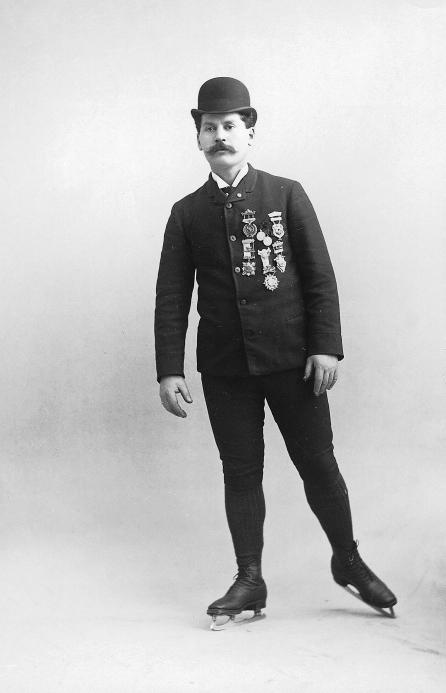
Louis Rubenstein was born on 23 September 1861 in Montréal to Max and Leah Rubenstein, Polish Jewish immigrants who arrived in Canada in 1850. He grew up in a athletic family and began skating as a child, winning a city-wide championship while still a teenager. At the time, the discipline was called "fancy skating": competitors traced prescribed figures and displayed control, balance, edge quality and individually devised specialties on natural or early rink ice.
By 1883, Rubenstein had become North America's first famous figure skater. He won Canadian championships from 1883 through 1889, claimed the North American crown in 1885, and took United States titles in 1888, 1889 and 1891. These achievements belong to an era before today's international federation, judging system and standardized championship structure—achievements best understood in their own historical setting.
Rubenstein's most consequential journey came in 1890, when he travelled to St. Petersburg for an international championship. He won the gold medal, becoming the first North American skater to compete abroad at the world level. The competition was unofficial, as no international federation yet existed. The organizers attempted first to exclude him, and later to deny his victories, because he was Jewish. His victory stands as both a skating achievement and a breakthrough against institutional antisemitism.
Competition was only one part of Rubenstein's influence. Confronted with inconsistent rules and judging across clubs and regions, he helped create the Amateur Skating Association of Canada in the late 1880s and assisted the organization of its American counterpart. He later led the association's Figure Skating Department from 1914 until his death in 1931, providing the administrative continuity that turned Canadian figure skating into an organized sport.
His public life extended beyond the rink. Rubenstein promoted and administered cycling, curling and bowling, worked in his family's brass foundry, and served Montréal as an alderman from 1914 until his death. He also held leadership and charitable roles in the city's Jewish and civic institutions. Rubenstein died in Montréal in 1931 at age 70. Skate Canada inducted him into its Hall of Fame as a builder in 1990.
Career Highlights
Began a run of Canadian championships that Parks Canada dates from 1883 through 1889. Parks Canada Parks Canada
Won the North American crown. Parks Canada Parks Canada
Helped form the Amateur Skating Association of Canada to address inconsistent rules and judging; institutional sources differ on the year. Parks Canada Skate Canada Parks Canada
Won a United States title. Parks Canada Parks Canada
Won another United States title and completed the documented 1883–1889 Canadian championship run. Parks Canada Parks Canada
Won gold at the unofficial pre-federation world championship in St. Petersburg after antisemitic attempts to bar him and deny his result. Parks Canada Parks Canada
Won a third documented United States title. Parks Canada Parks Canada
Began leading the Amateur Skating Association of Canada’s Figure Skating Department, continuing until 1931. Skate Canada Skate Canada
Inducted into the Skate Canada Hall of Fame in the Builders category. Skate Canada Skate Canada
Gallery
Legacy & Impact
Rubenstein matters because he links figure skating's nineteenth-century performance culture to its emerging institutional life. His record documents both the embodied authority of a champion fancy skater and the administrative work needed to make comparisons across clubs and borders credible. His experience in St. Petersburg demonstrates that international recognition was won in the face of attempts to exclude him based on his faith. For dancers and skating historians, he shows that skating history is not only a sequence of technical innovations but also a history of access, governance and public performance.


Explore More Legends
Discover the dancers, teachers, choreographers, and cultural icons who shaped how the world moves.
Keep the thread going
Dance history, technique, and the occasional rabbit hole — in your inbox. Thoughtful, infrequent, unsubscribe anytime.
Free. No spam. One click to leave.