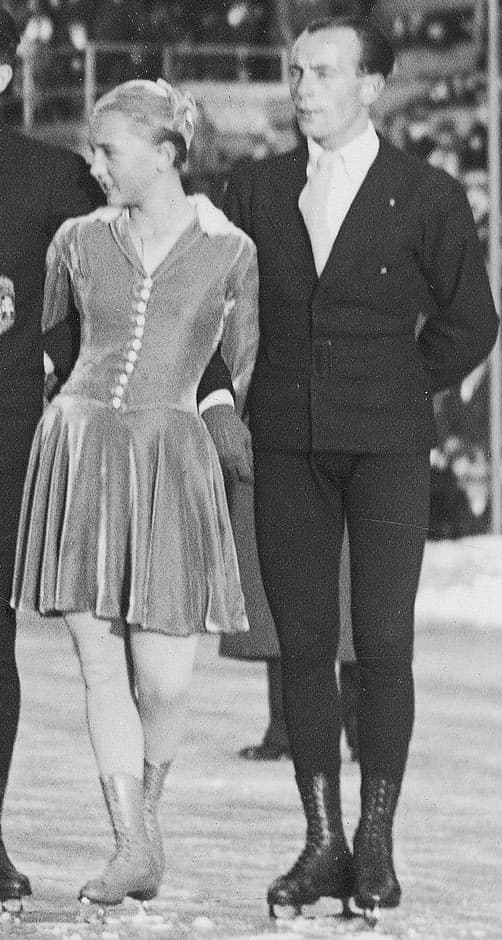
Maxi Herber And Ernst Baier
Legend of Dance
Why They Matter
Herber and Baier matter because they made pair skating look like a coordinated dance between two technically complete skaters. Their titles alone place them among the defining pairs of the prewar era, but the deeper contribution was structural: synchronized jumps, uninterrupted flow, and elements de
Biography
Maxi Herber and Ernst Baier were German pair figure skaters whose championship dominance and technical innovations reshaped pair skating in the prewar era. Ernst Baier, born in 1905 in Zittau, Saxony, had already established an elite singles career before their partnership began: he placed fifth in men's singles at the 1932 Winter Olympics in Lake Placid and reached the world podium in four consecutive championships from 1931 through 1934. Maxi Herber, born in 1920 in Munich, was already a German women's singles champion when they began skating together in 1934. Their different competitive backgrounds gave the new pair both strong individual skating technique and unusual technical independence.
Herber and Baier won the German pair title in their first season and took bronze at the 1934 World Championships in Helsinki. The partnership became known for skating difficult elements side by side rather than treating the woman primarily as a lifted or carried partner. Historical accounts credit them with the first side-by-side jumps in pair competition; their parallel Axel jumps and a lift associated with Baier are documented early steps in the development of pair vocabulary. From 1935 through 1939 they won five consecutive European Championships, and from 1936 through 1939 they won four consecutive World Championships.
At the 1936 Winter Olympics in Garmisch-Partenkirchen, Herber and Baier received seven of nine first-place votes and won the pair title for Germany. Herber was 15 years and 127 days old, making her the youngest female Winter Olympic champion of that era. Baier earned men's singles silver the following day, giving him two medals at the same Games. Their competitive record unfolded within Nazi Germany, and the staging of the 1936 Games remains inseparable from the historical context of that time.
Herber and Baier married in 1941. After the Second World War, they moved into professional ice entertainment, creating an ice revue that they later sold to Holiday on Ice. Their post-competitive work helped transfer championship pair skating into theatrical touring, where timing, character, and audience-facing presentation became as important as technical elements. In 1979, Herber and Baier were inducted together into the World Figure Skating Hall of Fame. Baier left professional ice shows in 1965 and turned to coaching; he died in Garmisch-Partenkirchen in 2001. Herber spent her later years painting and lived with Parkinson's disease; she died in the same town in 2006.
Career Highlights
Ernst Baier placed fifth in men’s singles at the Lake Placid Winter Olympics. Olympedia Olympedia
Herber and Baier began skating pairs, won the German championship, and earned World bronze in Helsinki. Olympedia: Herber Olympedia: Herber
They won the first of five consecutive European pair titles. Olympedia European medal list Olympedia European medal list
They became Olympic pair champions at Garmisch-Partenkirchen, receiving seven of nine first-place votes. Olympics.com Olympics.com
Baier also won Olympic silver in men’s singles. Olympedia Olympedia
The pair won the first of four consecutive World Championships. Olympedia World medal list Olympedia World medal list
They retained both European and World pair titles. Olympedia Olympedia
They again won European and World gold, extending their prewar dominance. Olympedia Olympedia
They completed runs of five consecutive European titles and four consecutive World titles. Olympedia Olympedia
Herber and Baier married; their competitive era ended as the Second World War interrupted international championship skating. Olympedia Olympedia
They performed in and built their own ice revue, later selling it to Holiday on Ice. Olympedia Olympedia
They were inducted together into the World Figure Skating Hall of Fame. U.S. Figure Skating museum archive U.S. Figure Skating museum archive
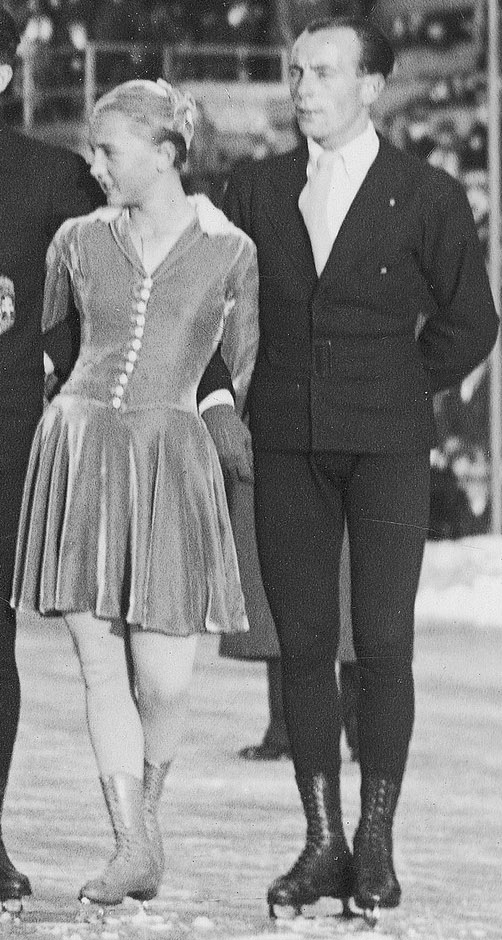
Gallery
Legacy & Impact
Herber and Baier matter because they made pair skating look like a coordinated dance between two technically complete skaters. Their four World titles and five European titles place them among the defining pairs of the prewar era, but the deeper contribution was structural: synchronized jumps, uninterrupted flow, and elements designed around equality of timing moved the discipline away from isolated poses and assisted tricks. Their later ice-revue work also connected competitive skating to theatrical dance production, helping preserve and popularize skating choreography beyond the championship arena.


Explore More Legends
Discover the dancers, teachers, choreographers, and cultural icons who shaped how the world moves.
Keep the thread going
Dance history, technique, and the occasional rabbit hole — in your inbox. Thoughtful, infrequent, unsubscribe anytime.
Free. No spam. One click to leave.