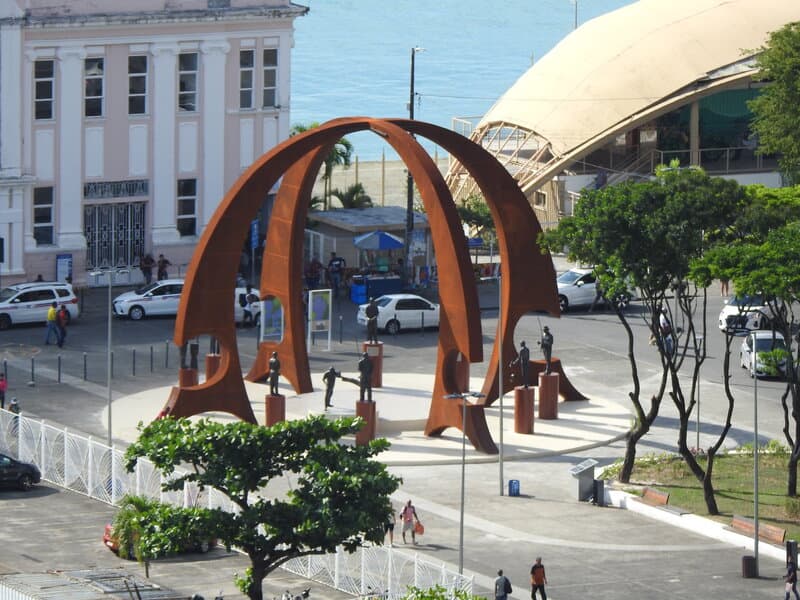
Innovator · Cultural Preserver · Teacher · Syllabus / System Builder
Mestre Bimba
Capoeira's Revolutionary Founder
Why They Matter
He saved capoeira from extinction by systematizing it and fighting for its legal recognition, ensuring that one of the world's most unique movement arts would survive and flourish.
Known For
Watch
Mestre Bimba (1/2) - De Lá Pra Cá - 21/11/2010
TV Brasil
Institutional broadcaster treatment with testimony and historical framing.
Mestre Bimba | Heróis de Todo Mundo - 1ª temporada (2013)
Canal Futura
Concise institutional introduction suitable for general audiences.
TV UFBA - Especial Capoeira - Parte 1
TV UFBA
Connects Bimba's academy history to the wider Bahian and university context.
Aula de capoeira com o Mestre Nenel na UFBA em 1995, na disciplina Capoeira 1
Grupo Artes do Corpo GEPAC-UEFS
Shows transmission of Bimba's method by his son Mestre Nenel in a university teaching setting.
CAPOEIRA E SUA IMPORTÂNCIA PARA O BRASIL | HOMENAGEM AO MESTRE BIMBA
TVTEC JUNDIAÍ
A municipal educational source situating Bimba within Brazilian capoeira heritage.
Homage to Mestre Bimba: Corridos de Capoeira Regional
Mestre Acordeon - Topic
Provides a rights-managed listening reference for Regional corridos without reproducing lyrics.
Biography
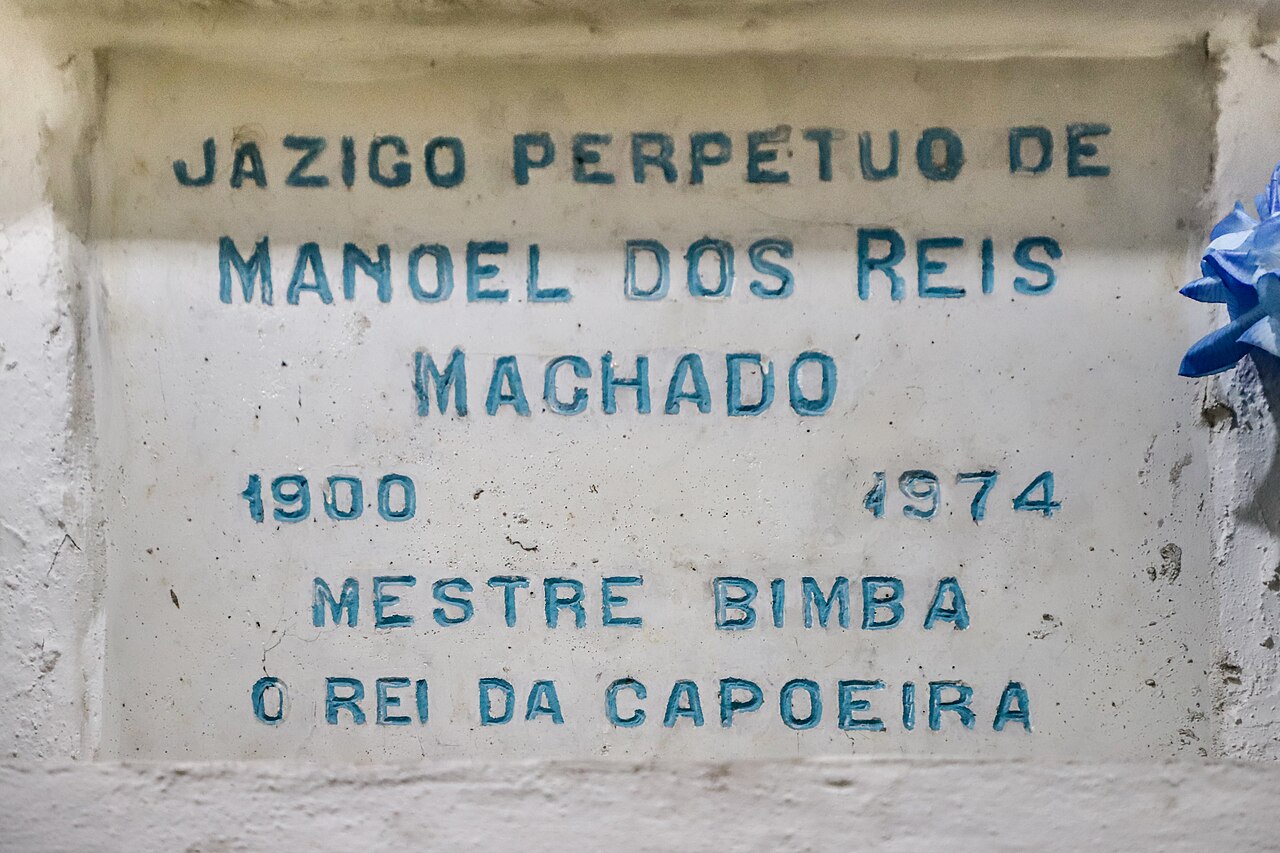
Manoel dos Reis Machado, known as Mestre Bimba, was born on 23 November 1899 in Engenho Velho de Brotas, Salvador, Bahia—though some municipal records register 1900. He grew up in a working-class district during a period when capoeira faced criminal repression under Brazil's 1890 Penal Code. His father, Luiz Cândido Machado, was known for practicing batuque, an Afro-Brazilian combat game, and a navigation worker named Bentinho taught him capoeira in his youth. By around 1918, Bimba began organizing capoeira instruction in a formal way, moving beyond informal transmission to create repeatable lessons, progression sequences, and public demonstrations.
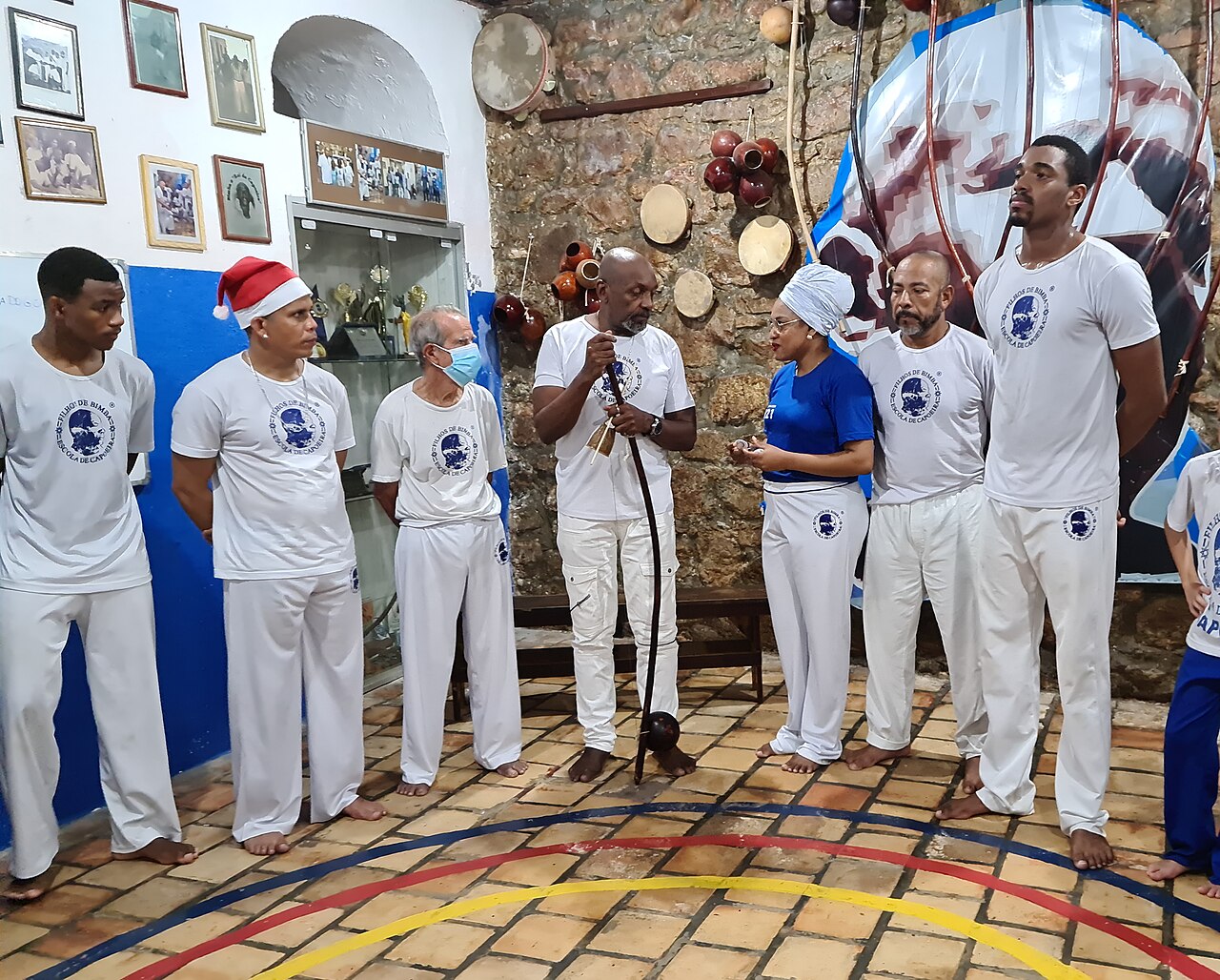
By 1928, Bimba had systematized his approach into what he called Luta Regional Baiana, later widely known as Capoeira Regional. This was not simply a collection of new techniques. He developed sequências—partner drills that arranged attacks, evasions and counters into teachable exchanges—alongside distinct berimbau rhythms, admission processes, batizado and graduation rituals, and codes of conduct. This framework made capoeira legible to students entering through scheduled classes while preserving the roda, call-and-response, and embodied dialogue central to the tradition. In 1932, Bimba opened an academy in Engenho Velho de Brotas. Five years later, in 1937, the Centro de Cultura Física Regional received official authorization—an exceptional institutional foothold for capoeira at that time. This achievement should be understood as the authorization of his academy rather than a single act of national legalization; the legal treatment of capoeira itself changed through separate processes over decades.
Bimba's work expanded beyond Salvador through public challenge matches and demonstrations. In 1942, his academy moved to the Terreiro de Jesus area in central Salvador, where it became a gathering place for students from professional and university circles. By 1949, he was taking groups to São Paulo for contests and demonstrations. A 1953 presentation for President Getúlio Vargas became a defining moment in capoeira's public recognition. These strategic moves broadened his audience while exposing his work to pressures to present capoeira as sport, physical education, or controlled folklore—tensions he navigated throughout his career.
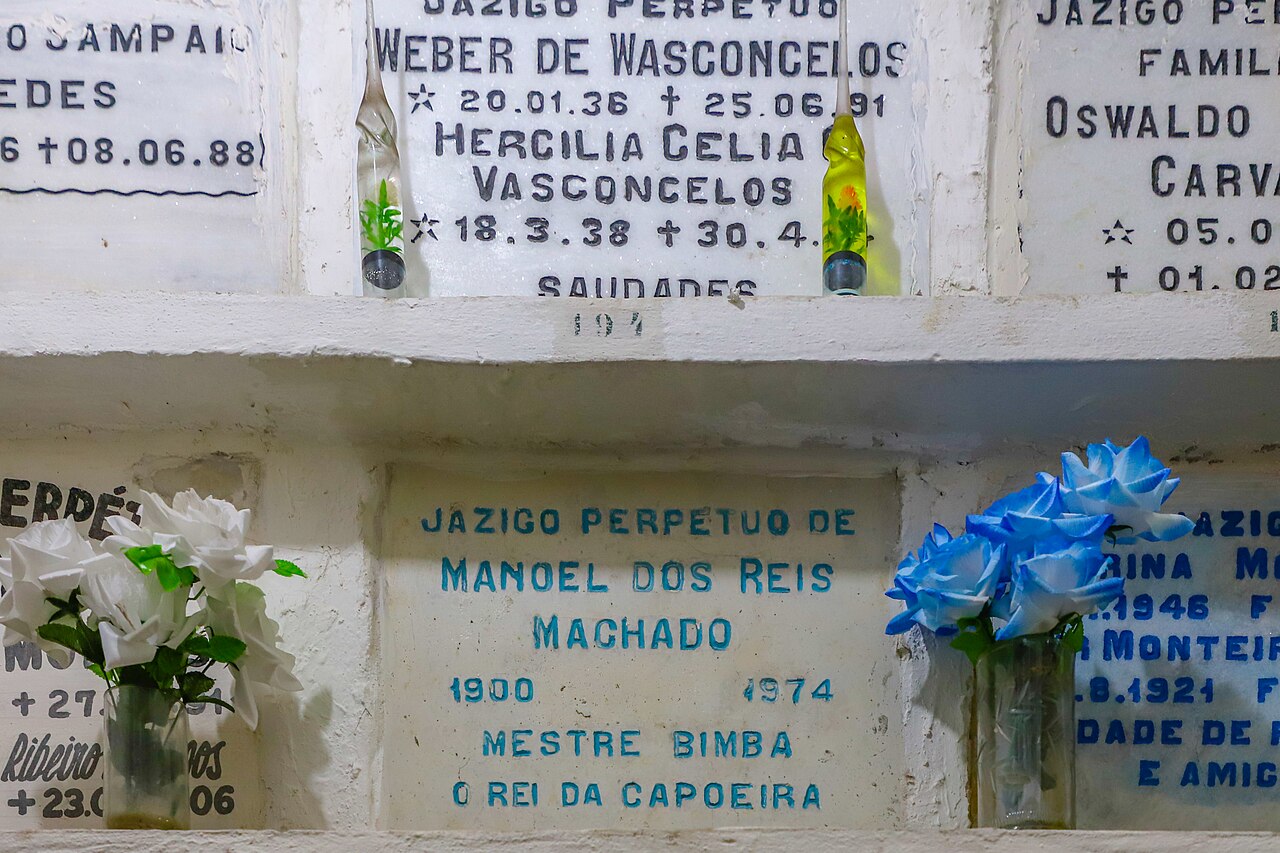
Bimba's recorded course, documented on the LP *Curso de capoeira regional* in the 1960s, preserved seven named berimbau toques—São Bento Grande, Banguela, Cavalaria, Santa Maria, Iúna, Idalina and Amazonas—along with quadras and corridos. This recording demonstrates that his legacy is musical and pedagogical as well as kinetic. In 1973, frustrated by financial conditions and what he perceived as a lack of official support in Bahia, Bimba relocated to Goiânia with members of his family and school. He died there on 5 February 1974 after a cerebral hemorrhage.
After Bimba's death, recognition transformed his standing from a teacher shaped under criminalization into a central reference in Brazilian cultural history. His son Manoel Nascimento Machado, known as Mestre Nenel, and his daughter Nalvinha sustained his method through the Fundação Mestre Bimba and its archive. In 2014, capoeira was inscribed on UNESCO's Representative List of the Intangible Cultural Heritage of Humanity—recognition that applies to the capoeira circle as a living community practice, not to any single master or style exclusively, but that places his work within a tradition whose knowledge is held and transmitted collectively.
Career Highlights
Retrospective biographies place the start of Bimba’s teaching career at about age eighteen; treat the year as an approximate oral-history chronology. MultiRio MultiRio
Bimba later identified this as the year he completed the formulation of his Regional method, combining his capoeira knowledge, batuque influence and added technical material. MultiRio MultiRio
He established an academy in Engenho Velho de Brotas, Salvador. MultiRio MultiRio
The Centro de Cultura Física Regional received an official operating authorization, a landmark in capoeira’s institutional history. MultiRio MultiRio
Bimba’s school moved to the Terreiro de Jesus area in Salvador’s historic center, where generations of students encountered the Regional curriculum. Capoeira Regional: a escola de Mestre Bimba, UFBA repository *Capoeira Regional: a escola de Mestre Bimba*, UFBA repository
Bimba took a group to São Paulo for public contests and demonstrations with practitioners of other fighting systems. MultiRio MultiRio
His group performed for President Getúlio Vargas in Salvador, a heavily cited moment in capoeira’s public recognition. MultiRio MultiRio
The LP Curso de capoeira regional documented seven berimbau toques plus quadras and corridos under Bimba’s name. Centro Nacional de Folclore e Cultura Popular catalogue Centro Nacional de Folclore e Cultura Popular catalogue
Brazil’s National Sports Council recognized capoeira as a regulated sporting practice; this was a national policy development distinct from Bimba’s 1937 academy authorization. MultiRio MultiRio
Bimba left Salvador for Goiânia with members of his family and school community. MultiRio MultiRio
He died in Goiânia on 5 February after a cerebral hemorrhage/stroke. MultiRio MultiRio
The capoeira circle was inscribed on UNESCO’s Representative List of the Intangible Cultural Heritage of Humanity, confirming the global safeguarding context in which Bimba’s lineage now participates. UNESCO decision 9.COM 10.8 UNESCO decision 9.COM 10.8
Gallery
Legacy & Impact
Mestre Bimba matters because he made pedagogy itself a creative act. His sequências, rituals, musical rules and academy structure offered a durable way to transmit demanding embodied knowledge without severing it from the roda's social and ethical relationships. That model gave students access to capoeira while helping challenge elite portrayals of the practice as criminal or socially illegitimate. His achievement stands alongside the work of Mestre Pastinha, other named mestres, musicians, students and community organizers who sustained multiple capoeira traditions. Capoeira Regional remains both a specific lineage and part of a larger Afro-Brazilian cultural field whose authority is fundamentally collective.


Explore More Legends
Discover the dancers, teachers, choreographers, and cultural icons who shaped how the world moves.
Keep the thread going
Dance history, technique, and the occasional rabbit hole — in your inbox. Thoughtful, infrequent, unsubscribe anytime.
Free. No spam. One click to leave.