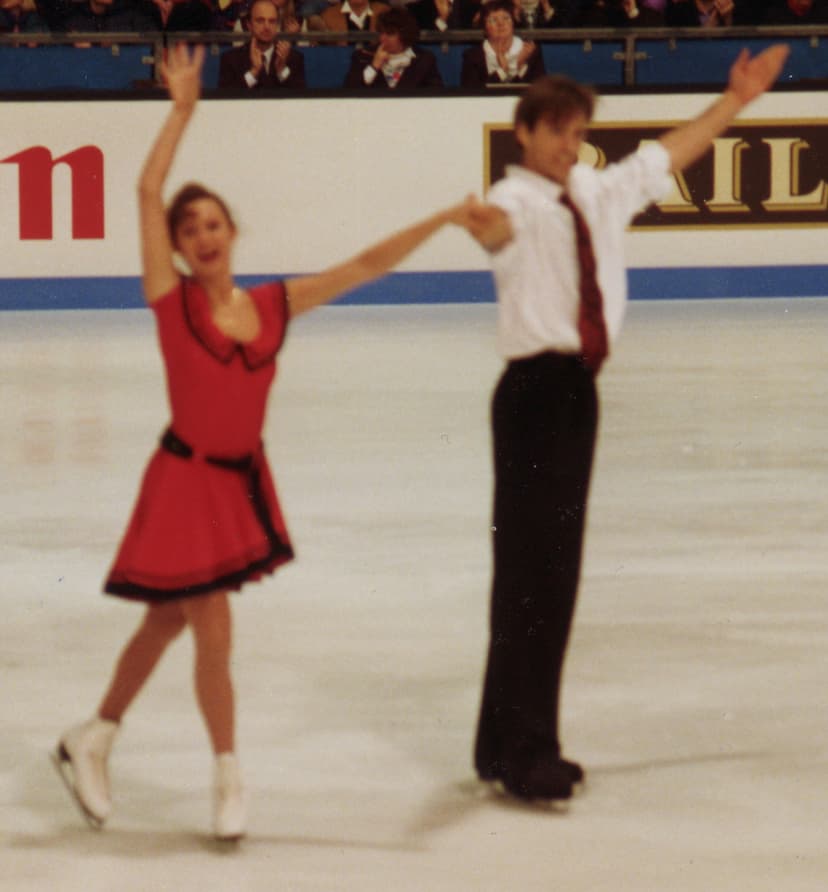
Oksana Grishuk And Evgeni Platov
Legend of Dance
Why They Matter
Grishuk and Platov matter because they joined a rare championship record to an assertive, high-velocity conception of ice dance. Their two Olympic victories were not isolated peaks: they sat inside four consecutive World titles and a broad multi-season run at the top of the discipline. The partnersh
Watch
1996 World Championships Free Dance Review
archival skating uploader
Provides contemporaneous framing for the pair's third consecutive World title
Biography
Oksana Vladimirovna Grishuk and Evgeny Arkadyevich Platov are the ice dancers who won consecutive Olympic titles in 1994 and 1998, a first in their discipline. Both emerged from Odesa in the Soviet Union and came to partnership through separate junior achievements: Platov had won three consecutive World Junior titles from 1984 to 1986, while Grishuk had claimed the 1988 World Junior championship with partner Alexandr Chichkov. When paired in 1989 under coach Natalia Dubova, they entered ice dance as it was then constituted—a discipline built on compulsory dances, an original dance, and a free dance.
Their first seasons together were marked by steady development rather than immediate dominance. They placed fifth at the 1990 World Championships, then fourth at the 1992 Albertville Olympics while representing the Unified Team, with bronze medals at that year's European and World Championships following. A coaching separation briefly interrupted the partnership, but they reunited to earn silver at both the 1993 European and World Championships. This arc of early placement and regrouping established the partnership cohesion that would anchor their later success.
At the 1994 Lillehammer Olympics, skating for Russia, Grishuk and Platov won their first Olympic ice-dance gold. That spring they captured their first World title, beginning a sequence of four consecutive World Championships from 1994 through 1997. Working with coaches including Natalia Linichuk and later Tatiana Tarasova, they expanded their competitive repertory across contrasting frames and musical contexts. Their 1994 free dance employed a rock-and-roll character marked by speed and theatrical directness. Later programs drew on diverse sources, including a 1997 free dance set to music from *The Last Temptation of Christ* and a 1998 Olympic free dance.
At the 1998 Nagano Olympics, Grishuk and Platov retained the Olympic ice-dance title, becoming the first partnership in the event to win two Olympic gold medals and the first to repeat as champions. They also won three consecutive European titles in 1996, 1997, and 1998. After Nagano, they retired from eligible competition and did not contest the 1998 World Championships. Their record of four straight World titles from 1994 to 1997 and two Olympic victories established a benchmark for sustained dominance in ice dance; in 2025, when later partnerships pursued comparable consecutive World titles, their achievement remained the historical reference point.
After competitive retirement, their paths diverged into professional skating, choreography, and coaching. Platov became an active coach; an International Skating Union biography from the 2025–26 season identified him as coaching Layla Karnes and Freddie Leggott while crediting his Olympic titles with Grishuk. Both have been recorded in authority sources as engaged in coaching and choreographic work, though their current appointments and roles are time-sensitive.
Career Highlights
Grishuk and Platov formed their partnership in the Soviet training system under Natalia Dubova. U.S. Figure Skating magazine archive U.S. Figure Skating magazine archive
They placed fifth in their World Championship debut as a team. Competitive chronology summarized in the Grishuk reference record Competitive chronology summarized in the Grishuk reference record
They finished fourth in Olympic ice dance at Albertville and earned bronze at both Europeans and Worlds. Wikidata Olympic participation record Wikidata Olympic participation record
After reuniting, they won silver at both the European and World Championships. Competitive chronology Competitive chronology
They won Olympic gold in Lillehammer for Russia. Olympics.com Olympics.com
They won their first World Championship, beginning a four-title sequence. Reuters, 28 March 2025 Reuters, 28 March 2025
They successfully defended the World ice-dance title. Competitive chronology Competitive chronology
They won both European and World titles. Competitive chronology Competitive chronology
They captured a third consecutive European title-season medal and their fourth consecutive World championship. Reuters Reuters
They won the European Championship and then a second Olympic gold at Nagano. Olympics.com Olympics.com
They retired from eligible competition after the Olympics and did not enter that year’s World Championships. Competitive chronology Competitive chronology
An ISU biography continued to identify Platov as an active coach while recording his two Olympic titles with Grishuk. ISU ISU
Gallery
Legacy & Impact
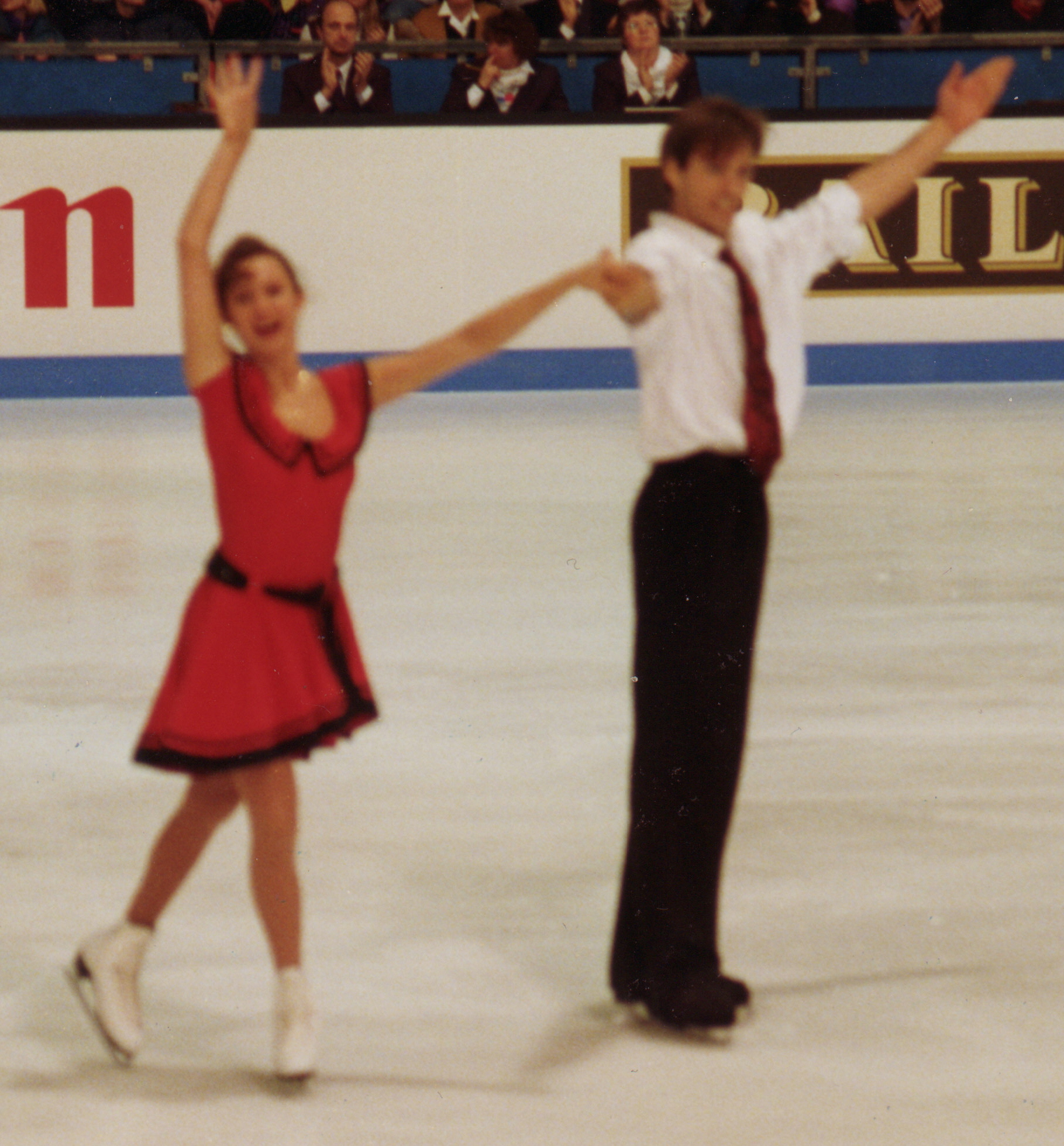
Grishuk and Platov matter because they joined an exceptional competitive record to a distinctly energetic approach to ice dance. Their two Olympic victories were not isolated achievements but the centerpiece of four consecutive World titles and sustained seasonal dominance across multiple continents. They trained in the Soviet system, represented the Unified Team during the transition from the Soviet Union, and then became champions for Russia while the discipline itself was shifting toward musically varied and theatrically assertive free dances. Their partnership established the historical benchmark against which later teams measure repeat Olympic success in ice dance and continues to shape how the sport evaluates sustained excellence at the highest level.


Explore More Legends
Discover the dancers, teachers, choreographers, and cultural icons who shaped how the world moves.
Keep the thread going
Dance history, technique, and the occasional rabbit hole — in your inbox. Thoughtful, infrequent, unsubscribe anytime.
Free. No spam. One click to leave.