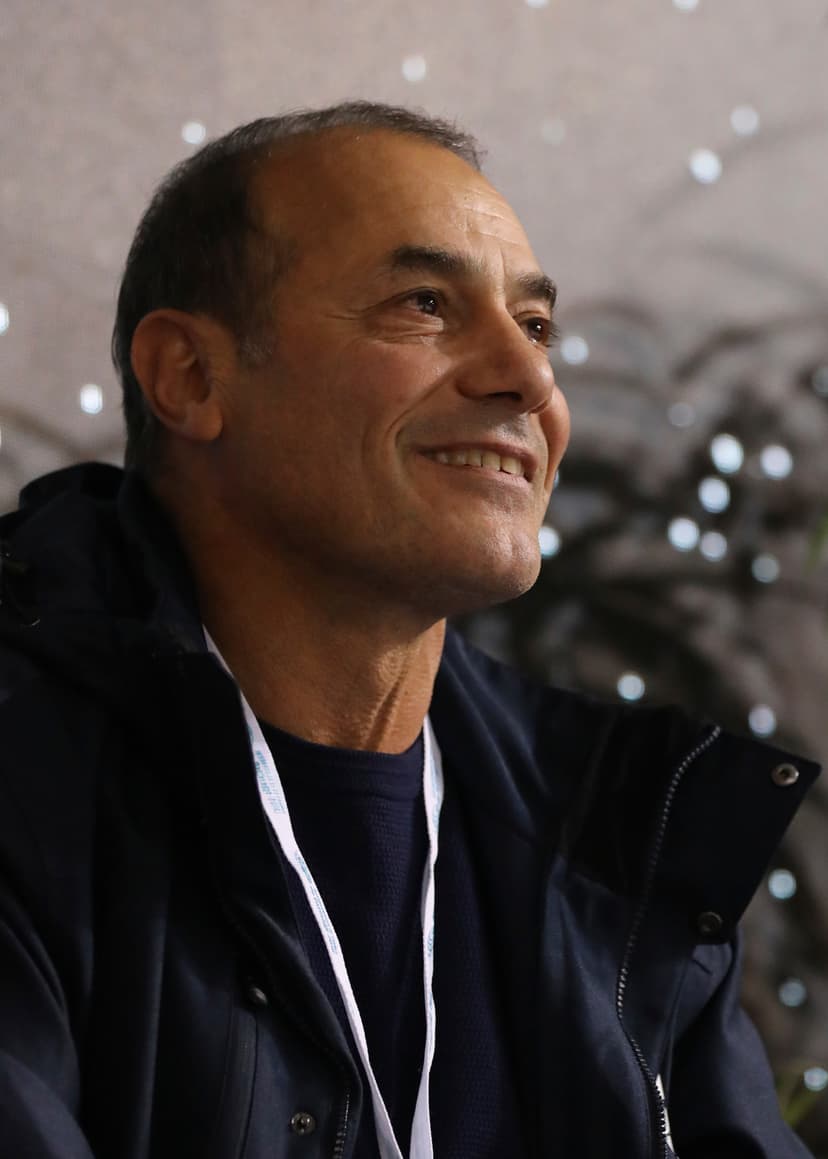
Rafael Vladimirovich Arutyunyan
Legend of Dance
Why They Matter
Arutyunyan’s importance lies in the durability and portability of his coaching practice. He developed athletes under Soviet, Russian, and American systems, then built collaborative teams capable of supporting both established champions and young skaters pursuing unprecedented jump content. His publi
Biography
Rafael Vladimirovich Arutyunyan is a figure skating coach whose five-decade career spans Soviet, Russian, and American competitive systems. Born in Tbilisi, Georgian SSR, Arutyunyan transitioned from competitive skating to coaching at eighteen, beginning a trajectory that would establish him as a builder of Olympic and world champions across multiple nations and generations.
Arutyunyan's early success came within the Soviet system. By 1980, one of his students had won the Soviet junior national title and placed sixth at the ISU World Junior Championships—a result that marked the beginning of an unusually sustained international coaching career. He advanced through Soviet and Russian coaching structures, working with the Russian national team from 1996 to 2000 alongside prominent coaches Tatiana Tarasova and Alexei Mishin. Seeking greater freedom in teaching and decision-making, he moved to California in 2000 and entered a U.S. rink culture in which leading coaches work directly with young skaters across competitive levels.
His American practice has combined primary coaching with technical consultation across a broad roster. U.S. Figure Skating documents his work with U.S. champions Michelle Kwan, Sasha Cohen, Ashley Wagner, Adam Rippon, and Mariah Bell; the pairs team of Alexa Knierim and Brandon Frazier; and international champions including Mao Asada, Jeffrey Buttle, Alexander Abt, and Michal Březina. These relationships varied in duration and scope; his role differed by athlete and context.
Arutyunyan's most sustained partnership was with Nathan Chen, whom he began teaching at age eleven in 2011. After eleven years together, Chen won the 2022 Olympic men's title. Arutyunyan's own account emphasizes accumulated technical work, trust, and timing rather than intervention at a single moment. His coaching approach centers on building frameworks in which extreme jump difficulty can coexist with repeatable training and complete programs—a philosophy that positions high-risk elements within choreographic flow rather than as isolated moments.
Recognition of his influence came through multiple honors. He received the PSA/U.S. Figure Skating Coach of the Year award in 2015, 2016, 2019, and 2022, and was named U.S. Olympic & Paralympic Coach of the Year for figure skating in 2016. In 2020 he entered the Professional Skaters Hall of Fame. The U.S. Figure Skating Hall of Fame selected him for its Class of 2026 in the Outstanding Professional category.
Arutyunyan became a U.S. citizen in 2019 and serves as head coach of the high-performance team at Great Park Ice and Five Point Arena in Irvine, California. As of the 2025–26 season, he is listed among the coaches of world champion Ilia Malinin and several national-team skaters, working within collaborative coaching teams that reflect the collective nature of modern competitive figure skating.
Career Highlights
Began coaching at age 18 after ending his competitive skating career. U.S. Figure Skating U.S. Figure Skating
Coached a Soviet junior national champion who placed sixth at the ISU World Junior Championships. U.S. Figure Skating U.S. Figure Skating
Began a four-year period coaching the Russian national team. U.S. Figure Skating U.S. Figure Skating
Moved to California and continued his coaching career in the United States. U.S. Figure Skating U.S. Figure Skating
Began the long-term coaching partnership with eleven-year-old Nathan Chen, according to Arutyunyan’s retrospective account. U.S. Figure Skating U.S. Figure Skating
Received the first of four documented PSA/U.S. Figure Skating Coach of the Year awards. U.S. Figure Skating U.S. Figure Skating
Named U.S. Olympic & Paralympic Coach of the Year for figure skating. U.S. Figure Skating U.S. Figure Skating
Became a U.S. citizen and took the high-performance head-coach role at Great Park Ice. U.S. Figure Skating U.S. Figure Skating
Inducted into the Professional Skaters Hall of Fame. U.S. Figure Skating U.S. Figure Skating
Coached Nathan Chen through the Olympic men’s title and received another PSA/U.S. Figure Skating Coach of the Year award. U.S. Figure Skating U.S. Figure Skating
Honored in the U.S. Figure Skating Hall of Fame’s Class of 2026 as an Outstanding Professional. U.S. Figure Skating Hall of Fame U.S. Figure Skating Hall of Fame
Listed by U.S. Figure Skating among Ilia Malinin’s coaches during a season in which Malinin won a third consecutive world title. U.S. Figure Skating roster U.S. Figure Skating roster
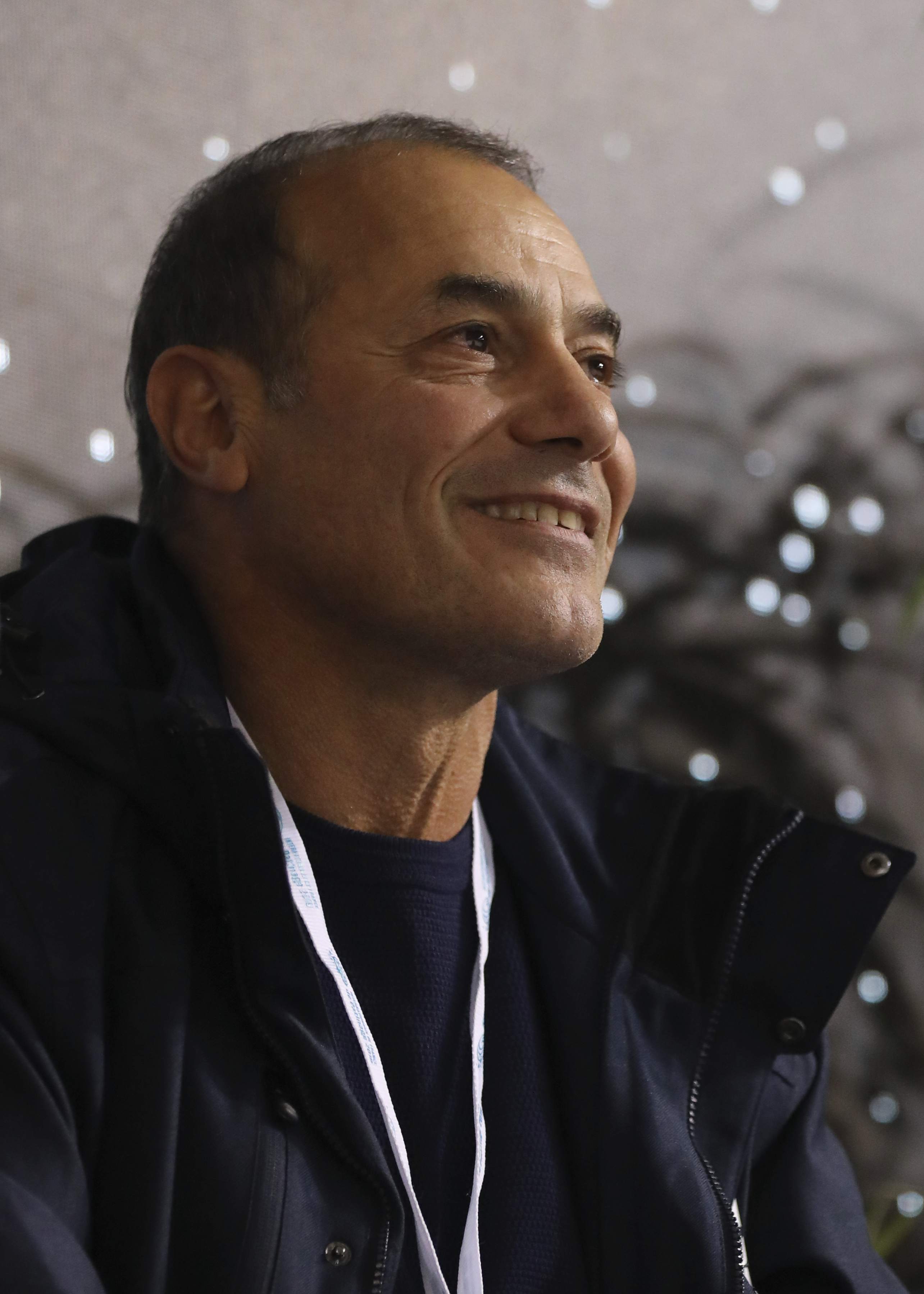
Gallery
Legacy & Impact
Arutyunyan's significance lies in the durability and portability of his coaching practice across competitive systems and generations. He developed athletes under Soviet, Russian, and American frameworks, then built collaborative teams capable of supporting both established champions and young skaters pursuing unprecedented technical content. His emphasis that coaching is collective—shared with assistants, choreographers, families, and athletes—provides a corrective to the solitary-genius model. His record demonstrates that technical innovation in skating emerges through long-term relationships and systematic progression rather than isolated intervention.


Explore More Legends
Discover the dancers, teachers, choreographers, and cultural icons who shaped how the world moves.
Keep the thread going
Dance history, technique, and the occasional rabbit hole — in your inbox. Thoughtful, infrequent, unsubscribe anytime.
Free. No spam. One click to leave.